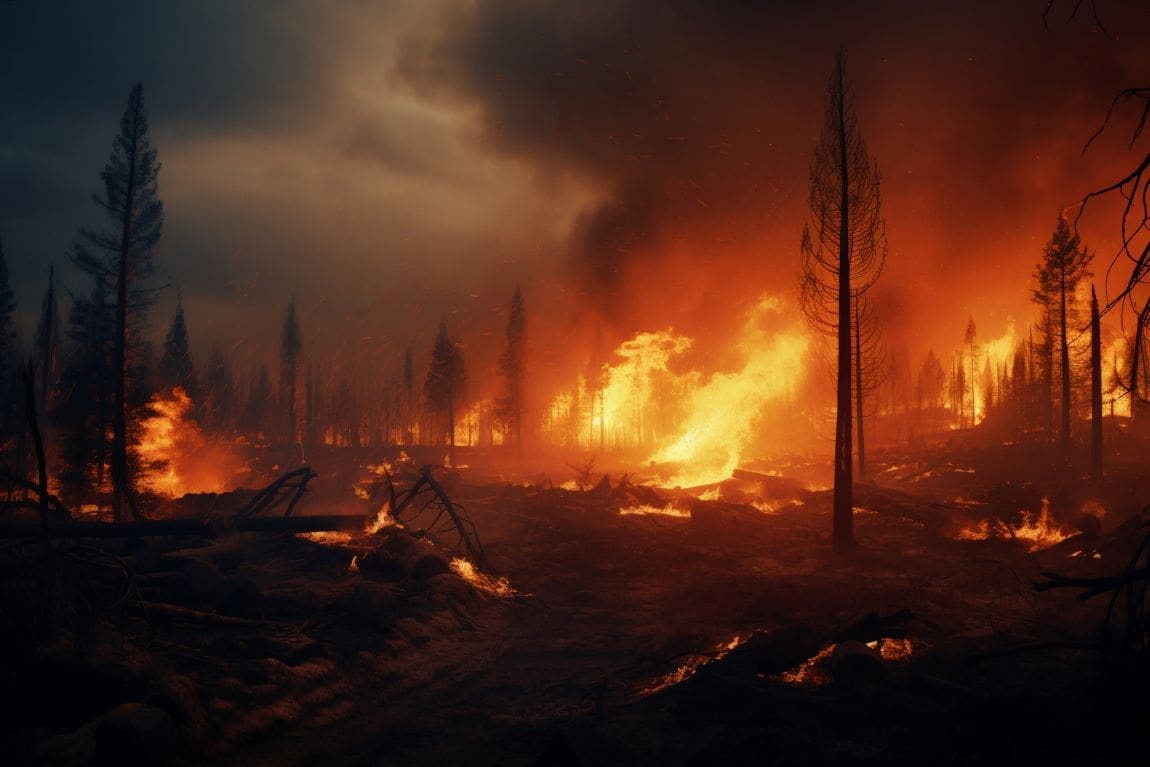
Fort McMurray, Canada (AFP) – A wildfire in Canada’s major oil-producing region doubled in size as it drew closer to the city of Fort McMurray on Wednesday, but officials were hopeful shifting winds could soon push it away.
The blaze scorched almost 21,000 hectares (52,000 acres) of forest overnight as it came within 4.5 kilometers (2.8 miles) of the city, which was partly evacuated the day before.
Alberta Wildfire spokeswoman Christie Tucker told a briefing that cooler temperatures and calmer winds were expected to “push the fire away from Fort McMurray” as well as weaken it.
However, Alberta Public Safety Minister Mike Ellis urged residents to “remain vigilant,” noting that “wildfire conditions can change and deteriorate rapidly.”
For many, the fire has brought back terrifying memories of 2016 when a massive blaze gutted Fort McMurray, forcing its entire population of more than 90,000 to flee at a moment’s notice.
“I’m sure these memories will create fear and uncertainty for many in Fort McMurray and my sympathy is with everyone facing this situation, but safety must remain our top priority,” said Alberta Premier Danielle Smith, after 6,000 residents of four neighborhoods were ordered out on Tuesday.
Many stores and schools were closed as a haze blanketed the city.
Freddy Saulnier, 51, who recently moved to Fort McMurray from New Brunswick on the Atlantic coast, says he is living “a nightmare.”
Staying in a hotel room after being ordered to leave his home, he says he can smell the smoke.
This fire “is a beast,” he told AFP. “It’s almost like watching a horror movie, you don’t know if the killer is hiding behind a tree, and it’s eerily quiet at night.”
After being pulled from the front lines the day before, firefighters were back on Wednesday along with water bombers dropping retardant, while heavy equipment operators built fire guards southwest of the town.
Companies with major oil sands mines less than 150 kilometers from Fort McMurray told AFP their operations have not been affected thus far. Canada is the world’s fourth largest producer and a leading exporter of crude to the United States.
Canadian authorities have been bracing for another possibly devastating wildfire season, after the country’s worst-ever last year saw flames burning from coast to coast and charring more than 15 million hectares of land.
The westernmost province of British Columbia is currently experiencing several active wildfires — 15 of which are out of control — with some 4,700 people under evacuation orders as of Wednesday.
Rob Fraser, the mayor of Fort Nelson in the province’s remote north, told AFP Wednesday that the situation there was “promising.”
A fire threatening his town has “calmed down with last night’s cooler weather.”
“We’re still praying for rain,” he added.
bur-amc/des/nro
© Agence France-Presse
Featured image by Freepik (AI Gen)