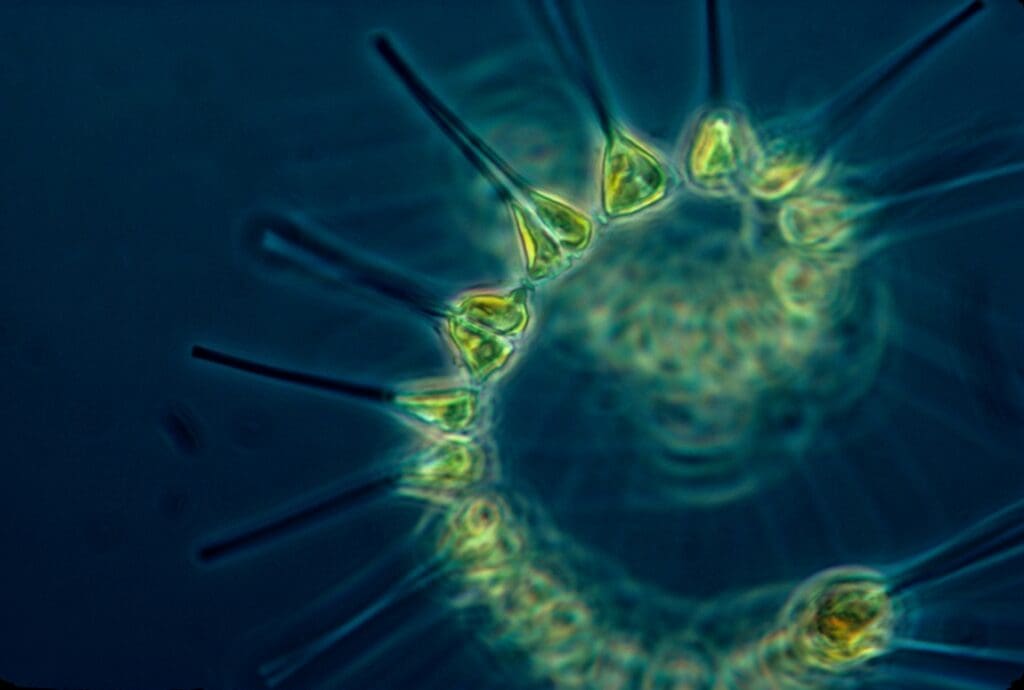
As oceans warm, a hidden world of phytoplankton is flourishing beneath the surface, according to new research.
These microscopic organisms, vital for life on Earth, account for about half of the planet’s primary production, converting carbon dioxide into organic material.

A study from the University of Exeter, published in Nature Climate Change, has revealed that while surface-dwelling phytoplankton show little change in overall biomass, those living deeper in the ocean have experienced significant growth over the last decade, spurred by rising temperatures.
The research, which draws on 33 years of data from the Bermuda Atlantic Time-series Study (BATS) in the Sargasso Sea, points to the different ways surface and subsurface phytoplankton are responding to climate change.
While surface phytoplankton exhibit a reduction in chlorophyll, meaning they are becoming less green, their total biomass has remained stable. Meanwhile, the biomass of subsurface phytoplankton has surged, indicating a dynamic shift in the lower layers of the marine ecosystem.
“It’s important to understand these trends because phytoplankton are the foundation of the marine food web and play a key role in removing carbon dioxide from the atmosphere,” said Dr. Johannes Viljoen, from the University of Exeter’s Department of Earth and Environmental Science.
Dr. Viljoen explained that while satellite observations are crucial for tracking surface phytoplankton, they cannot capture changes occurring in the deeper layers. “Our study highlights the limitations of satellite observations and underscores the urgent need for improved global monitoring of phytoplankton below what satellites can see.”
The implications of these findings extend far beyond the phytoplankton themselves. According to co-author Dr. Bob Brewin, changes at the base of the food web, where phytoplankton sit, can lead to cascading effects throughout marine ecosystems, affecting species from tiny zooplankton to large marine mammals.
Phytoplankton play a pivotal role not only in marine biodiversity but also in regulating the Earth’s climate by absorbing carbon dioxide from the atmosphere. As such, continued monitoring of subsurface phytoplankton populations is critical to understanding the broader impacts of climate change on marine ecosystems.
“Continued monitoring of these deep-living phytoplankton will help scientists better understand ongoing changes in the ocean that might otherwise go unnoticed,” added Dr. Viljoen.
The study, led by Viljoen alongside Dr. Brewin and Dr. Xuerong Sun, both from the Centre for Geography and Environmental Science, was supported by a UKRI Future Leader Fellowship awarded to Dr. Brewin.
Journal Reference:
Viljoen, J.J., Sun, X. & Brewin, R.J.W., ‘Climate variability shifts the vertical structure of phytoplankton in the Sargasso Sea’, Nature Climate Change (2024). DOI: 10.1038/s41558-024-02136-6
Article Source:
Press Release/Material by University of Exeter
Featured image credit: NASA | Stephanie Anderson/University of Rhode Island | Public domain