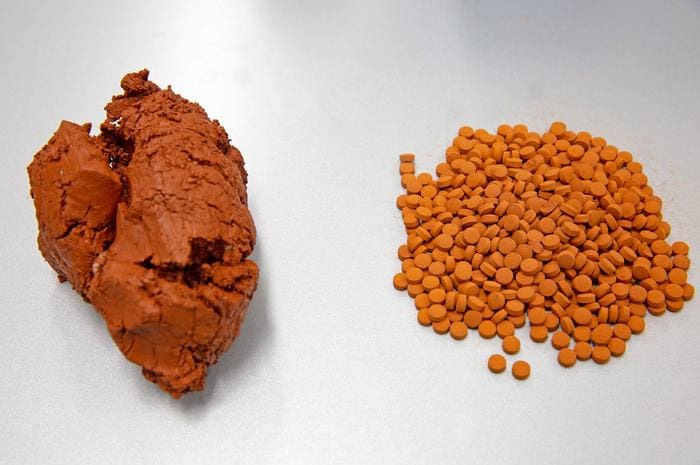
Sydney, Australia (AFP) – Hundreds of mysterious black tar-like balls have washed up on two popular Sydney beaches, prompting lifeguards to close the strands to swimmers.

“Mysterious, black, ball-shaped debris” began appearing on Coogee Beach on Tuesday afternoon the local mayor said, leaving flummoxed Australian authorities scrambling to find out what they might be, and where they may have come from.

Hundreds of golf-to-cricket-ball-sized spheres could be seen littering the coast, which is usually thronged with Sydneysiders and tourists.

Instead, a few seagulls wandered among the spheres, pecking and examining.

The balls were also spotted at nearby Gordon’s Bay, an aquatic reserve popular for snorkelling and fishing, which was also closed.

“At this stage, it is unknown what the material is,” Mayor Dylan Parker said in a social media post.

“However, they may be ‘tar balls’ which are formed when oil comes in to contact with debris and water, typically the result of oil spills or seepage.”

arb/ssy

© Agence France-Presse

Featured image credit: kjpargeter | Freepik

Image: green trees on gray concrete pathway during daytime
Urban trees suffer more from heat and drought than rural trees, study findsScience

Urban trees suffer more from heat and drought than rural trees, study finds

By CUNY ASRC A new study published in Ecological Applications details how trees in New York City and Boston are more negatively impacted by heat…
SourceSourceAugust 12, 2024 Full article
Image: Grain Crop
Making agriculture more resilient to climate changeNews

Making agriculture more resilient to climate change

Researchers across MIT are working on ways to boost food production and help crops survive drought. Anne Trafton | MIT News - As Earth’s temperature…
SourceSourceNovember 1, 2024 Full article
Satellite imagery: Alaska, USA
Image of the day: Alaska’s shrinking snowfall captured from spaceNews

Image of the day: Alaska’s shrinking snowfall captured from space

Since December 2024, Alaska has experienced warmer-than-average temperatures, disrupting seasonal snowfall patterns. On January 15, 2025, Anchorage recorded an average temperature of −6.4°C, 2.4°C higher…
Muser NewsDeskMuser NewsDeskJanuary 28, 2025 Full article