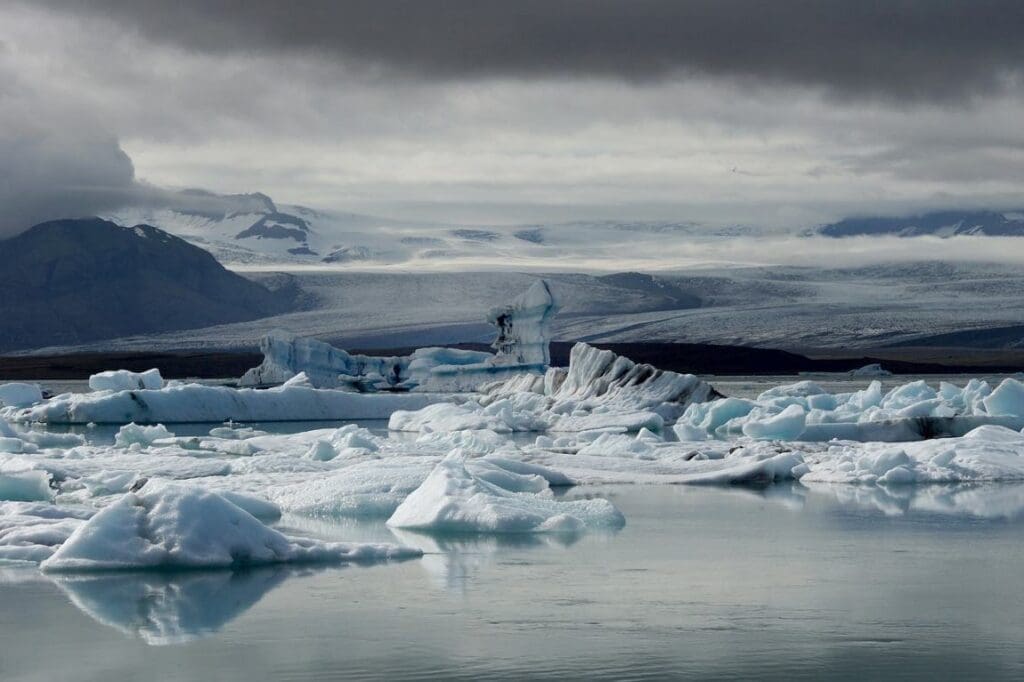
A new study has revealed how climate change could significantly disrupt Arctic marine ecosystems, with potential ripple effects impacting species throughout the region.
Researchers from Durham University, UK, and the Fisheries and Marine Institute at Memorial University in Canada have focused their efforts on the North Water Polynya – a biologically rich area of open water between Canada and Greenland, surrounded by sea ice. Their findings offer insight into how shifts in species distributions due to warming temperatures could reshape this ecosystem.
The study, published in PLOS Climate, highlights how species expansions into the Arctic could trigger profound changes in the local food web. As sea ice retreats and waters warm, species such as plankton, Arctic cod, and even killer whales may alter their ranges, disrupting long-standing predator-prey relationships.

One key projection is the increased abundance of capelin, a fish adapted to warmer waters, at the expense of Arctic cod. This shift could have far-reaching consequences, as Arctic cod plays a central role in the food web, feeding larger species like polar bears, seals, and beluga whales. Meanwhile, the arrival of killer whales, attracted by the longer ice-free season, poses a direct threat to narwhals and seals, further straining the ecosystem.
Researchers also explored the indirect effects of these changes, such as how fluctuations in plankton populations – tiny organisms at the base of the food chain – could lead to cascading impacts on larger species. A decline in energy-rich copepods, a type of crustacean that sustains many fish species, could cause populations of Arctic cod, ringed seals, and even polar bears to plummet.
“The research sheds new light on how novel species moving into the Arctic due to climate change could have cascading effects on the entire food web,” said Beth Gillie of Durham University’s Department of Biosciences. “I find it fascinating how a subtle shift in the relative abundance of large and small crustaceans could lead to a four-fold decline in polar bear numbers in future, highlighting the complexity of species’ potential responses to climate change.”
The researchers used food web models to simulate potential future scenarios, revealing unexpected outcomes. A decrease in phytoplankton – a crucial part of the marine ecosystem – was linked to sharp declines in polar bear numbers, highlighting how changes at the bottom of the food chain can reverberate throughout the web.
The findings emphasize the vulnerability of Arctic ecosystems to climate change and the urgent need to curb carbon emissions.
Study co-author Andrea Bryndum-Buchholz added: “These findings highlight the sensitivity of Arctic marine ecosystems to climate change and the need to reduce carbon emissions as quickly as possible.”
This study is one of the first to analyze how climate change could cascade through Arctic food web and serves as a foundation for future research into the broader impacts of warming oceans on marine life globally.
Journal Reference:
Gillie ER, Bryndum-Buchholz A, Willis SG, Eddy TD, ‘Exploring novel North Water Polynya ecosystems under climate change’, PLOS Climate 3, (10): e0000490 (2024). DOI: 10.1371/journal.pclm.0000490
Article Source:
Press Release/Material by Durham University
Featured image credit: Steve Lindsay