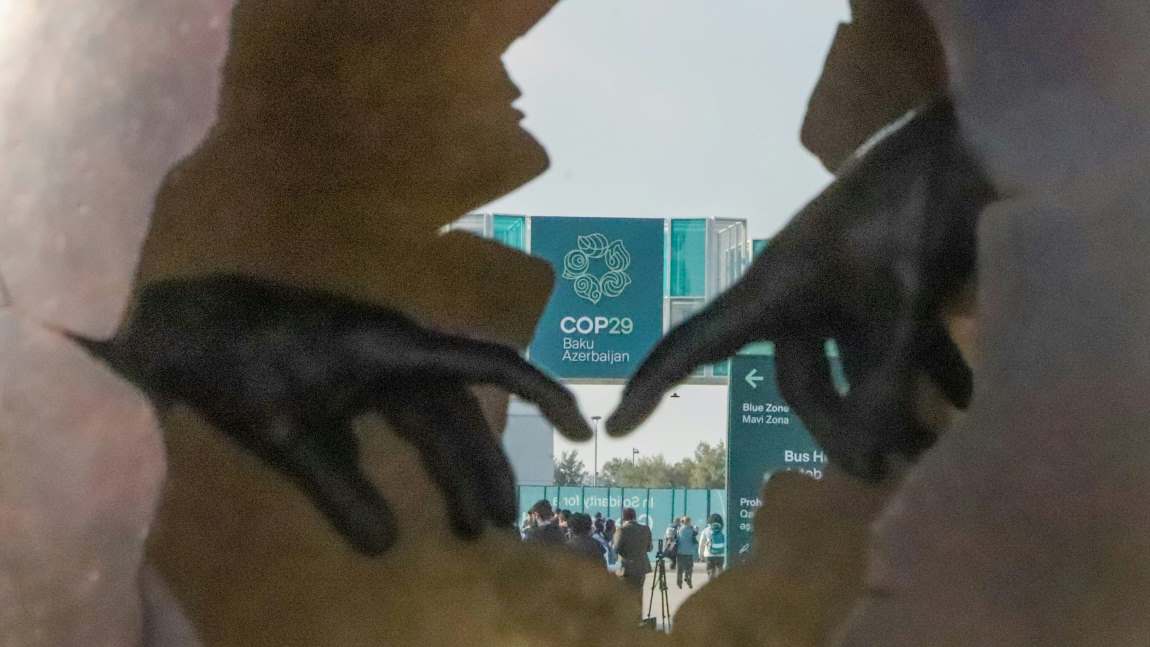
Baku, Azerbaijan | AFP – A fresh draft deal published Thursday at the deadlocked COP29 climate talks shows rich and poor countries still divided as time runs out to strike a finance agreement for developing nations.
The streamlined text released in Azerbaijan recognises developing countries need a trillion dollars per year to fight global warming, but does not present a much-sought figure needed to land the deal.
This will be the focus as nations go back to the negotiating table with just a day to go until COP29 is supposed to conclude in Baku.
The draft reflects the broad and opposing positions of developed countries — which are obligated to pay climate finance — and the developing countries that receive it.
“The new finance text presents two extreme ends of the aisle without much in between,” said Li Shuo, director of the China climate hub at the Asia Society Policy Institute.
The main sticking points — who should pay, how much and the type of funding — remain unresolved in the slimmed-down 10-page document.
Ali Mohamed, the chair of the African Group of Negotiators, said the “elephant in the room” was the lack of a concrete number.
“This is the reason we are here… but we are no closer and we need the developed countries to urgently engage on this matter,” said Mohamed, who is Kenya’s climate envoy.
Rich countries have been under pressure to say how much they are willing to provide developing countries to wean off fossil fuels and build resilience against disaster.
Some developing countries have pushed for a final commitment of $1.3 trillion, mostly in grants from government coffers, and not loans they say add to debt.
The European Union and the United States, two of the biggest climate finance providers, had said they would not reveal a figure until the scope of any deal was much clearer.
“The fact there is no number specified for the climate finance goal is an insult to the millions of people on the frontlines bearing the brunt of climate change impacts,” said Greenpeace’s Jasper Inventor.
Mohamed Adow, a Kenyan climate activist, also lamented the lack of clarity around a figure.
“We came here to talk about money. The way you measure money is with numbers. We need a cheque but all we have right now is a blank piece of paper,” said the founding director of think tank Power Shift Africa.
Developing countries, excluding China, will need $1 trillion a year in foreign assistance by 2030.
This number rises to $1.3 trillion annually by 2035, according to an expert economic assessment commissioned by the United Nations.
But many of the nations obligated to help cover this cost face political and fiscal pressures, and insist they cannot rely on their balance sheets alone.
lth/np/fox
© Agence France-Presse
Featured image credit: Matthew TenBruggencate | Unsplash