Climate change, the most pressing challenge to global development and environmental stability, demands an urgent transformation of the United Nations’ Sustainable Development Goals (SDGs), a new study concludes.
The SDGs, established to eradicate poverty, promote socio-economic progress, improve health, and safeguard the environment, are fundamentally intertwined with the need for climate resilience. According to University of Birmingham researchers, aligning climate action with all aspects of the SDGs is essential for securing a sustainable future for the planet.
Their findings, published in npj Climate Action, emphasize the necessity of integrating climate resilience into every SDG target and indicator.
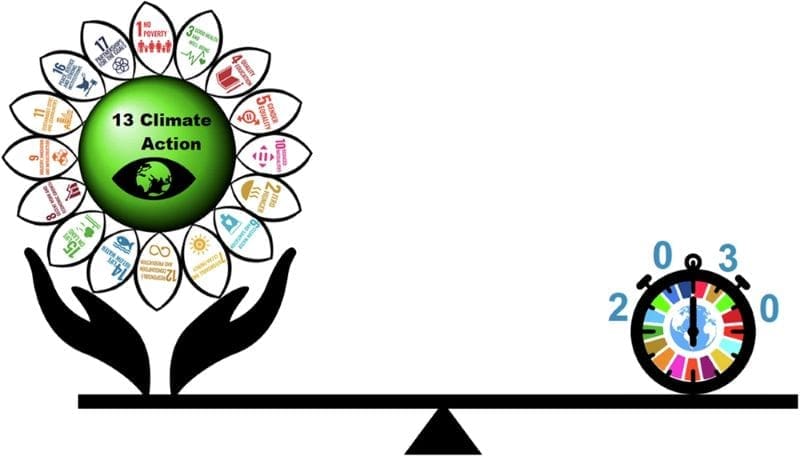
The interdisciplinary team of experts, representing all five Colleges of the University, presented a comprehensive blueprint for reorienting the SDGs to account for climate change impacts. This five-point plan addresses key areas, including aligning SDG objectives with the Paris Agreement, establishing clear short- and long-term goals, empowering local communities, creating a unified financial framework, and fostering international cooperation through a dedicated panel.
“Climate change is the most significant contemporary threat to the environment, human well-being, and livelihoods,” explained Professor Francis Pope, corresponding author of the study. “It impacts every one of the 17 SDGs, particularly through increasing temperatures, rising sea levels, and extreme weather events.”
The study underscores that climate change exacerbates poverty and inequality, disrupts health systems by intensifying disease risks, reduces agricultural productivity, and undermines food and water security. The researchers also highlight the cascading effects of climate change on education, gender equality, and economic development, stressing the urgency of embedding climate resilience across all developmental efforts.
Dr. Ajit Singh, lead author, added: “Embedding climate action within each SDG would ensure that climate resilience is a core component of sustainable development. If we fail to resolve tensions between development goals and climate action, we will find it impossible to secure the future of our planet and its people.”
Specific recommendations from the study call for integrating climate education into school curricula and advancing sustainable agricultural practices, water management, and ocean conservation. The researchers also advocate for climate-resilient tools and policies to safeguard food systems and natural resources, particularly in vulnerable regions.
UN member states, which collectively formulated the SDGs, remain responsible for implementing progress towards these goals. However, the study emphasizes that a systematic, climate-focused transformation is the only viable pathway to achieving sustainable development in the face of climate crises.
Journal Reference:
Singh, A., Pope, F.D., Radcliffe, J. et al. ‘Delivering sustainable climate action: reframing the sustainable development goals’, npj Climate Action 3, 110 (2024). DOI: 10.1038/s44168-024-00194-2
Article Source:
Press Release/Material by University of Birmingham
Featured image credit: Workman House | Pexels