A ferocious wildfire broke out in the Hollywood Hills of Los Angeles, California, on January 7, 2025, threatening famous landmarks and densely populated neighborhoods. The blaze is one of four major wildfires in the area that have led to significant loss of life and property.

At least five people have died, more than 2,000 structures have been destroyed, and over 130,000 residents have been evacuated. By January 8, authorities declared a state of emergency, with power outages leaving more than 456,000 people in the dark.

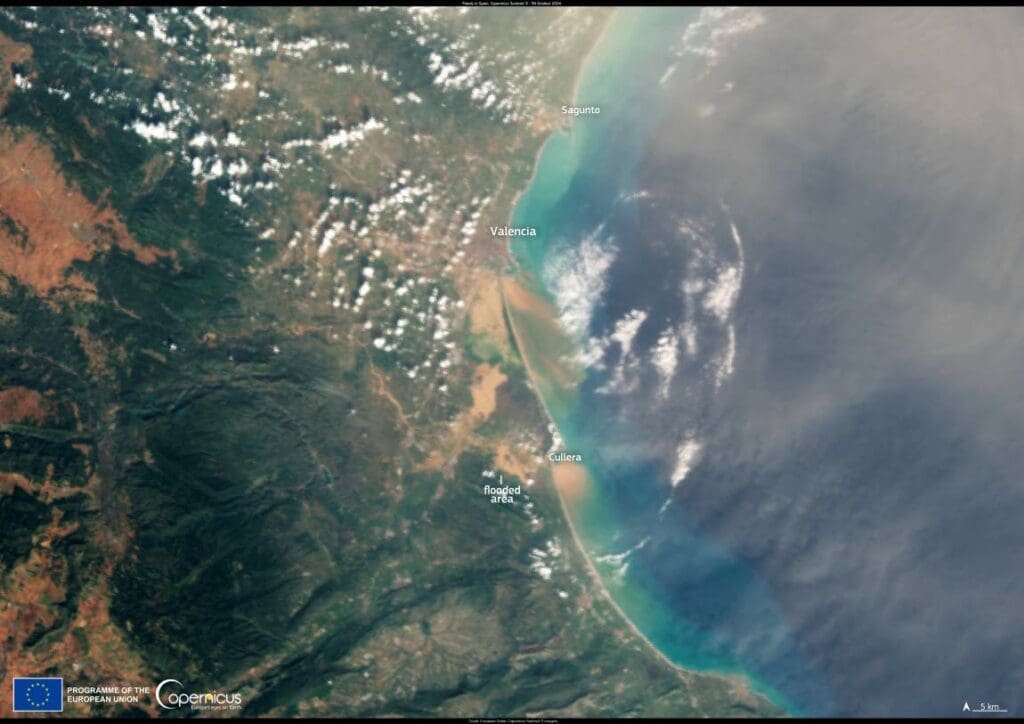
Satellite image of wildfire of Los Angeles, California
California, USA. Credit: European Union, Copernicus Sentinel-3 imagery

This dramatic scene, captured by the Copernicus Sentinel-3 satellite on January 9, 2025, shows the widespread devastation.

Open data from Sentinel satellites is invaluable for monitoring wildfires, mapping their extent, and aiding disaster response efforts worldwide.

Featured image credit: European Union, Copernicus Sentinel-3 imagery

Image: Airplane at sunset
Ultrafine particles from planes put 52 million Europeans at risk of serious health conditionsClimate

Ultrafine particles from planes put 52 million Europeans at risk of serious health conditions

By Transport & Environment (T&E) A new study by green group Transport & Environment (T&E) suggests that thousands of cases of high blood pressure, diabetes and dementia…
SourceSourceJune 25, 2024 Full article
Hourglass with Earth inside with an glacier melting above - global warming concept
Civil society organizations unveil ‘Principles for a Fair JETP’ framework ahead of G7 summitNewsClimate

Civil society organizations unveil ‘Principles for a Fair JETP’ framework ahead of G7 summit

A coalition of Civil Society Organizations (CSOs) from South Africa, Indonesia, Vietnam, and Senegal has launched the 'Principles for a Fair Just Energy Transition Partnership…
Adrian AlexandreAdrian AlexandreJune 10, 2024 Full article
Forest. In Central Appalachia, programs that manage forested lands to enhance the carbon-storing capabilities of trees and soil are paying dividends for large corporate landowners but leaving small landholders out, according to WVU research. Biologist Steven Kannenberg is working to ensure local communities benefit from the carbon credits their forests generate
Money trees: researchers looking at local benefits from climate fighting ability in Appalachian forestsClimateNews

Money trees: researchers looking at local benefits from climate fighting ability in Appalachian forests

West Virginia University - Researchers at West Virginia University are working to ensure small landowners and local communities, instead of large corporations, profit from the…
SourceSourceAugust 9, 2024 Full article