Washington, United States | AFP
In brief:
Human-driven climate change set the stage for the devastating Los Angeles wildfires by reducing rainfall, parching vegetation, and extending the dangerous overlap between flammable drought conditions and powerful Santa Ana winds, according to an analysis published Tuesday.
The study, conducted by dozens of researchers, concluded that the fire-prone conditions fueling the blazes were approximately 35 percent more likely due to global warming caused by burning fossil fuels.
“Climate change increased the risk of the devastating LA wildfires,” said Clair Barnes of Imperial College London, the lead author of the study by World Weather Attribution, an international academic collaboration.
“Drought conditions are increasingly pushing into winter, raising the likelihood of fires breaking out during strong Santa Ana winds that can transform small ignitions into deadly infernos.
“Without a faster transition away from planet-heating fossil fuels, California will continue to get hotter, drier, and more flammable.”

Projected to worsen
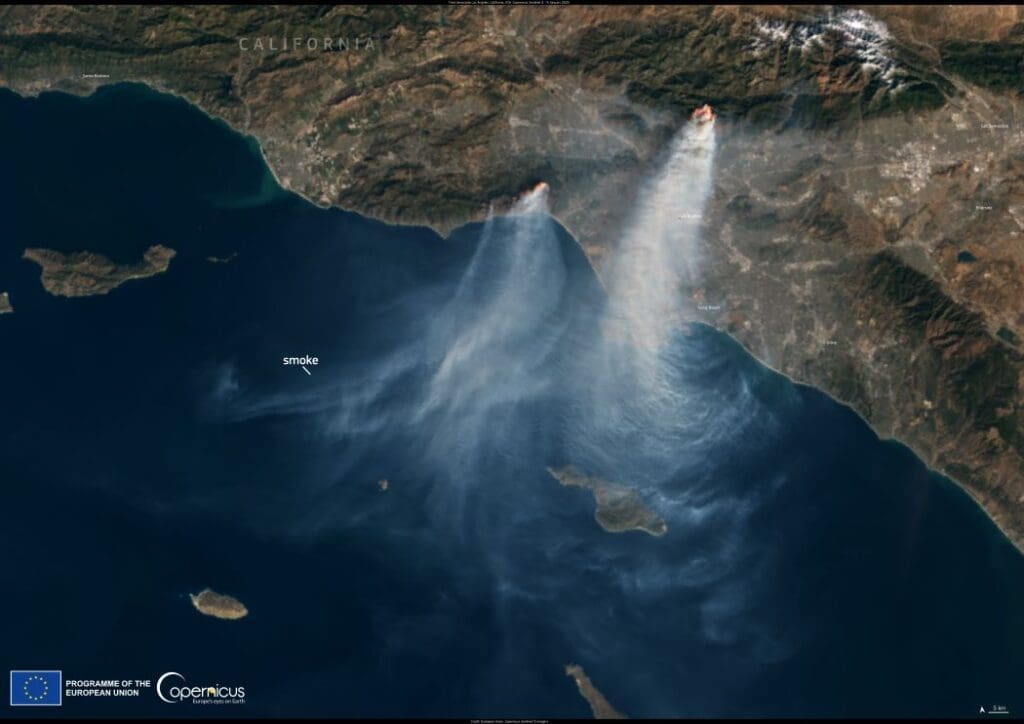
The study does not address the direct causes of the wildfires, which erupted around Los Angeles on January 7, killing at least 29 people and destroying more than 10,000 homes, the most destructive in the city’s history.
Investigators are probing the role of power company Southern California Edison in one of the blazes, the Eaton Fire.
Instead, researchers analyzed weather data and climate models to assess how such events have evolved under today’s climate, which has warmed approximately 2.3 degrees Fahrenheit (1.3 degrees Celsius) above pre-industrial levels.
Using peer-reviewed methods, they found that the hot, dry, and windy conditions were 1.35 times more likely due to climate change.
Looking ahead, the study warns that under current scenarios, where global warming reaches 4.7F (2.6C) by 2100, similar fire-weather events in January will become a further 35 percent more likely.
Historically, October through December rainfall has marked the end of wildfire season.
However, these rains have decreased in recent decades.
The study found that low rainfall across these months is now 2.4 times more likely during neutral El Nino conditions, leading to drier, flammable conditions persisting into the peak of the Santa Ana wind season in December and January.
Areas of Uncertainty
The relationship between climate change and Santa Ana winds — which form in western deserts, then heat up and dry out as they flow down California’s mountains — remains unclear.
While most studies predict a decline in these winds as the climate warms, some suggest hot Santa Ana wind events and particularly strong years will persist.
This year’s fires followed two wet winters in 2022–2023 and 2023–2024, which spurred the growth of grass and brush. However, almost no rain this winter left the vegetation dry and highly flammable.
Globally, extreme shifts between very wet and very dry conditions, known as “precipitation whiplash,” are becoming more common. These swings are driven by a warmer atmosphere that can hold and release greater amounts of moisture, exacerbating weather extremes.
ia/bfm
© Agence France-Presse
Article Source:
Press Release/Material by Issam AHMED | AFP
Featured image credit: rawpixel | Freepik