Summary:
While deforestation in the Brazilian Amazon has fallen to its lowest level in a decade, forest degradation has risen dramatically, posing a serious challenge to Brazil’s climate commitments. According to a new study published in Global Change Biology, degradation in the Amazon increased by 163% between 2022 and 2024, driven mainly by fire and prolonged drought, while deforestation fell by 54% in the same period. The researchers, from Brazil’s National Institute for Space Research (INPE), the University of São Paulo, and partners in the United Kingdom and the United States, warn that this “negative balance” could jeopardize Brazil’s international pledges to curb emissions and protect biodiversity.
In 2024 alone, 25,023 square kilometers of forest were degraded – an area slightly larger than Israel – with wildfire scars accounting for 66% of alerts. With the country set to host COP30 in Belém this November, the authors stress that tackling degradation must become a national priority. They call for stronger fire management, large-scale restoration, and integration with carbon markets to support sustainable land use and meet Brazil’s climate targets.
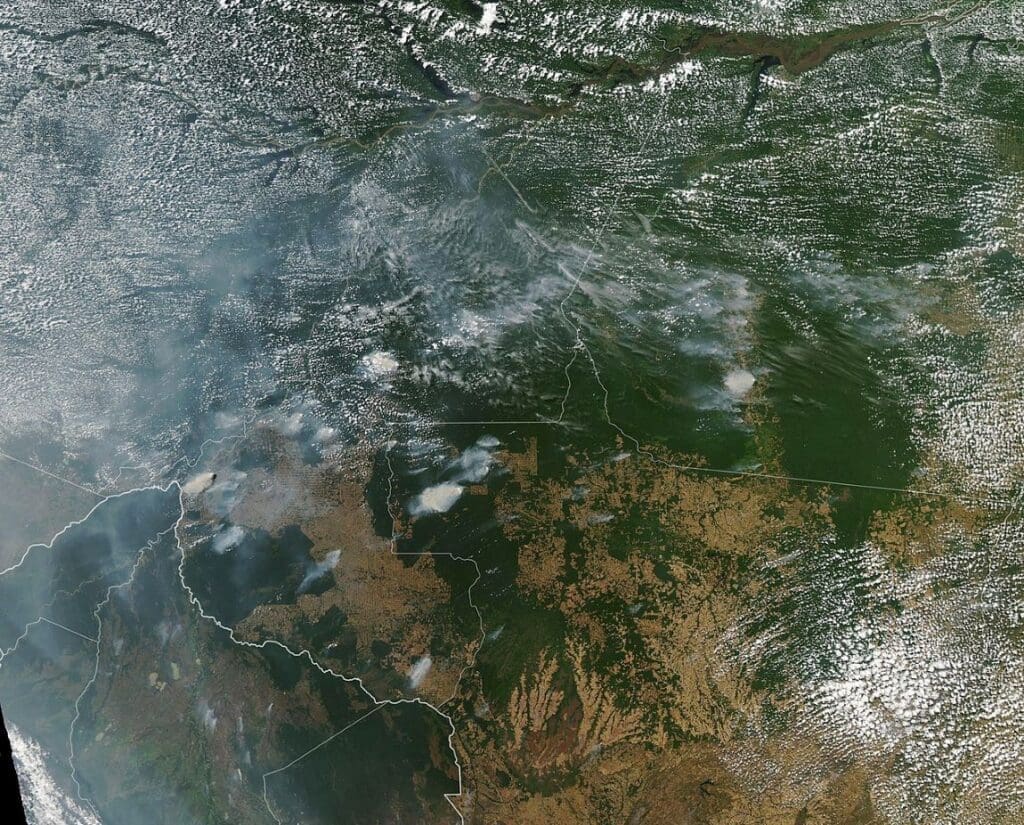
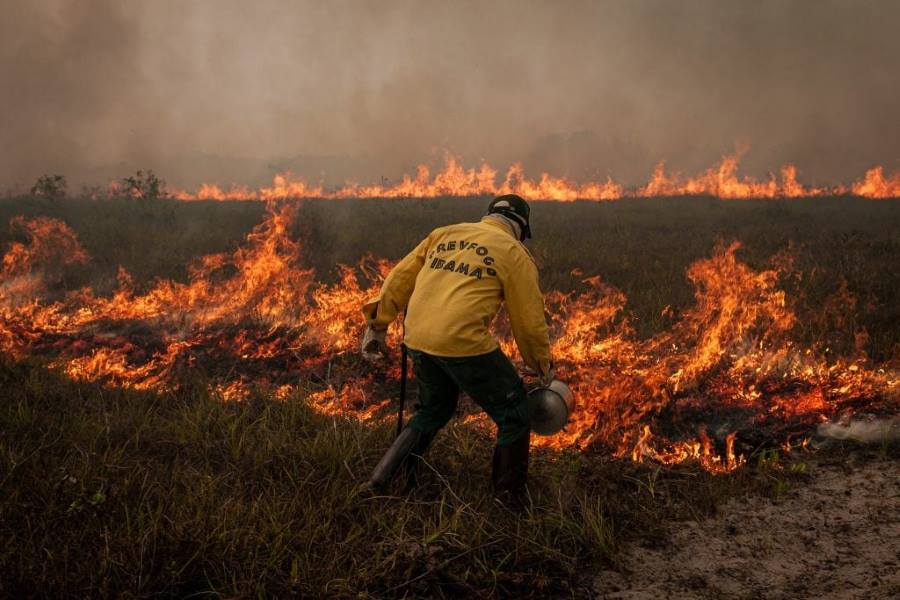
Amazon degradation increases by 163% in two years, while deforestation falls by 54% in the same period
The accelerated degradation of the Brazilian Amazon, primarily due to fires, has overshadowed the significant reduction in deforestation from 2022 to 2024. This “negative balance” in protecting the biome jeopardizes the international goals for combating the climate crisis that have been assumed by the country, which is hosting the United Nations Climate Change Conference (COP30) this year.
This warning comes from an article in the journal Global Change Biology published by scientists from Brazil’s National Institute for Space Research (INPE) in partnership with the University of São Paulo (USP, also in Brazil) and institutions in the United Kingdom and the United States. Deforestation completely removes native vegetation cover, whereas degradation weakens forests without destroying them entirely (e.g., selective logging).
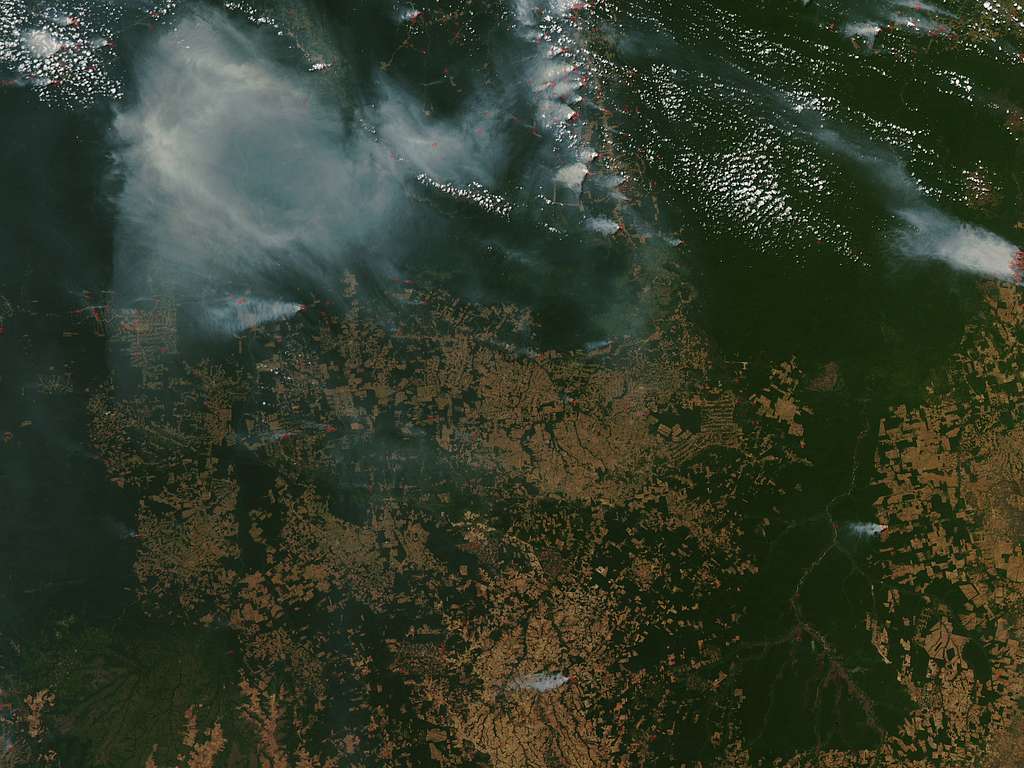
According to the study, alerts indicating forest degradation in the Amazon increased by 44% from 2023 to 2024 – a 163% increase compared to 2022. Last year alone, 25,023 square kilometers (km²) of forest were degraded, around 66% of which was due to forest fires. This is slightly larger than the area of Israel.
Conversely, deforestation fell by 27.5% and 54.2%, respectively, marking the smallest increase in ten years. According to data from INPE’s Brazilian Amazon Forest Satellite Monitoring Program (PRODES), 5,816 km² were deforested in the period up to 2024.
“Degradation is a more difficult process to identify than deforestation because it occurs while the forest is still standing. It’s mainly due to fire, which in the last two years has been aggravated by the drought situation in the Amazon. There’s also selective logging and the edge effect. All of this reduces the ecosystem services provided by these forests. Understanding this data contributes to the formulation of public policies,” says Guilherme Mataveli, a postdoctoral fellow at INPE’s Earth Observation and Geoinformatics Division.
Between 2023 and 2024, the Amazon experienced a severe drought, with precipitation deficits of 50 to 100 millimeters per month, an increase in temperature of over 3 °C, and a delayed rainy season. This left rivers at minimum levels. Consequently, last year, the biome recorded the highest number of hotspots since 2007 – 140,328 in total.
Mataveli, the first author of the article, is part of the Tropical Ecosystems and Environmental Sciences Laboratory (TREES), led by researchers Luiz Aragão, who also signed the paper, and Liana Anderson.
For Aragão, the importance of the study was to demonstrate that satellites – critical space technologies for the country, used in INPE’s monitoring system – can now detect degradation processes. “These processes had been silently compromising the integrity of our forests. Today’s technologies not only provide the capacity to monitor events, report the associated carbon emissions and their impacts on the environment, the population, and the planetary climate, but also enable strategic planning for sustainable, low-carbon territorial management,” says the INPE researcher and coordinator of the FAPESP Research Program on Global Climate Change (RPGCC).
He adds: “Brazil’s leadership on the international stage in terms of actions to combat climate change and biodiversity loss depends on effective responses to forest degradation. Reporting the emissions associated with these processes is a path of no return within the National Greenhouse Gas Inventories. Therefore, the intensification of control measures, with the implementation of consistent policies that address this process, becomes a national priority.”
Brazil was the first country to submit a new Nationally Determined Contribution (NDC) to the United Nations Framework Convention on Climate Change (UNFCCC). The country has committed to reducing net greenhouse gas emissions by 59% to 67% by 2035, compared to 2005 levels (850 million to 1.05 billion tons of CO2 equivalent).
NDCs are each country’s targets for reducing greenhouse gas emissions and preventing the average global temperature from rising more than 1.5 °C, as established in the Paris Agreement. These targets must be reviewed and updated by COP30, which will take place in Belém in November.
The impact
Although it does not completely remove native vegetation, degradation deteriorates the forest that “remains,” affecting biodiversity and reducing its ability to provide essential services such as carbon capture and water cycle regulation. These are vital functions for ecosystem resilience.
Previous research has already shown that nearly 40% of the Amazon’s standing forests are degraded due to factors such as fires, edge effects, illegal logging, and extreme droughts. This further emphasizes the scale and importance of the problem. In this scenario, the gradual loss of vegetation resulted in carbon emissions equivalent to or greater than those from deforestation. The loss of vegetation resulted in emissions ranging from 50 to 200 million tons per year, while deforestation resulted in emissions ranging from 60 to 210 million tons per year.
In their recently published article, the scientists suggest improving fire management and implementing large-scale restoration and reforestation projects. Another approach is to integrate these strategies with carbon credit markets to create financial incentives for landowners, companies, and local communities to adopt sustainable practices.
They also point out the challenges of improving the tracking and quantification of degradation and of creating mechanisms to hold those responsible accountable.
***
The study was supported by FAPESP through the Research Center for Greenhouse Gas Innovation (RCGI) and a Thematic Project, led by Paulo Artaxo, a researcher from the Center for Amazon Sustainability Studies at the University of São Paulo (USP).
Journal Reference:
Mataveli, G., Maure, L.A., Sanchez, A., Dutra, D.J., de Oliveira, G., Jones, M.W., Amaral, C., Artaxo, P. and Aragão, L.E.O.C., ‘Forest Degradation Is Undermining Progress on Deforestation in the Amazon’, Global Change Biology 31, 4: e70209 (2025). DOI: 10.1111/gcb.70209
Article Source:
Press Release/Material by Fundação de Amparo à Pesquisa do Estado de São Paulo (FAPESP)
Featured image credit: Defense Visual Information Distribution Service | Public Domain