Gorgona National Natural Park off Colombia’s Pacific coast has been recognised among the world’s top Marine Protected Areas, earning the 2025 Blue Park Award from the Marine Conservation Institute. The accolade, announced on Marine Protected Areas Day, honours sites that excel in conserving marine biodiversity while supporting sustainable development and local communities.
The park encompasses the waters surrounding Gorgona and Gorgonilla Islands, 35 kilometres offshore, and shelters the most diverse coral reef ecosystem in the Eastern Tropical Pacific. Its reefs, the largest in Colombia’s Pacific region, help replenish and stabilise regional coral populations, offering habitat for a wide variety of fish, invertebrates, and other marine life. The convergence of several ocean currents here supports a unique mix of species from neighbouring regions.
The area safeguards breeding, feeding, and migration routes for sharks, sea turtles, marine mammals, and seabirds. It plays a vital role in the regional distribution of birds such as the brown pelican, blue-footed booby, brown booby, and frigatebirds. Because of its biodiversity and accessibility to researchers, the park is nicknamed “Science Island” (“Isla Ciencia”).
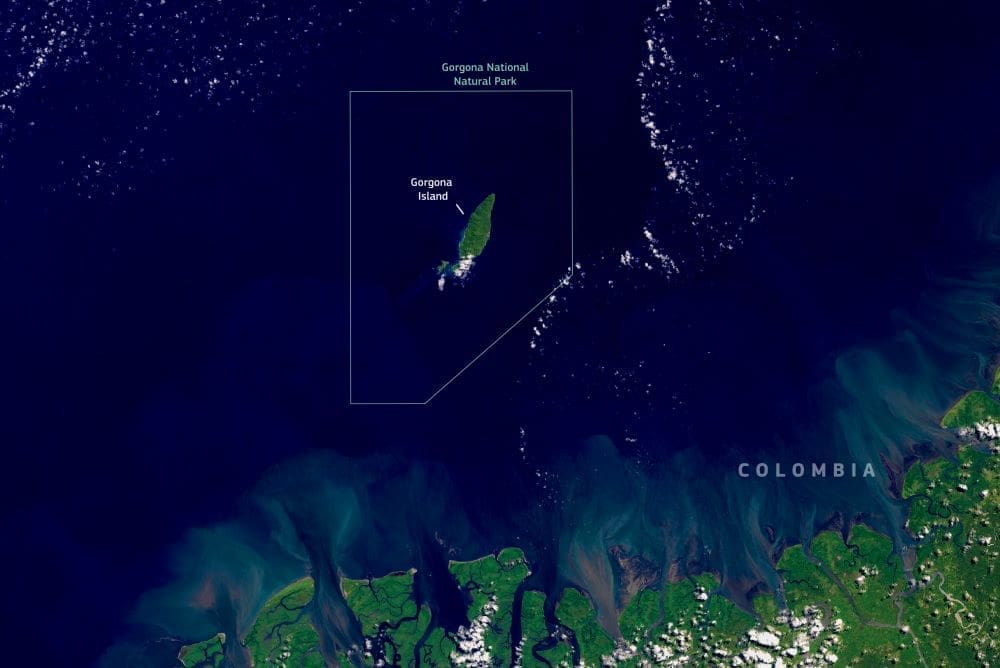
This Copernicus Sentinel-2 image from 14 July 2025 shows the park’s boundaries, along with nearby mangrove-rich stretches of Colombia’s coast. Data from the Copernicus satellites and the Copernicus Marine Service support monitoring and sustainable policy-making for ocean conservation.
Once a prison island, Gorgona has been managed by Colombia’s National Natural Parks authority since 1984. Today, it is part of the Marine Corridor of the Eastern Tropical Pacific – an initiative linking Colombia, Costa Rica, Panama, and Ecuador to promote ecological connectivity. The Afro-Colombian fishing community in Bazán, which historically used the island as a resting point, is now actively involved in the park’s stewardship.
Featured image credit: European Union, Copernicus Sentinel-2 imagery