Brussels, Belgium | AFP | Muser NewsDesk
A flagship European environmental policy — dubbed a “carbon tax” on imports — is raising hackles abroad and is becoming a flashpoint at the UN’s COP30 climate summit in Brazil.
The European Union’s Carbon Border Adjustment Mechanism (CBAM) is designed to level the playing field for European industries subject to strict emissions rules.
But critics say it risks becoming an unwelcome source of friction with Europe’s global partners.
What is CBAM?
Tested since 2023 and set to become fully operational in 2026, CBAM targets imports of carbon-intensive goods such as steel, aluminium, cement, fertilisers, electricity and hydrogen.
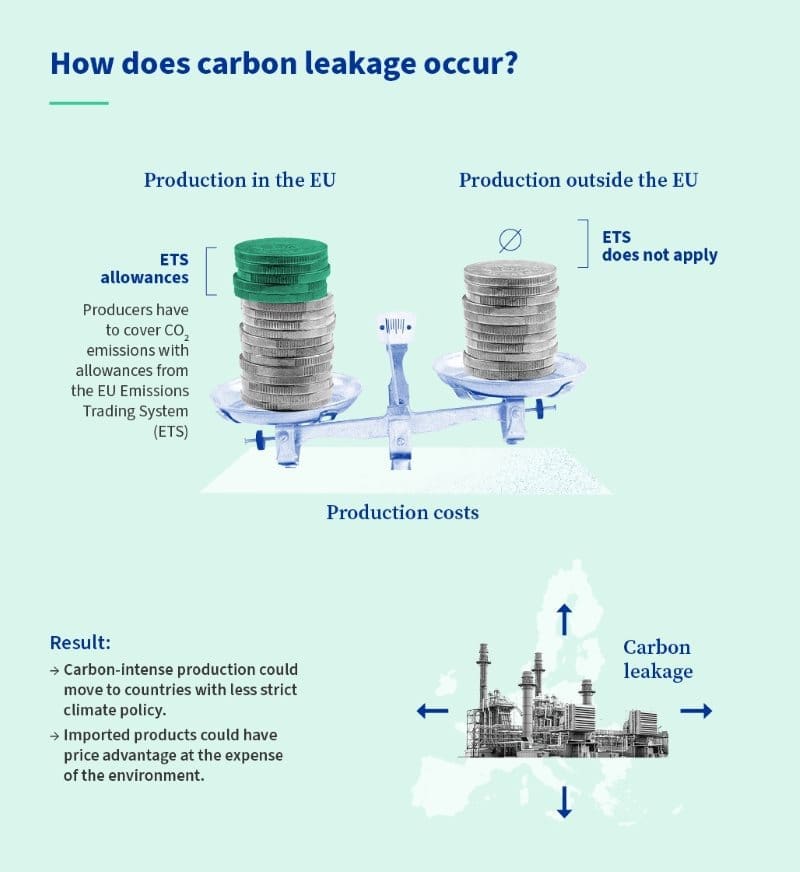
The goal is to make foreign companies pay the same as EU producers are already doing under the bloc’s internal emissions trading system.
Importers — often large trading firms — must declare the CO₂ emissions embedded in the production of goods abroad. If they exceed EU standards, firms are required to purchase emission certificates at the EU carbon price.
“The aim is to prevent carbon leakage,” Pierre Leturcq, a policy expert at the Institute for European Environmental Policy, told AFP. In other words: to stop companies relocating production to countries with weaker climate rules.
With EU carbon prices currently hovering between 70 and 80 euros per tonne — and expected to exceed 100 euros by 2030 — the cost implications are significant.
“That could nearly double the price of a tonne of steel,” Leturcq said.
Brussels is also considering expanding the mechanism to other sectors — a move that would be highly sensitive for the automotive and aerospace industries in particular.
Why are other countries upset?
The EU promotes CBAM as a “virtuous” tool that encourages greener practices worldwide. But some trading partners see it as a veiled form of protectionism.
“The instrument has been misunderstood or misinterpreted by these trade partners,” said Elisa Giannelli of the E3G environmental think tank.
“Nobody really took care of explaining to them what this is about.”
Among the scheme’s most vocal critics is US President Donald Trump, who has repeatedly slammed the EU’s climate agenda and demanded exemptions for US firms.
“What he really dislikes is having a worldview imposed on him,” said Leturcq. “His opposition to CBAM is part of a broader rejection of environmental policy altogether.”
Leturcq points to broader concerns from developing countries, however.
“There’s a real fear that the Global North will end up shifting the financial burden of emissions reductions onto the South — rather than shouldering it itself,” he said.
But EU lawmaker Pascal Canfin, who helped steer the legislation through the European Parliament, pushed back on that claim.
“CBAM mainly affects trade with industrialised countries — the US, Canada, China, Russia and Ukraine for fertilisers,” he said. “It’s a non-issue for developing nations.”
COP30 flashpoint?
Several countries including China, India and Bolivia are targeting the carbon border tax in their request to include “unilateral trade measures” on the agenda at COP30, which opens Monday in Brazil.
Leturcq warned the mechanism could distract from “more substantive talks” on climate finance and emissions mitigation — areas that require hundreds of billions of euros in investment.
While CBAM is expected to generate 1.4 billion euros ($1.2 billion) annually for the EU from 2028, he said its actual impact on global emissions will be “fairly modest.”
To ease tensions, some experts have suggested the EU earmark part of the revenue raised to support decarbonisation efforts in developing countries.
Beyond the EU, Britain is planning to roll out its own carbon border mechanism by 2027, and other countries may follow suit.
One of the US Congress’s most outspoken voices on climate change, Democratic Senator Sheldon Whitehouse, has called the EU’s approach with CBAM a “last lifeboat” to raise the global cost of pollution.
“If that persists, and if that expands with the UK, Australia, Canada, others adding to it, a pathway to climate safety begins to emerge,” he recently told reporters.
“Without that, it’s game over.”
adc/ec/del/rlp
© Agence France-Presse
Article Source:
Press Release/Material by Adrien de Calan | AFP
Featured image credit: fabrikasimf | Freepik