The Bolivian Altiplano, part of the Andean plateau, stretches across one of the highest inhabited regions on the planet, and its colours and sharp landforms immediately stand out in this Copernicus Sentinel view. The false-colour rendering brings out the rugged details of the terrain, where deep canyons cut through arid ground and long ridgelines trace the slow work of erosion. Shades of brown, red, and ochre reveal layers of sediment shaped over millennia by shifting winds and intermittent water flow.
Across the plateau, riverbeds and dry channels run in pale threads, marking pathways carved by seasonal runoff. These faint lines break up the broad surfaces of bare soil and weathered rock, helping to show how water once moved across the landscape and how it continues to influence the region’s form. Variations in tone also point to changes in elevation and soil composition, offering a clear sense of how the Altiplano’s surfaces differ from one valley to the next.
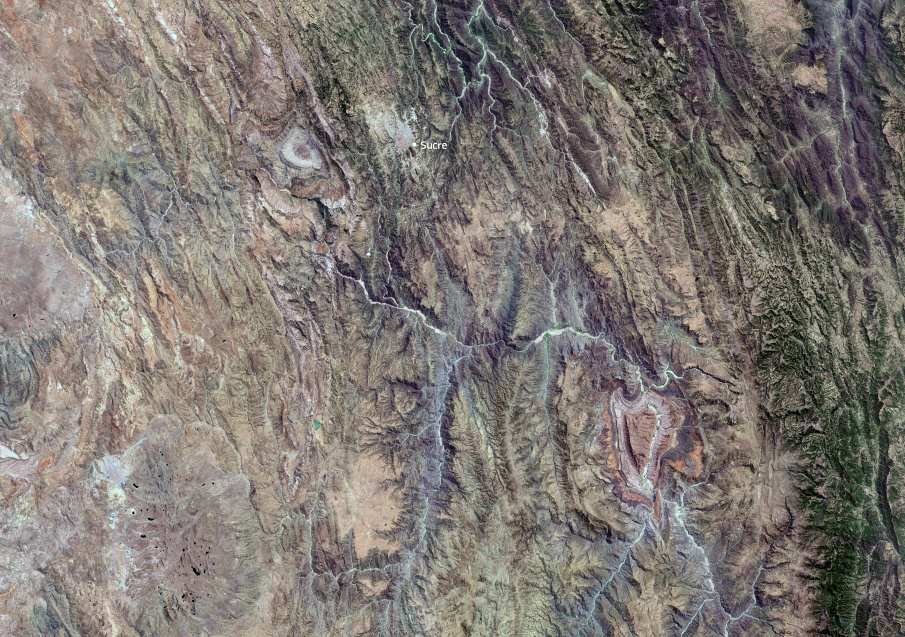
This false-colour image, acquired on 1 January 2025 by one of the Copernicus Sentinel-2 satellites, presents the topography with striking clarity and helps reveal features that are less perceptible in natural colour views.
The data collected by the Copernicus Sentinel-2 mission support monitoring across natural environments with dense vegetation or exposed ground, providing regular observations useful for tracking ecosystem conditions and understanding how dry landscapes evolve. For regions like the Altiplano, these measurements assist scientists studying erosion patterns, soil distribution, and the effects of climate variability on high-altitude terrain.
Seen from orbit, the plateau’s broad expanses and sharply defined valleys form a distinctive pattern that reflects both the stability and the ongoing change of this elevated landscape – an environment shaped by time, weather, and the thin air of the Andes.
Featured image credit: European Union, Copernicus Sentinel-2 imagery