Summary:
Rising carbon dioxide levels have long been expected to boost tree growth by enhancing photosynthesis, yet real-world observations show a far more uneven response. Across forests worldwide, some trees grow faster as atmospheric CO₂ increases, while others show little change or even reduced growth. New research published in Nature Climate Change offers a mechanistic explanation for this long-standing puzzle by focusing on how trees regulate water and carbon exchange through tiny pores in their leaves.
Using an optimisation framework grounded in plant hydraulics, researchers from Duke University and Wuhan University examined how increases in intrinsic water-use efficiency relate to actual gains in tree productivity. Their model shows that while higher CO₂ generally allows trees to assimilate carbon more efficiently, this does not translate directly into proportional growth. Environmental constraints such as rising atmospheric dryness, along with physiological limits linked to tree height and water transport, restrict how much extra carbon can be converted into biomass. The findings help reconcile conflicting results from long-term forest experiments and tree-ring records, refining expectations of how forests respond to a carbon-enriched atmosphere.
Leaves’ pores explain longstanding mystery of uneven tree growth in a carbon-enriched world
The basics of photosynthesis are something that every student learns in school: carbon dioxide, water and light in; oxygen and sugar for growth out. In a world where atmospheric carbon dioxide levels are rising, it is plausible to think that trees and other plant life growth will rise in lockstep.
But that is not what observations have borne out. As global levels of carbon dioxide have risen, measurements of tree growth – and how much carbon they are storing for the long-term – have varied greatly. How much of that variance can be attributed to carbon dioxide levels has long been unknown.
In a paper published in the journal Nature Climate Change, researchers led by Duke University and Wuhan University describe a model that answers many of these questions. By looking at the tradeoffs between taking in more carbon dioxide to grow and losing water to evaporation, they show how an engineer’s view of this delicate balance in the pores of a tree’s leaves can explain and predict its growth over decades and centuries.
“There used to be a common assumption that higher levels of carbon dioxide will cause trees to grow more and store more carbon,” said Gaby Katul, the George Pearsall Distinguished Professor of Civil and Environmental Engineering at Duke. “But benchmark experiments showed that while this may be true in isolation, other environmental factors also play a large role. We have now uncovered some of the underlying mechanisms at work.”
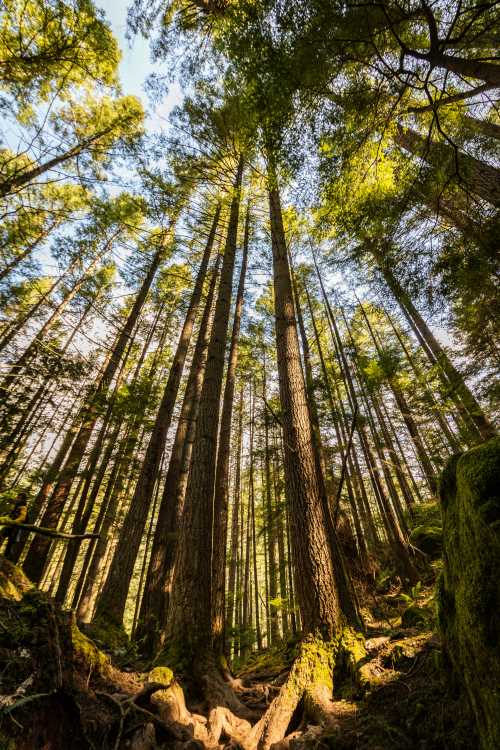
The benchmark experiments Katul is referring to took place at Duke University and ETH Zurich to investigate how much carbon the world’s forests might capture in a future carbon-rich atmosphere. Over the course of 16 years, the Duke site fed groups of trees excess carbon dioxide while the ETH Zurich site increased their local humidity levels. By closely measuring tree growth and carbon sequestration, and monitoring many other variables, researchers showed that trees in general would not take in nearly as much carbon as previously conjectured.
But the reasons why were still not fully understood. To help explain these results, and dozens of others from around the world, Katul and his collaborators turned to an engineer’s view of water movement in a tree.
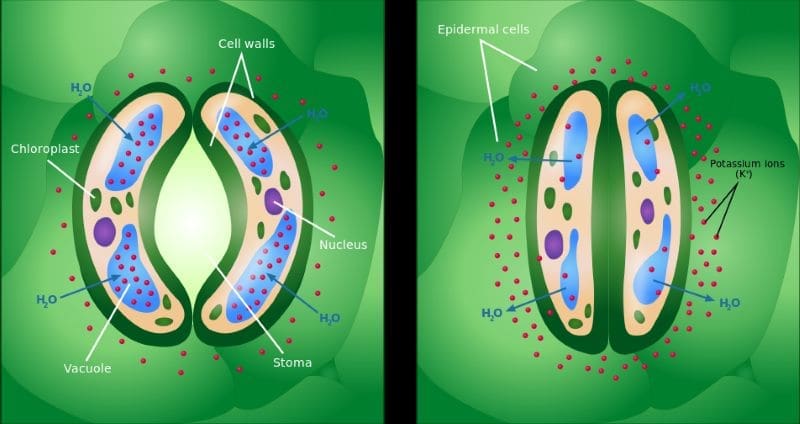
For a tree to take in carbon dioxide, it must open pores on its leaves called stomata. With more carbon dioxide in the atmosphere, the working assumption has been that proportionally more carbon dioxide would enter these pores.
However, in warmer and drier environments, water evaporates from these pores into the atmosphere more quickly. To keep their internal water systems balanced, trees compensate by making their stomatal pores smaller, which in turn leads to them absorbing less carbon dioxide.
This dynamic causes a direct tradeoff between gathering more carbon dioxide to grow and losing water needed to survive. And to complicate matters further, there is a delicate balance of water tension held throughout a tree’s roots, trunk and limbs that risks disruption if too much water is lost too quickly, especially as trees reach their mature heights.
“Stomata are like valves that control how much water is drawn up into the leaves and released into the air,” said Katul.
Looking at the interplay between stomatal opening, carbon levels and water loss as an optimization problem is a new approach to complement physiological theories, Katul explained. But it has proven accurate in describing results from the benchmark experiments at Duke and ETH Zurich.
During those studies, researchers captured incredibly rich data about stomatal activity. By encapsulating individual leaves and tightly controlling and monitoring variables such as temperature, humidity, carbon dioxide, stomatal size and more, the long-term experiments gave Katul’s team all the ammunition they needed to build their model.
Once finished, the researchers then used their approach to analyze dozens of reports of tropical tree growth that showed large amounts of variability. Despite levels of carbon dioxide rising in the atmosphere for the past half-century, some studies found increases, some found no change at all and some even found decreases. Using their new model, the researchers were able to finally offer an accurate explanation as to why.
There are, of course, plenty of other mitigating factors that can be added to the new model to increase its accuracy. Soil nutrients, water availability, surrounding plant and animal life, and changing seasonal patterns all come to mind. And while this model can describe behavior on a tree-by-tree basis, work must be done to incorporate these findings into large-scale regional climate models.
“There is a lot of value in looking at these environmental and biological questions from an engineering perspective,” Katul said. “Figuring out how best to ameliorate climate change using nature-based green technology in the decades to come is going to take contributions from many disciplines.”
***
This work was supported by the National Natural Science Foundation of China (42371035), the European Research Council (242955), and the EC projects ISONET EVK2-CT-2002-00147 and Millennium FP6-2004-GLOBAL-017008-2.
Journal Reference:
Zhang, Q., Zhang, J., Adams, M.A. et al., ‘Increased efficiency of water use does not stimulate tree productivity’, Nature Climate Change (2025). DOI: 10.1038/s41558-025-02504-w
Article Source:
Press Release/Material by Ken Kingery | Duke University
Featured image credit: wirestock | Freepik