Paris, France | AFP | Muser NewsDesk
Think of the destruction of Earth’s rainforests and a familiar image may come to mind: fires or chainsaws tearing through enormous swathes of the Amazon, releasing masses of planet-warming carbon dioxide.
But new research suggests that deforestation on a much smaller scale is just as damaging for the climate, greatly reducing the capacity of tropical rainforests absorb carbon from the atmosphere.
These quieter, smaller acts of forest destruction “are responsible for most of the carbon losses observed over the past 30 years” in the world’s tropical rainforests, said French scientist Philippe Ciais.
In a new study, Ciais and other researchers found that clearances of less than two hectares represented a tiny fraction of tropical deforestation but accounted for 56 percent of carbon losses from these vital sinks.
These findings highlighted the “disproportionate” climate impact of small-scale tropical deforestation and called for a policy rethink, said the study published in the journal Nature on Wednesday.
This underscored the importance of addressing deforestation at a local level where the scourge can fly beneath the radar, overshadowed by larger and more spectacular destruction in better known hotspots like the Amazon.
Tropical rainforests contain half of the carbon stored in the world’s trees, playing an essential role in locking away heat-trapping carbon from the atmosphere caused primarily by humanity’s burning of fossil fuels.
But they are the most threatened by deforestation or partial degradation by fires or to make way for agriculture, logging, or mining.
According to its latest annual report, the Global Forest Watch observatory estimates that the equivalent of 18 football fields per minute of tropical rainforest were destroyed in 2024.
Roads and villages
The international team of researchers behind the Nature study relied on data from satellite observations to examine deforestation in tropical zones since 1990.
Their method builds on previous research by factoring tree regrowth into the equation. This occurs in instances where trees are allowed to regenerate after deforestation, representing a carbon gain.
While a major fire could reduce vast stretches of forest to ashes, the carbon impact is offset over the longer term as lush vegetation grows back.
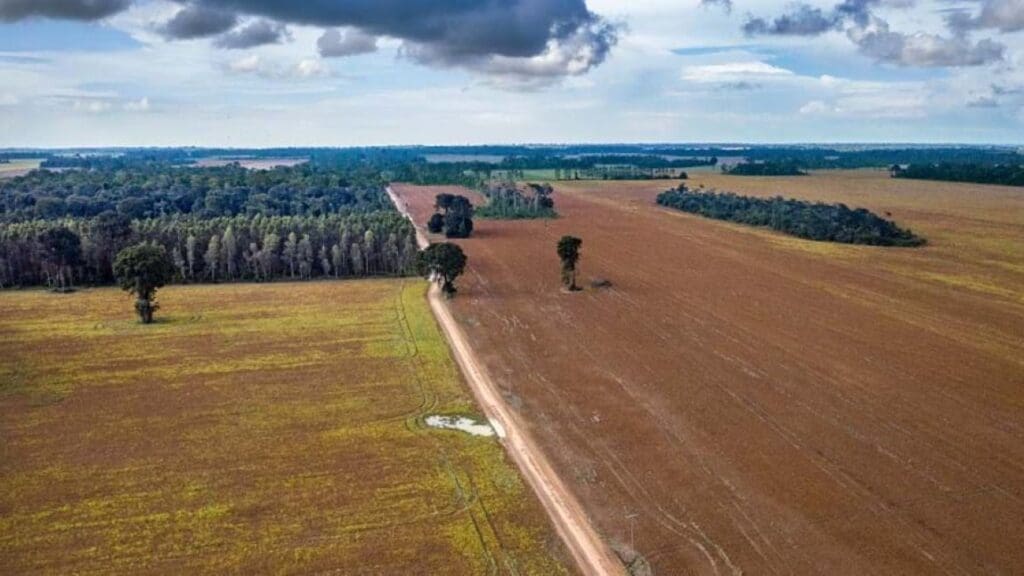
Conversely, small-scale deforestation often represents a permanent change as the cleared land is turned into farms, roads and villages.
This has particularly been the case in the Amazon but is primarily now concentrated in forest-rich developing nations in Southeast Asia and Africa, the study said.
It concluded that these areas have lost more carbon than they have absorbed over the past thirty years.
On the other hand, tropical dry forests located on the periphery of these more-humid regions have achieved a neutral carbon balance as they have benefited in part from post-fire regeneration.
This stressed the importance of allowing forests to regrow after destruction and showed that carbon losses were not “inexorable,” said Ciais, a researcher at France’s Laboratory for Climate and Environmental Sciences (LSCE).
“If we were able to act to significantly reduce activities related to degradation and deforestation, forests could regenerate very quickly and thus shift from a source to a sink” of carbon, Ciais told journalists.
For many underdeveloped nations, it is simply more profitable to clear forests than protect them, and breaking that perverse economic model has proved difficult.
This issue was spotlighted at November’s UN climate summit in Brazil, where the hosts launched an investment fund aimed at financially rewarding developing countries that keep their tropical forests intact.
Policies to combat deforestation should take into account the reality for farmers on the ground and seek to provide additional sources of income so deforestation is not necessary, Ciais said.
jmi/np/jxb
© Agence France-Presse
Journal Reference:
Xu, Y., Ciais, P., Santoro, M. et al., ‘Small persistent humid forest clearings drive tropical forest biomass losses’, Nature 649, 375–380 (2026). DOI: 10.1038/s41586-025-09870-7
Article Source:
Press Release/Material by Julien Mivielle | AFP
Featured image credit: Gabriel Ramos | Unsplash