Across the plains of central Spain, renewable energy infrastructure has become part of everyday rural life. As the International Day of Clean Energy is observed on 26 January, the landscape of Cuenca offers a tangible example of how the transition to low-carbon power is unfolding far beyond city centres and industrial zones.
The International Day of Clean Energy was established by the United Nations to draw attention to the role of clean and affordable energy in addressing climate change, reducing air pollution, and supporting sustainable development. The observance reflects a growing recognition that energy systems sit at the core of economic stability, public health, and climate policy, particularly as global electricity demand continues to rise.
Within the European Union, renewable energy is already reshaping electricity production. According to the European State of the Climate 2024 report, renewable sources generated 45% of the EU’s total electricity in 2024. Wind power accounted for 18%, making it one of the largest single contributors and a key element of efforts to cut emissions and strengthen energy security.
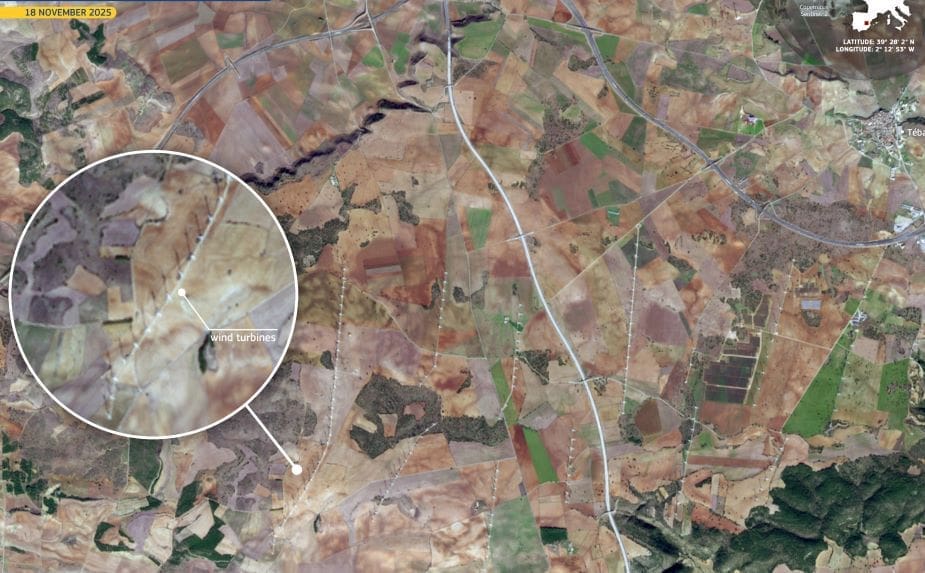
Acquired on 18 November 2025 by one of the Copernicus Sentinel-2 satellites, the image shows a cluster of turbines southwest of the town of Tébar in the province of Cuenca. They are distributed across cultivated fields, with infrastructure aligned to existing land use. The arrangement illustrates how large-scale energy projects can be integrated into working agricultural landscapes without displacing farming activity.
Spain has expanded its renewable capacity steadily over the past two decades, with interior regions such as Castilla-La Mancha playing a central role. Projects in areas like Cuenca support national electricity supply while bringing investment and long-term economic activity to rural communities.
Earth observation data help document and analyse this transformation. Through initiatives such as the Copernicus Energy Hub, satellite-based datasets and services support the energy sector by providing insight into infrastructure development, land use patterns, and environmental conditions linked to Europe’s clean energy transition.
Featured image credit: European Union, Copernicus Sentinel-2 imagery