Cyprus drought conditions in February 2026 have left the island’s dams at their lowest inflow levels since records began in 1901. National authorities report that overall water reserves dropped to just 13.7 % of total capacity during the month, reflecting the cumulative impact of several dry years.
Rainfall between 13 and 15 February brought measurable precipitation and short-term inflows, but the improvement was limited. Reservoir levels across the island remained in the low teens as a percentage of capacity, and officials continued to warn that winter rains had not reversed the deficit. Drinking water supplies have been prioritised, while desalination output is being expanded to stabilise supply ahead of the summer season.
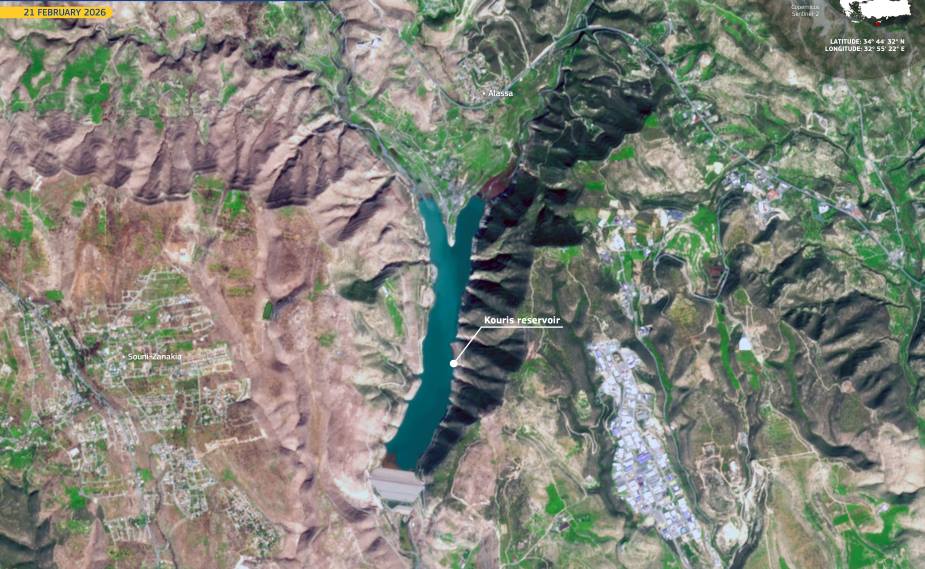
Located in the south of the island, the Kouris reservoir supplies freshwater to households and irrigated farmland. However, the reservoir has recently recorded a significant decline in stored water levels. This image, acquired on 21 February 2026 by one of the Copernicus Sentinel-2 satellites, shows the reduced water extent in the reservoir.
Kouris is the largest reservoir in Cyprus and is often used as an indicator of national water availability. The exposed banks visible in the satellite image show how far the shoreline has retreated compared with typical winter conditions. Reduced storage affects irrigation allocations in surrounding agricultural areas and increases reliance on alternative sources, including desalination and groundwater.
Copernicus satellite data provide consistent monitoring of reservoir levels, offering authorities an evidence base for water management and drought response planning at a time of sustained hydrological stress.
Featured image credit: European Union, Copernicus Sentinel-2 imagery