Copenhagen, Denmark | AFP
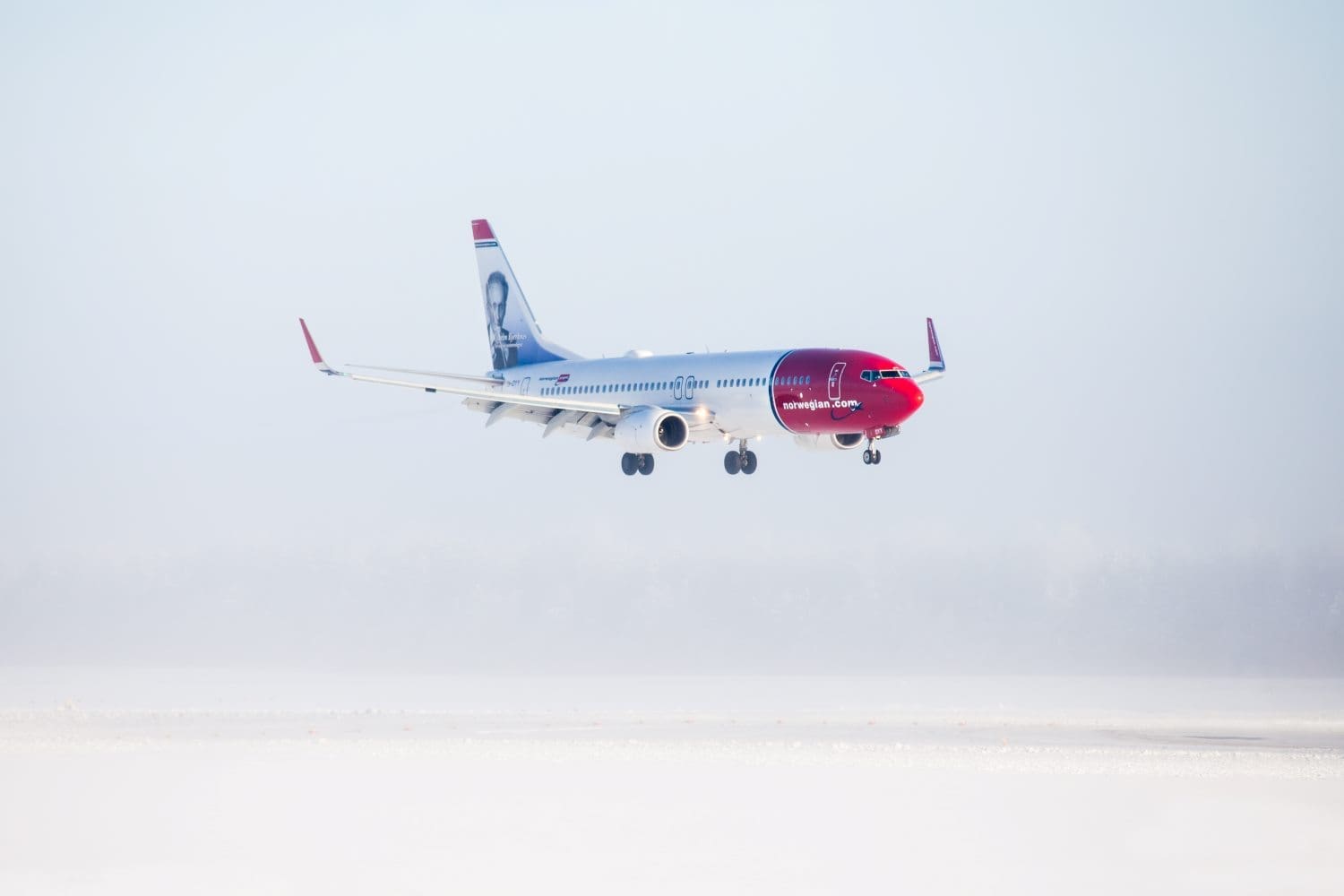
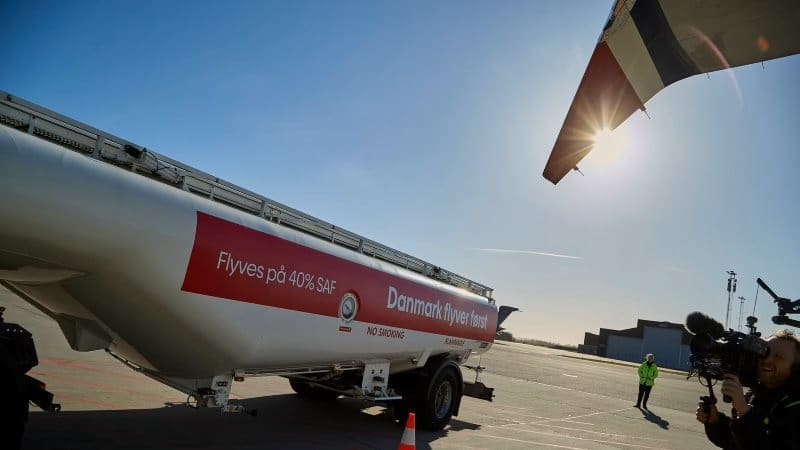
Denmark on Wednesday inaugurated its first domestic aviation route powered 40-percent by sustainable aviation fuel (SAF), an alternative expected to cut CO₂ emissions on the route by 3,000 tonnes a year, the airline said.
A flight from low-cost carrier Norwegian Air Shuttle took off from Aalborg in northwestern Denmark at 3:29 pm (14:29 GMT) headed for Copenhagen, using 40-percent SAF made from used cooking oil.
The carrier estimated that SAF will reduce its CO₂ emissions by 3,000 tonnes a year.
“This is obviously a step in the right direction,” said Alexander Bjorn Hansen, transport expert at the non-governmental organisation Council for the Green Transition, noting that few carriers offer routes partially powered by SAF.
In Europe, Ryanair announced in spring 2023 that it would operate a third of its flights departing from Amsterdam with sustainable aviation fuel.
“It’s important to us that we take part in the transition supported by the Danish government,” Norwegian chief executive Geir Karlsen told AFP.
“The infrastructure is there in Aalborg and the way the Danish government is helping out is a good incentive.”
The Aalborg–Copenhagen route was introduced as part of the Danish government’s green aviation plan, for which it has allocated 800 million kroner ($125 million) between 2025 and 2029.
In December 2023, the Scandinavian country, which prides itself on its strong environmental track record, introduced an eco-tax on plane tickets that will average around $16 by 2030.
The measure is intended to fund investments in its domestic aviation sector’s green transition, including the Aalborg–Copenhagen route, among other things.
“We would like all the revenue from this tax to be dedicated to aviation and to also help finance non-fossil fuels,” Hansen said.
He said it was important to diversify sustainable aviation fuels — which are between two and five times more costly than conventional fuel, depending on the product — and increase investment and political commitment.
SAFs are currently derived from used oil or biomass.
But for the future, the sector is banking on synthetic fuels made from “green” hydrogen produced with renewable electricity, and on carbon capture.
The aviation sector is responsible for up to three percent of global CO₂ emissions, and SAFs are seen as its main way of meeting its goal of net-zero emissions by 2050.
The mandatory share of SAF in aviation fuel is two percent, while current engines are certified for up to 50 percent.
cbw/po/phz
© Agence France-Presse
Article Source:
Press Release/Material by AFP
Featured image: Photo credit: Jørgen Syversen | Source: © Norwegian Air Shuttle ASA