Summary:
A global analysis of mangrove conservation suggests that relatively small changes in how protected areas are planned could significantly improve the resilience of these coastal ecosystems to climate change. The study, published in Nature Communications, indicates that expanding protected mangrove areas by just 7.3 % – while prioritising locations less exposed to future climate impacts – could increase the climate resilience of global mangrove networks by 13.3 %.
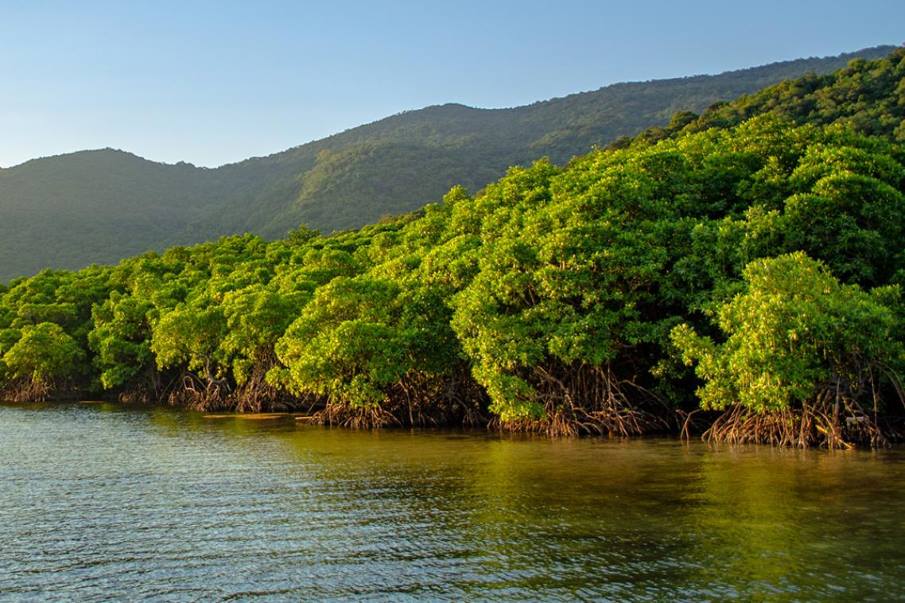
Mangrove forests play a central role in coastal protection, acting as natural barriers against storms and erosion while providing nursery habitat for fish and storing large amounts of carbon. Yet they face growing pressure from sea level rise, coastal development and other human activities. Although about 43 % of the world’s mangroves already lie within protected areas, the research shows many of these sites are not located where mangroves are most likely to persist under future climate conditions.
Led by University of Queensland PhD candidate Alvise Dabalà, the study combined global maps of mangrove species distribution with models estimating the probability of mangrove loss under future climate scenarios. The results suggest that climate-aware conservation planning – particularly when coordinated across national borders – could strengthen protection of mangrove ecosystems without requiring large increases in protected land.
— Press Release —
Small step to yield a big coastal protection win
University of Queensland PhD candidate Alvise Dabalà led analysis which showed safeguarding the coastal ecosystem didn’t require huge expansions in protected areas, just smarter planning.
“Mangrove forests are vital fish nurseries and carbon sinks that also shield coastlines from storms and erosion, but they’re vulnerable to rising sea levels and development,” Mr Dabalà said.
“While 43 per cent of the world’s mangroves are in protected areas, these are not always in the best locations when climate change is considered.
“By preferentially targeting places where there is less impact of climate change, our analysis found just a 7.3 per cent increase in protected areas can make mangrove networks 13.3 per cent more resilient.
“In practical terms, a small increase protecting where mangroves have the best chance of surviving in the future and not just where they exist today will pay dividends.”
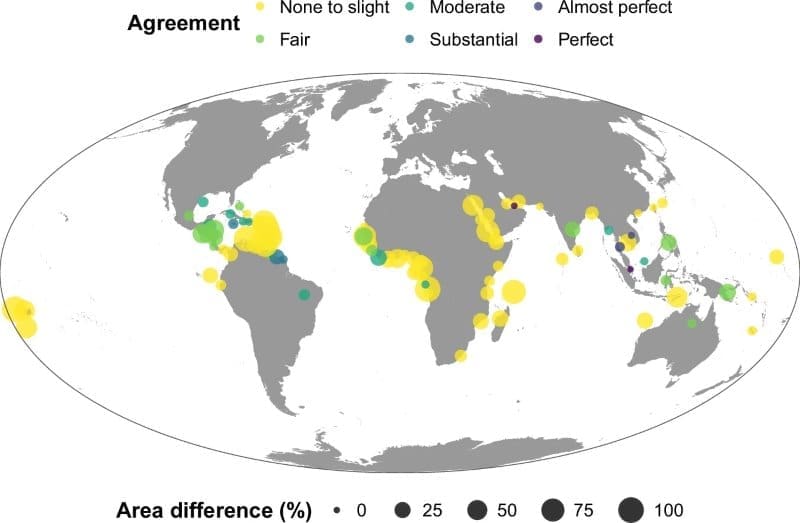
The study led by UQ’s School of the Environment combined maps of mangrove species and distribution with a model that predicts the probability of mangrove loss under future climate change.
It then compared a standard conservation plan with a climate-smart plan that prioritised the most resilient areas.
“Our research shows climate-smart conservation is achievable and affordable,” Mr Dabalà said.
“It also reveals a need for tailored strategies for the landward and seaward edges of mangrove forests, because they face different climate-related stressors.
“On the landward sides infrastructure like roads can block mangroves migrating inland as sea levels rise, so a strategy that allows room for movement would protect the ecosystem for the long term.
“International cooperation is crucial to success, because transboundary planning protects more resilient mangroves while using less total area than isolated national efforts.”
Co-author Professor Anthony Richardson said the study’s blueprint for mangroves could be applied to other ecosystems.
“Where there is data on distribution and climate resilience, this methodology can help future-proof other vulnerable ecosystems by focusing conservation and protection efforts,” Professor Richardson said.
Journal Reference:
Dabalà, A., Brown, C.J., Van der Stocken, T. et al., ‘Safeguarding climate-resilient mangroves requires only a moderate increase in the global protected area’, Nature Communications 17, 2063 (2026). DOI: 10.1038/s41467-026-68877-4
Article Source:
Press Release/Material by University of Queensland (UQ)
Featured image credit: Alvise Dabalà