Summary:
Extreme heat during the 2021 western North American heatwave caused widespread ecological disruption, killing large numbers of plants and animals while allowing a few heat-tolerant species to expand. A large synthesis published in Nature Ecology and Evolution shows that more than three-quarters of the species examined experienced negative effects, although responses varied widely across ecosystems.
The study combined meteorological records, ecological observations, hydrological data, wildfire statistics and process-based modelling to analyse the heat dome that struck the region from 25 June to 2 July 2021. Researchers examined 32 terrestrial and marine taxa and found outcomes ranging from severe declines to rapid population increases. Sessile marine invertebrates, algae and plants were among the most strongly affected, while birds and mammals often showed smaller or more variable changes.
In some coastal areas, more than half of barnacles died and around 92 % of bay mussels perished after being exposed to extreme temperatures. At the same time, species able to tolerate heat or exploit newly opened ecological space expanded. Sea lettuce, for example, increased its beach coverage after other seaweeds declined.
The heatwave also altered ecosystem processes. Carbon uptake by vegetation rose by about 30% in cooler, wetter areas but fell by up to 75% in warmer, drier landscapes, while wildfire activity surged sharply during and after the event.
— Press Release —
Extreme heat has extreme effects – but some like it hot
Mussels baked by the billions. Insect larvae cooked inside scorched cherries. Baby birds plummeted to their deaths from their overheating nests.
But some species did just fine during the 2021 North American heatwave, according to a new study published in Nature Ecology and Evolution. With such events projected to become more frequent and intense due to climate change – and 2026 on track to be the hottest year ever – understanding these differing effects is vitally important, the researchers say.
“The heatwave had widespread ecological effects, including an almost 400-per-cent increase in wildfire activity and negatively affecting more than three-quarters of the species studied,” said co-author Dr. Diane Srivastava, professor in the UBC department of zoology and Biodiversity Research Centre.
“With little forewarning, we relied on whatever studies were already under way or observations made during the event,” said first author Dr. Julia Baum, a biology professor at the University of Victoria. “Thus, despite the breadth of this study, I suspect we have barely scratched the surface of the heat dome’s ecological effects.”
Lots of losers, some winners
The 2021 event, which lasted from June 25 to July 2, was one of the most intense climate change-fueled heatwaves on record, with land temperatures reaching over 50 °C in some areas. The researchers used remote sensing, a meta-analysis of field data, computer modelling and media reports to paint a broad picture of its effects on plant and animal species, as well as ecosystems around B.C.
They found the effects on species were largely detrimental, but nuanced, changing depending on factors such as whether cover was available, a species’ inherent ability to deal with heat, and behaviour including the ability to move to shade or not.
More than half the thatched barnacle population died, as did 92 per cent of Bay mussels. Before the heatwave, one in every two blueberry plants had aphids on them. Afterwards, this dropped to less than one in every 100 plants.
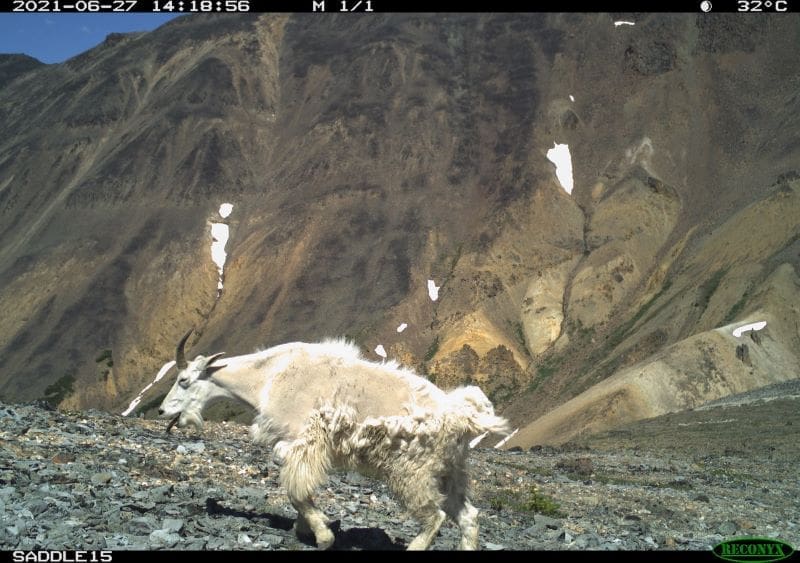
Counts of surf scoters, a native sea duck, dropped by 56 per cent post-heatwave, and daily camera trap detections of caribou dropped by half.
“Basically, any animal that couldn’t escape the heat was hard hit by it,” said co-author Dr. Baum. “This included mobile animals at vulnerable stages of life, such as baby birds that couldn’t yet fly and were trapped in their heat-retaining nests.”
Sea lettuce was among the winners. Better able to handle the heat than its seaweed counterparts, it took advantage of their die-off and proliferated, increasing its beach area by 65 per cent after the heatwave.
Moose bounced back to the same number of daily camera trap detections after the heatwave as before. “We know from previous studies that moose are sensitive to high temperatures, so it’s possible they were able to avoid the hottest areas by selecting cooler microclimates, such as sites with denser forest cover,” said co-author Dr. Cole Burton, an associate professor in the UBC faculty of forestry and environmental stewardship.
Blowing the hydrological budget
The researchers also found that cooler, wetter areas of the province were able to absorb 30 per cent more carbon than usual, while warmer, more arid areas absorbed 75 per cent less than usual. “This challenges the common assumption that heatwaves are uniformly harmful to vegetation,” said co-author Dr. Sean Michaletz, associate professor in the UBC department of botany.
Streamflow from snow and ice melt increased 40 per cent during the heatwave as the snowpack melted, before dropping below average later that summer, while wildfire activity surged 37 per cent during the heatwave and 395 per cent the following week.
“In August, when alpine systems were baking in the sun and really needed water, there was a deficit – everything had melted already by then,” said Dr. Srivastava.
She warned that repeated heatwaves would not only melt snow too quickly, but also start to draw on long-term sources such as glaciers, accelerating their melting.
Monitoring network
One solution could be a coordinated monitoring network of species and ecosystems across the province and Canada itself, said Dr. Srivastava. “We would be more prepared for the next time we have a heatwave to even better understand its effects and therefore, plan for the future.”
Journal Reference:
Baum, J.K., Slein, M.A., Garen, J.C. et al., ‘Widespread ecological responses and cascading effects of the 2021 western North American heatwave’, Nature Ecology & Evolution (2026). DOI: 10.1038/s41559-026-02987-6
Article Source:
Press Release/Material by University of British Columbia (UBC)
Featured image credit: Dgzb Belfor | Pixabay