Summary:
A new international research effort will assess how climate change is reshaping water resources in mountain regions worldwide, combining field observations, advanced modeling and artificial intelligence to produce the first global reanalysis at high resolution. The Institute of Science and Technology Austria (ISTA) will lead the MountAInWater project, supported by a USD 9.5 million grant from Schmidt Sciences under its Virtual Institute for Earth’s Water (VIEW) programme.
The project brings together partners from six countries to study glaciers, snow and permafrost across major mountain ranges, including the Andes, Himalaya and Canadian Rockies. Data collected at dedicated high-altitude “supersites” will be used to train physics-based and AI-driven models capable of simulating water flows and identifying critical tipping points in the cryosphere. These models will operate at a spatial resolution of up to one kilometre, enabling a level of global detail not previously achievable.
Researchers will also identify regions most at risk of water scarcity and work with local stakeholders to develop adaptation strategies. An interactive ‘Mountain Digital Twin’ platform will support decision-making by visualising future scenarios. The results are expected to inform long-term water management and improve understanding of global freshwater systems.
— Press Release —
Understanding mountain water – worldwide
Just before World Water Day, the Institute of Science and Technology Austria (ISTA) announces it will lead the new MountAInWater project, an ambitious endeavor funded by Schmidt Sciences with a grant of USD 9.5 million.
Scientists will carry out the first-ever global reanalysis of mountain water resources using high-resolution models, assessing the effects of climate change on these critical water supplies, and identifying potential tipping points in mountain environments. To achieve this, the team from six countries will make use of a unique combination of field work, physically-based modeling and AI – and also engage with affected regions and communities. Their results will be a crucial resource in managing future water security challenges.
Schmidt Sciences, founded by former Google CEO Eric Schmidt and philanthropist Wendy Schmidt, is a foundation supporting transformative environmental projects. Its Virtual Institute for Earth’s Water (VIEW) program backs innovative research on water systems, funding projects that can significantly advance understanding of water worldwide.
Ahead of the United Nations World Water Day on March 22, 2026, Schmidt Sciences announces it will fund four projects with an overall amount of USD 33 million. One of the winning projects in this highly competitive grant scheme is led by the Institute of Science and Technology Austria (ISTA) and implemented with partners from Canada, Germany, the Netherlands, Norway and Switzerland. Their MountAInWater project, one of only four selected out of 150 proposals, has been awarded USD 9.5 million, emphasizing its significant potential in global freshwater research.
MountAInWater: From local to global – and back to regional
The MountAInWater project brings several innovative and unprecedented elements to the study of mountain water resources.
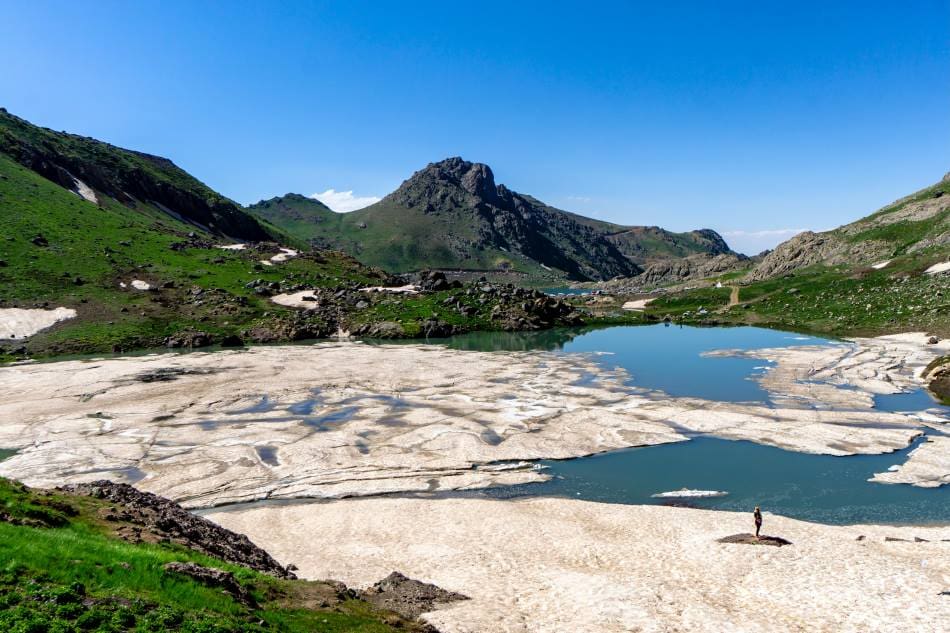
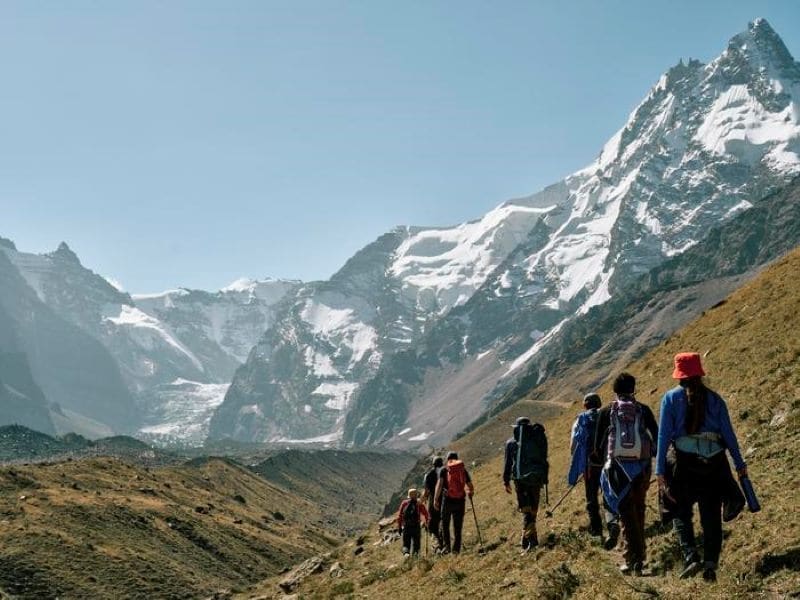
“We employ a multi-scale modeling approach, starting with ‘supersites’ in the Canadian Rockies, the Andes, the Pamir, and the Himalaya,” explains the project’s lead principal investigator, ISTA Professor Francesca Pellicciotti, noting that these high-altitude areas serve as important hubs for detailed fieldwork and modeling activities.
“This is where we’re really going on site, establishing four exceptional, high elevation observatories of mountain processes and collecting unique data. For this, we are building on our experience of earlier field trips to these regions,” the glaciologist adds.
The data collected at these local supersites will then be used to advance physical models to simulate tipping points in the cryosphere – i.e., in glaciers, snow, and permafrost – and water fluxes from mountain systems. These simulations at the supersites will train machine learning models, allowing the study to expand globally.
“With AI on board, we’re able to speed up the computational demands of advanced physics-based models and generate a reanalysis of mountain water resources worldwide,” says Adrià Fontrodona-Bach, scientific coordinator of MountAInWater and a postdoc in the Pellicciotti research group at ISTA. The models simulate the response of the cryosphere to climate and water fluxes across all major mountain ranges with spatial resolution as fine as one kilometer.
“Doing this on a global scale has not been possible before. Even with the best state-of-the-art numerical models, one had to decide between staying on a regional level or – when going global – using simpler models,” Fontrodona-Bach adds. This limitation will now be overcome by switching from purely numerical ‘classical’ models to a combination with AI-driven ones.
Across scales, the project addresses non-linearities and ‘tipping points’ in the cryosphere that have rarely been considered to date. By including these critical transitions in the simulations, the project aims to provide novel predictions of changes in global water availability.
Once the global reanalysis is complete, the project will zoom back in on what the researchers call regional hotspots of impact.
“These hotspots are where the data indicates significant changes or vulnerabilities in water availability – places already facing, or likely to face, water scarcity,” Pellicciotti notes.
Researchers will delve into the societal and ecological impacts of these changes and collaborate with local stakeholders to develop effective and sustainable water management strategies. They will also use ‘Mountain Digital Twin’, an interactive platform that helps communities visualize climate change impacts and explore adaptation options collaboratively. This enables local stakeholders to make informed decisions based on realistic scenario simulations.
“Interacting with, and giving back knowledge to, affected communities has always been extremely important in my work. I am therefore very glad that our newly funded project also puts such a strong emphasis on this aspect,” Pellicciotti adds.
The interdisciplinary, multi-faceted approach combines cutting-edge scientific models with collaborative stakeholder engagement, making MountAInWater a pioneering project in the field of hydrology and glaciology, creating novel data sets for climate science supportive of systemic change.
Three ISTA research groups add expertise in AI, hydrology & glaciology
Pellicciotti’s research group at ISTA leads the consortium of the MountAInWater project. Her team focuses on glacier fieldwork, and on developing and running the high-resolution land surface model that will simulate changes in snow, glaciers, permafrost and mountain water resources. Her group works on reconstructing water flows from mountain regions across the globe, with a resolution of one kilometer or less, which existing large-scale hydrological models struggle to achieve.
The team will tackle non-linearities and tipping points in the cryosphere – such as the transition from sublimation to melt, changes in the phase of precipitation, the non-linear feedbacks associated with glacier winds, and changes in evaporative fluxes across mountain land surfaces – to provide a new kind of assessment of how these systems respond to climate change.
“This work is crucial in understanding the changes and future availability of water resources from mountain regions, which are vital for downstream ecosystems and human communities,” underlines ISTA postdoc Catriona Fyffe, one of seven participating scientists from the Pellicciotti group.
Professor Francesco Locatello‘s group at ISTA on the other hand is advancing the use of artificial intelligence to enhance data analysis and model simulations, providing a crucial technical backbone for the MountAInWater project. Additionally, Professor Simone Fatichi, who will join the Institute this fall, will be focusing on the interactions between climate and mountain ecosystems,
International collaboration across six countries
Aside from ISTA, the project involves prestigious global partners, each contributing expertise across interdisciplinary, connected domains.
The project’s scientific coordinator, Fontrodona-Bach, highlights the collaborative spirit of MountAInWater: “By bringing together experts globally, we are uniquely positioned to address the complexities of water scarcity and develop strategies that cater to diverse environmental and societal needs.”
Utrecht University and the University of Saskatchewan will be working on understanding ecological impacts downstream of mountain water sources. ETH Zurich will deliver remote sensing and field data to support the project’s modeling efforts. The Technical University of Munich and the University of Lausanne will develop and apply the AI models for the global re-analysis. In addition, FutureWater and Wageningen University will focus on identifying water scarcity hotspots and simulating water resources allocation, while Climate Adaptation Services will be co-designing community-based adaptation and mitigation strategies.
Together, this consortium will map vulnerabilities and devise actionable strategies to manage the anticipated impacts of water stress on societies – from crop production to hydroelectricity, and ecosystems.
“MountAInWater is about providing very novel insights on the past, present and future of the water resources generated in the mountains, to provide actionable science at the service of society,” says Pellicciotti. “We strive to make sure that our research is at the forefront of innovation, and at the same time provides the scientific evidence for systemic change in addressing future water security challenges.”
Article Source:
Press Release/Material by Institute of Science and Technology Austria (ISTA)
Featured image credit: © Marin Kneib | ISTA