Explore the latest insights from top science journals in the Muser Press roundup (March 24, 2026), featuring impactful research on climate change challenges.
In brief:
— Press Release —
New paper outlines pathways to equitable flood adaptation
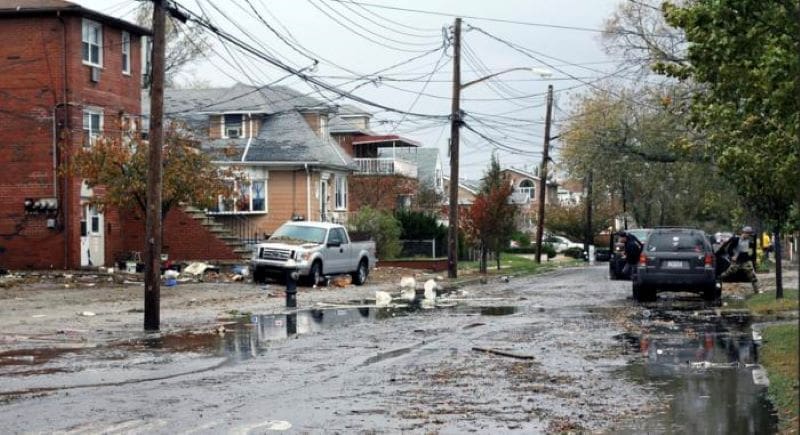
While parts of New York and New Jersey were “building back better” after Superstorm Sandy, residents of flood-prone public housing in Rockaway, Queens, were left without heat or running water for years.
A perspective published in Nature Water in February underscores how adaptation and mitigation measures to address urban flooding often exacerbate environmental injustices for society’s most vulnerable groups – not just in the US, but around the world. Led by Rebecca Hale of the Smithsonian Environmental Research Center and co-authored by urban ecologist Elizabeth Cook of Cary Institute of Ecosystem Studies, the piece offers strategies for governments, organizations, and individuals involved in climate adaptation to break the cycle.
“We have to be really intentional about how we address these challenges,” said Cook, “because otherwise we end up recreating and reinforcing the injustices that already exist. It’s really hard to break these cycles, but our paper includes case studies where some of this is already happening.”
Together with coauthors Krista Capps from the University of Georgia and Rachel Scarlett from Georgia State University, Hale and Cook lay out three main points:
- Urban water hazards are increasing due to climate change, and risks are higher for socially and economically disadvantaged groups.
A person’s risk of exposure to floods, water scarcity, or water contamination depends heavily on factors such as race, gender, migration status, and income. Socially and economically disadvantaged communities bear the brunt of these hazards.
The perspective identifies two reasons for this unequal distribution of risk.
First, these groups have higher exposure to climate hazards. Globally, people of color and people living in poverty are more likely to inhabit flood zones. These patterns are often linked to legacies of oppression, such as segregation and redlining. Infrastructure such as wastewater treatment plants and combined sewers are also disproportionately sited in Black communities, exposing residents to untreated wastewater – as was the case in Mobile, Alabama, Baton Rouge, Louisiana, and Jackson, Mississippi, to name a few US examples.
Second, with fewer resources and less power, people in these groups are more vulnerable to climate threats and have a lower capacity to bounce back. Within the US, cities that are whiter and wealthier have more capacity to participate in federal programs and raise funds to pay for flood protection.
Among the less affluent, costs of recovery fall on vulnerable individuals and households, who are less likely to have flood insurance or be able to secure a loan to rebuild after a flood. In particular, women in informal settlements – communities where residents lack land rights and have little or no access to safe housing, sanitation, clean water, waste disposal, or electricity – may not have savings to fall back on or access to credit to recover their microbusinesses after a disaster.
- Many adaptation measures to address flooding exacerbate environmental injustices.
When planners don’t consider the uneven exposures and vulnerabilities created by historical oppression, said lead author Hale, climate adaptation measures can worsen disparities.
St. Louis, Missouri, for example, has historically had different types of water infrastructure between the predominantly white side of the city and the predominantly Black side. These systems flow into two different rivers, with different water quality regulations. So, in 2011, when the city decided to address the problem of combined sewer overflows, which dump sewage into neighborhoods and waterways, it took two different approaches. The more privileged side received new pipes, storage tanks, and systems that separate storm water from sewage. The poorer part of the city, with more communities of color, received rain gardens to absorb water, and the burden of maintaining these gardens fell on these less privileged communities, even though they already had fewer resources.
“In part, it made sense,” said Hale, “because that area had more vacant lots and less stringent water regulations. But it illustrates how patterns such as housing segregation can have cascading impacts on adaptation and how we make the next decisions. These decisions are often made by people who want to do the right thing, but there’s a lack of awareness of the history, the complications, and the dynamics, and a lot of scientists and engineers just aren’t trained at that.”
Increasingly, profit-driven and market-based tools are used to support climate mitigation and adaptation, but these tools may also exclude vulnerable populations. For example, some programs offer financial incentives for people to install green infrastructure, but because these programs require property ownership, it limits the ability of low-income households to participate and benefit.
“With any of these private market financing tools, you have to have a return on your investment,” said Hale. “And that tends to incentivize investment in places that have higher economic value.”
In some cases, climate adaptation in wealthier communities can even make conditions worse for vulnerable communities – such as when flood protections in one area redirect floodwaters to lower-income communities.
Even when climate adaptations are focused on more vulnerable communities, they may increase the risk of gentrification, uprooting people of color and the working class. In cities across the US and Europe, urban greening for improved livability and climate adaptation is a leading cause of gentrification. In Medellín, Colombia, a large-scale greenbelt designed to restrict urban growth and enhance climate protection and biodiversity is displacing residents of informal settlements. Similarly, a nature-based flood control project in São Paulo, Brazil, has forced residents of informal floodplain settlements to relocate.
“Displacement breaks up communities,” said Hale, “and having a good community and social safety net matters a lot in terms of flood resilience and capacity to adapt to those problems. If you are displaced and you don’t know your neighbors, you’re not going to have people you can reach out to if you need help.”
- Equitable climate adaptation requires transformative strategies.
For climate adaptations that repair, rather than replicate, legacies of oppression, the authors suggest four interrelated approaches:
Centering racial justice. “Rather than focusing on narrow climate-centered outcomes,” they write, “prioritizing the everyday needs of marginalized communities (for example, healthcare, education, and livelihoods) is expected to increase adaptive capacity at both the household and community levels.” Two approaches for centering racial justice, discussed below, include co-production and the development of novel governance arrangements.
Co-production. Many adaptation plans lack effective or meaningful community involvement, concentrating decision-making power in the hands of a limited few. “But the ‘experts’ don’t always know what the problems are, and differences in vulnerability can really reshape how the biophysical environment is manifesting in social impacts,” said Hale. Co-production involves communities in the process of climate adaptation, giving them a voice in defining problems and goals, evaluating tradeoffs between potential solutions, and assessing success. This strategy requires changing the usual power dynamics and de-centering academic and technical experts.
Novel governance arrangements. Governance arrangements should enable public participation, improve transparency and accountability, and address power imbalances.
Adaptive and flexible management. Adaptive management incorporates opportunities to identify areas of success and room for improvement, to realign goals and strategies as demands and risks evolve. Ideally, the metrics used to evaluate adaptation programs are developed with or by communities to assess outcomes that are valued locally.
“These changes have to happen in tandem. While each is important individually to address legacies of oppression, together they will be more powerful to create system change and break the cycle of inequities,” said Cook.
Breaking cycles isn’t easy, but it is possible
If done right, climate adaptation provides opportunities to not only increase urban resilience to climate change but also to address historic injustices. Systemic change is never easy, but amplifying community voices, sharing power, and meaningful engagement can challenge these legacies, the authors write.
The paper includes several case studies that show that change is possible.
In the steep surroundings of Bogotá, Colombia, people living in informal settlements face high risk of flooding and landslides, and other hazards such as insufficient water, sewage, and electricity services. In the absence of government help, community-led coalitions such as Arraigo have stepped up to solve these challenges.
“Arraigo has been advocating for social justice and community-based resilience projects by designing their own nature-based solutions to manage environmental risk and to provide for themselves,” said Cook. “For example, they’ve developed terraces that reduce landslide risk and work as catchment basins for water and areas for planting food.”
A great example of co-production comes from Austin, Texas, with the Dove Springs Climate Navigator. This portal allows community members to share their flooding experiences with the City, creating a two-way flow of information. The program also trains and pays community members for their participation, and works together with the community to incorporate local knowledge into adaptation planning.
“I think this is a really great example of investing in community involvement from the ground up, in a way that’s not taking advantage of communities, but respecting their knowledge and their time,” said Hale.
In Atlanta, Georgia, in the 1990s, community activists challenged municipal plans to discharge raw wastewater during storms in a Black neighborhood. By getting involved in the decision-making process, community members convinced the city to abandon its original plans and instead build separate wastewater and stormwater management systems – a win for residents all over the city.
And that’s the goal of the new perspective. “When you’re doing a better job at climate adaptation,” said Hale, “hopefully it’s going to improve everybody’s lot in society.”
Journal Reference:
Hale, R.L., Capps, K., Cook, E.M. & Scarlett, R., ‘Transformative adaptation needed to break cycles of inequitable urban flood management’, Nature Water 4, 147–157 (2026). DOI: 10.1038/s44221-025-00569-7
Article Source:
Press Release/Material by Lori Quillen | Cary Institute of Ecosystem Studies
— Press Release —
Vertical gardens prove effective in improving indoor air quality
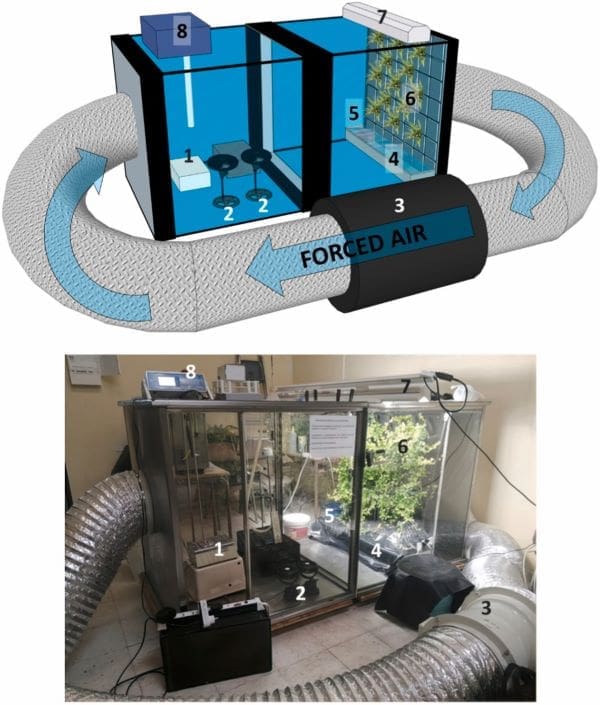
Researchers at the University of Seville have demonstrated the effectiveness of active vertical garden systems in improving indoor air quality in buildings. To do so, they worked inside a closed glass chamber installed at the Higher Technical School of Agricultural Engineering, where they found that after 24 hours, 96% to 98% of the pollutants used in the various experiments had disappeared.
Indoor air pollution has become a serious public health problem in many countries, and has a significant impact on people’s health. It causes sick building syndrome by affecting the comfort and productivity of workers and the learning of students occupying the building.
The main sources of indoor pollutants are paint solvents, perfumes and cosmetics, building materials, furniture, tobacco smoke, as well as indoor activities such as heating (fuel burning), cooking and cleaning products, while outdoor sources come from urban dust.
The team formed by Antonio J. Fernández Espinisa, Sabina Rossini Oliva, Luis Pérez Urrestarazu and Rafael Fernández-Cañero has studied the capacity of an active living wall (ALW) to remove pollutants from indoor air. They evaluated five different species (Spathiphyllum wallisii, Tradescantia zebrina, Philodendron scandens, Ficus pumila and Chlorophytum comosum) inside a closed glass chamber installed at the Higher Technical School of Agricultural Engineering.
Gaseous pollutants (NO₂ and SO₂) and volatile organic compounds (VOCs) (formaldehyde, acetone, n-hexane and n-heptane) were introduced into the chamber, monitoring changes in concentration and calculating the reduction. High values of the Pollutant Reduction indicator (PR%) were recorded after releasing pollutants into the chamber, especially for formaldehyde and sulphur dioxide.
After 24 hours, the percentage reduction in the chamber ranged from 96% to 98% for all plant species studied. Removal efficiency was highest for CH₂O and NO₂. In addition, differences in pollutant removal capacity were observed between plant species depending on the pollutant considered.
Fifteen minutes after the injection of total volatile organic compounds (TVOCs), a reduction of between 24% and 40% was achieved with all plant species. However, they highlight that S. wallisii showed a greater reduction capacity for NO₂, with a 60% reduction in the first hour of exposure.
Journal Reference:
Antonio José Fernández-Espinosa, José Manuel Montiel-de La Cruz, Rafael Fernández-Cañero, Luis Pérez-Urrestarazu, Sabina Rossini-Oliva, ‘Volatile organic compounds, SO₂ and NO₂ capture by means of an indoor active living wall’, Atmospheric Environment 371, 121856 (2026). DOI: 10.1016/j.atmosenv.2026.121856
Article Source:
Press Release/Material by María García Gordillo | University of Seville
— Press Release —
Beyond climate resilience: the science of thriving in a chaotic world
From deadly heatwaves to unprecedented flooding, devastating wildfires to record-breaking droughts, extreme weather is becoming the new normal.
As climate-fueled shocks multiply, some creatures in our oceans, forests, deserts and grasslands will manage to cope and bounce back. But new research from Michigan State University (MSU) asks: could some species and ecosystems not only survive shocks, but thrive because of them?
A study published March 20 in the journal American Naturalist backs up the idea. For the research, a team of MSU scientists – made up of Jonas Wickman, a postdoctoral fellow in ecology, evolution and behavior; and Christopher Klausmeier and Elena Litchman, both MSU Research Foundation Distinguished Professors – examined mathematical models of how living things respond to changing conditions.
Extreme weather is becoming more frequent and more intense as the world warms, previous studies show. In the last 20 years major floods have more than doubled and severe storms have increased by 40%.
For years, scientists interested in the impacts of such events have focused on resilience. But while resilience is critical – it helps ecosystems cope with and recover from stress – resilient things are at best unharmed. So Litchman and colleagues got to thinking: Could they identify things in nature that are actually strengthened by volatility?
If so, perhaps they could use that information to help ecosystems not just weather storms, heatwaves and droughts, but emerge stronger on the other side.
In one set of models, the team examined the impact of temperature swings on phytoplankton.
These tiny aquatic organisms drift around with the ocean currents and photosynthesize, using sunlight and CO₂ to produce their energy just like plants do on land.

It’s this ability to remove heat-trapping carbon dioxide from the air that makes phytoplankton important players in moderating global warming.
They are also the foundation of the marine food web, feeding small animals such as krill or jellyfish, which are in turn eaten by larger creatures like sharks and whales.
But when the researchers modeled how phytoplankton species fare under fluctuating temperatures, something remarkable happened.
As the annual swings between warm and cold intensified, the amount of biomass some phytoplankton species produced – a measure of their ability to function – declined. But collectively, the productivity of the community went up.
In other words, in the aggregate, phytoplankton species didn’t just withstand the temperature roller coaster, they harnessed the ups and downs and flourished.
In another set of mathematical models, the researchers looked at hypothetical species whose members varied in terms of how well suited they were for life in a certain environment. These species were able to adapt and outcompete more uniform species when conditions such as rainfall or temperature started to fluctuate. By hedging their bets, they outperformed other species in the face of whatever conditions might arise.
These unexpected responses are an example of a concept called “antifragility,” Litchman said. First coined in 2012 by a former trader and risk analyst named Nassim Nicholas Taleb, the term refers to things that gain from volatility rather than just withstanding it.
The concept has since been applied to fields ranging from finance to cancer to engineering.
Litchman says the phenomenon can be found elsewhere in nature too. Think about how some grasslands or woodlands grow back more lush or diverse after wildfires or grazing, she said.
“It’s a phenomenon that cuts across so many different contexts and disciplines,” Litchman said.
As a next step, Wickman, Klausmeier and Litchman are looking at how warming impacts phytoplankton’s ability to capture carbon dioxide from the atmosphere. Altogether, phytoplankton remove four times as much carbon dioxide as the Amazon rainforest. That amounts to nearly a third of our greenhouse gas emissions each year – emissions that would otherwise continue trapping heat and warming the planet. If this ability is even modestly antifragile, the team said, it could have large consequences for the pace of global warming.
The researchers cautioned against being too quick to declare a given species or ecosystem “antifragile.” As with many things, the devil is in the details, Wickman said.
In the case of phytoplankton, for example, he found that whether productivity is antifragile or not depends on what forces keeps their numbers in check. Their research also revealed that one measure of an organism’s performance might thrive amid chaos while another measure suffers.
But they say that by understanding the science of antifragility, researchers may be able to come up with ways to better restore or manage ecosystems in an uncertain world.
***
This research was supported by a grant from the U.S. National Science Foundation (EF-2124800).
Journal Reference:
Jonas Wickman, Christopher A. Klausmeier, and Elena Litchman, ‘Antifragility: a cross-cutting concept for understanding ecological responses to variability’, American Naturalist (2026). DOI: 10.1086/740143
Article Source:
Press Release/Material by Robin Smith | Michigan State University (MSU)
— Press Release —
Climate change may complicate avalanche risk across the Pacific Northwest
This winter was one of the warmest on record across the West; as a result, many snowy, alpine areas have seen bouts of winter rainfall where there would ordinarily only be snow. These unusual weather patterns have contributed to an abysmal ski season, but they can also set the stage for dangerous avalanches. At temperatures close to freezing, precipitation can fall as rain but freeze when it hits the snow, forming an icy crust. Snow that accumulates on top of that crust is unstable and prone to abrupt slides, causing an avalanche that can close down a major highway in moments, endanger backcountry skiers and more.
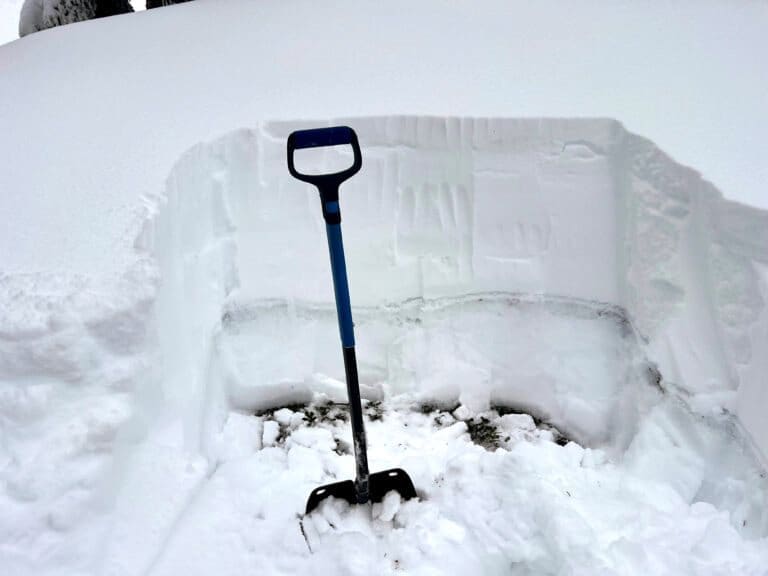
Avalanche experts in Western Washington know how to manage the risks associated with rain-on-snow events, but many of their counterparts in colder regions like Eastern Washington, Idaho and Montana are less familiar with these dynamics. New research from the University of Washington shows that as winters in these regions warm, their snowpacks may come to resemble those of maritime areas, with more rain-on-snow events, icy crusts and complex avalanche forecasting.
The findings were published in ARC Geophysical Research.
“This winter’s warmth is a harbinger,” said lead author Clinton Alden, a UW graduate student of civil and environmental engineering. “We know that temperatures will keep rising, and our work is a red flag for cooler regions of the greater Pacific Northwest, such as Idaho and Western Montana, that aren’t used to dealing with ice crusts and their resulting avalanche problems.”
The study is part of a larger effort to understand the structure of snow as it accumulates, which has implications for weather and avalanche forecasting, wildlife dynamics and more.
“Snow scientists are pretty good at measuring snow depth and volume,” said senior author Jessica Lundquist, a UW professor of civil and environmental engineering. “We’re also pretty good at figuring out how much water you get if all that snow melts. But our models aren’t as good at representing snow structure, such as layers of different densities and crystal types that increase avalanche risks. And we really want to know how the structure of snow changes as the climate changes. That’s a tricky question that no one has tackled, particularly for rain-on-snow conditions.”
To dig into that question, the researchers studied how warming influences ice layer formation in seasonal snowpacks. First, they collected temperature and precipitation data captured by 53 monitoring stations across the Pacific Northwest for the past 25 years. They used a computer model to identify days when ice layers likely formed at each location. They then checked the model against real-world measurements at one of the locations – a station at Snoqualmie Pass – and found that the model matched the measurements with 74% accuracy.
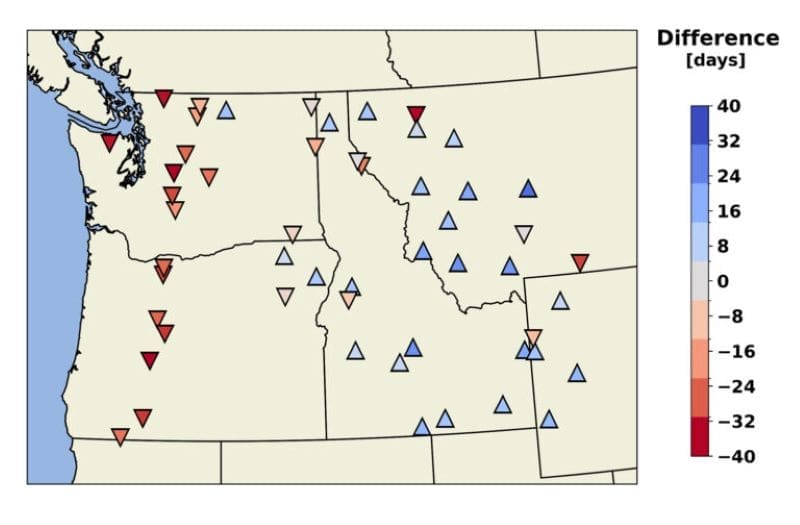
Finally, they used the same model to simulate those same 25 winters at 2 °C and 4 °C warmer than they were, and looked for changes to the number of ice crusts across the region. According to the UW Climate Impacts Group, the Pacific Northwest is expected to warm by 2 °C to 5 °C by 2050 as compared to pre-2000 temperatures.
The results were split regionally by the Cascade mountains. In colder, inland parts of the Pacific Northwest – places like Eastern Washington, Idaho and Montana – higher temperatures created more rain-on-snow days and more avalanche-prone ice layers. Locations in the warmer, maritime Cascades saw the opposite effect: Higher temperatures created slush instead of ice, potentially reducing the avalanche risk associated with ice crusts.
The predicted snowpack changes may also impact wildlife behavior. Some foraging mammals, such as reindeer, dig down into the snow in search of food and may have a hard time breaking through an icy crust. Conversely, firm ice might provide a better running surface for animals fleeing predators. Specific regional effects will require additional study.
What’s clear now is that those who work or play in avalanche terrain in broad swaths of the Pacific Northwest – and even beyond – may need to adjust to a new set of risk factors.
“I get calls from avalanche forecasters in places like Colorado, Wyoming and Montana. They tell me they’re getting rain at 10,000 feet, which they’ve never seen before,” said co-author John Stimberis, the avalanche forecaster supervisor at Washington State Department of Transportation at Snoqualmie Pass, who earned his master’s in transportation and highway engineering at the UW. “They want to know when to expect the onset of avalanches and when to expect the return to stability.”
Alden hopes that this research will encourage further collaboration within the avalanche forecasting community.
“I’d love to see this shared with avalanche forecasters widely, both as a call to action and as a way to help them understand what their snowpack might look like in the future,” Alden said.
***
Benjamin K. Sullender, the director of geospatial science at Audubon Alaska and former doctoral student of environmental and forest sciences at the UW, is a co-author.
This research was funded by the NASA Interdisciplinary Research in Earth Science program and the UW Program on Climate Change’s Graubard Fellowship.
Journal Reference:
Alden, C., Sullender, B., Stimberis, J. & Lundquist, J., ‘Higher Temperatures Lead to More Melt-Freeze Crusts in Snowpacks in Cooler Regions of the Pacific Northwest’, ARC Geophysical Research (2), 2 (2026). DOI: 10.5149/ARC-GR.2451
Article Source:
Press Release/Material by William Poor | University of Washington
Featured image credit: Freepik (AI Gen.)