Cyclone Narelle did not end with its landfall in far north Queensland on 20 March. After crossing Cape York Peninsula, the system weakened over land but continued west across northern Australia, reaching the Gulf of Carpentaria to the west, where it began to reorganise over very warm waters and regained structure.
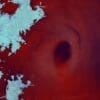
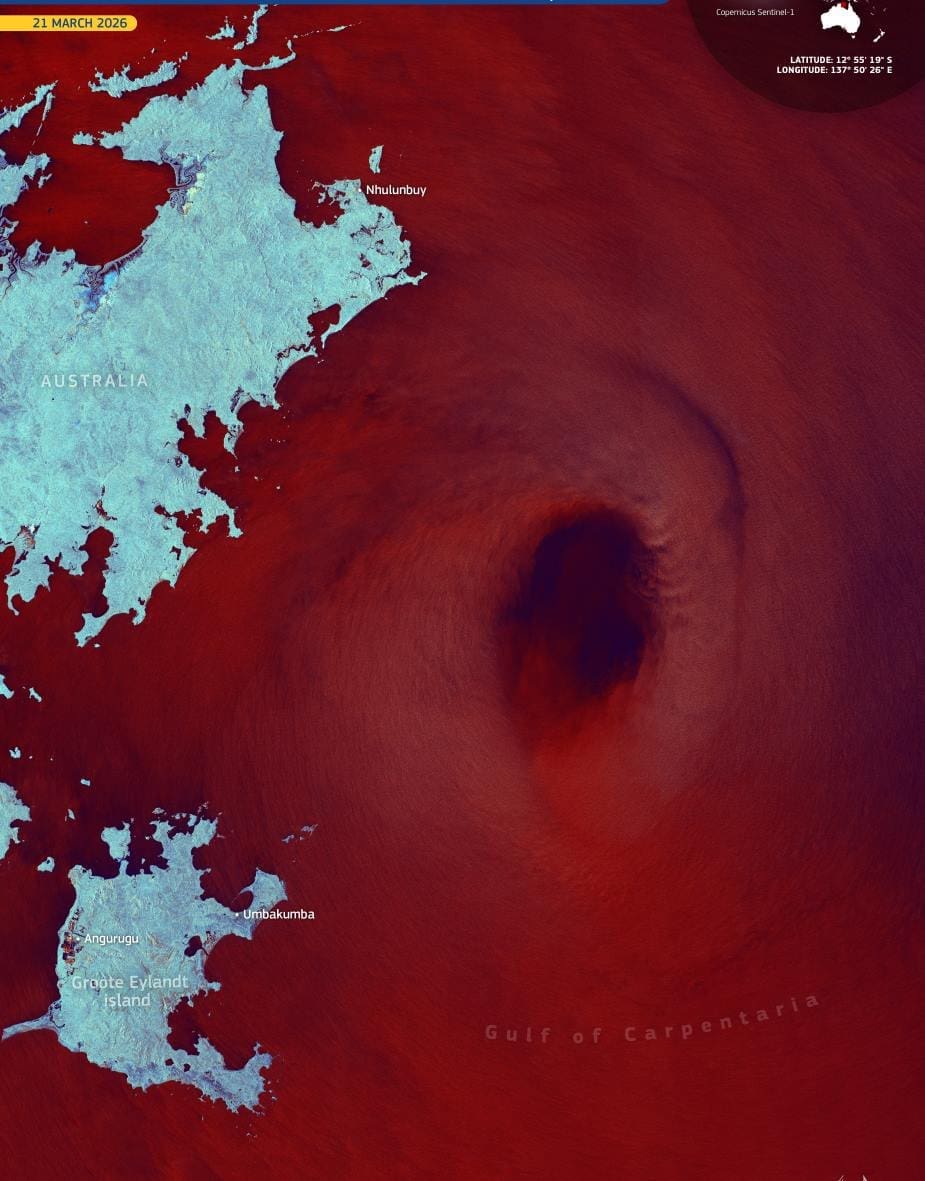
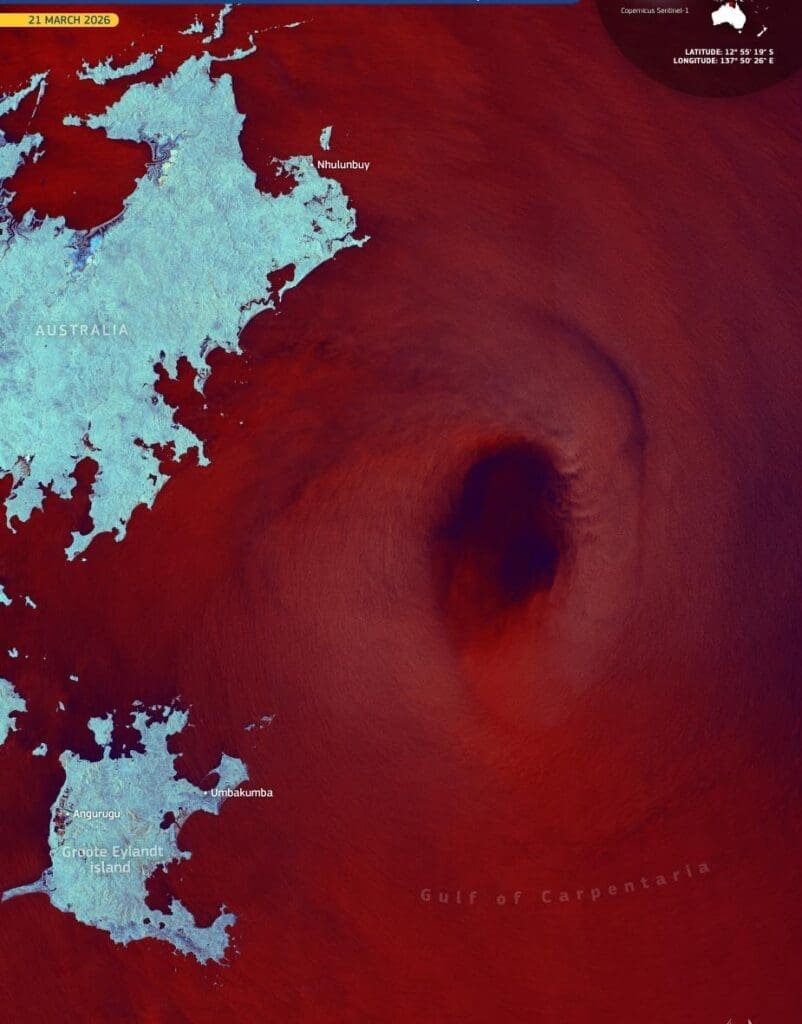
That transition is visible in this image, acquired on 21 March 2026 by the Copernicus Sentinel-1 mission. The radar view shows a defined eye over the Gulf, north of the Australian mainland, with the surrounding sea surface marked by wind-driven roughness.
By the afternoon of 21 March, Narelle reached the Northern Territory coast north of Numbulwar with sustained winds of 148 km/h, marking its second landfall as it continued its westward track.
After moving inland, the system weakened into a tropical low. Between 21 and 23 March, heavy rainfall triggered flooding across the Top End. Some areas recorded more than 200–230 mm of rain within 24 hours, while Darwin received around 60 mm. Rivers including the Adelaide, Katherine and Daly rose rapidly, inundating low-lying communities, cutting transport routes and prompting evacuations of about 500 people.
By 23 March, the system had moved further west into the Kimberley region of Western Australia, where severe weather continued. The circulation persisted and moved back over open water.
By 24 March, Narelle had re-formed off the north-west coast of Australia over the Indian Ocean, continuing the same westward path it had followed since Queensland, with conditions supporting renewed strengthening.
The image captures the midpoint of that movement across the continent. It shows the cyclone not at its peak, but at the stage where it reorganised and extended its westward track from Queensland across the Gulf of Carpentaria toward the Northern Territory and further into Western Australia.
Copernicus Sentinel-1 provides continuous monitoring of such systems, allowing their structure and movement to be tracked across remote regions and through every phase of their lifecycle.
Featured image credit: European Union, Copernicus Sentinel-1 imagery