By Institute for Basic Science
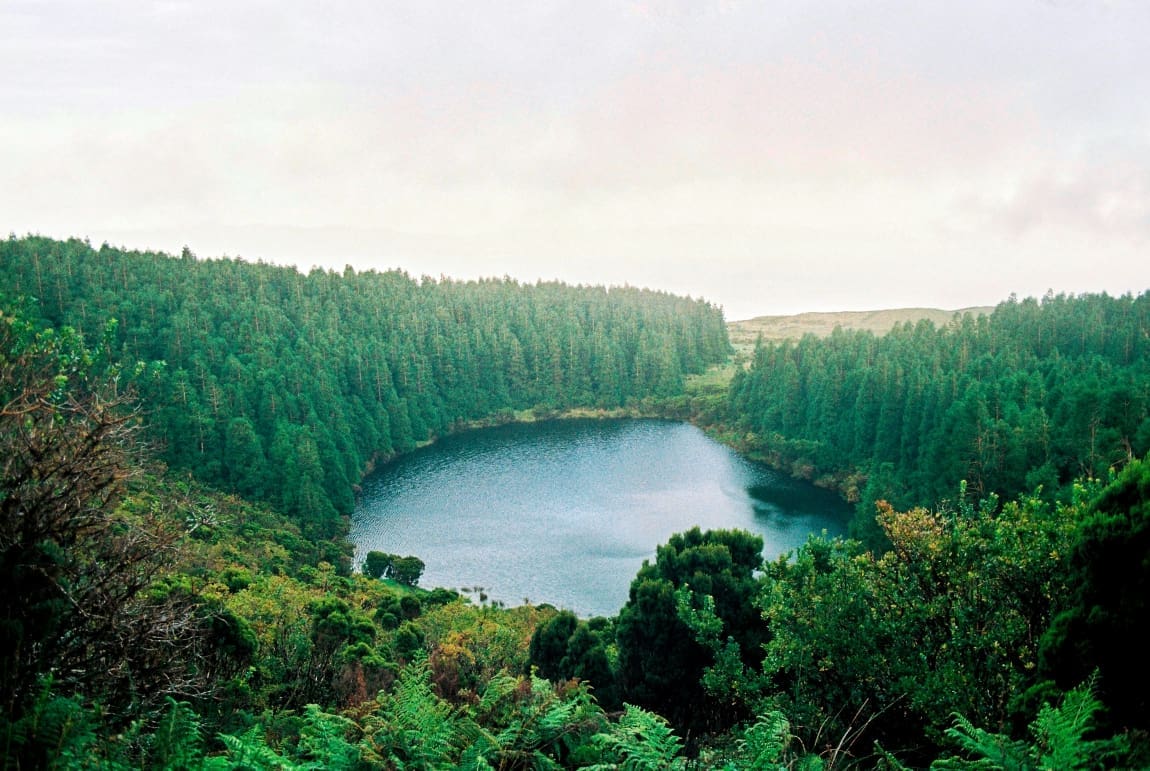
Lakes, with their rich biodiversity and important ecological services, face a concerning trend: rapidly increasing temperatures.
A recent study published in Nature Geoscience by an international team of limnologists and climate modelers reveals that if current anthropogenic warming continues until the end of this century, lakes worldwide will likely experience pervasive and unprecedented surface and subsurface warming, far outside the range of what they have encountered before.
The study uses lake temperature data simulated by a state-of-the art climate computer model (Community Earth System Model, version 2) covering the period from 1850-2100 CE. It is the first model of its kind, which captures the dynamics and thermodynamics of lake systems in an integrated way with the atmosphere. Rather than running the computer model into the future only once, the scientists used an ensemble of 100 past-to-future simulations, which were run on one of South Korea’s fastest computers (‘Aleph’ at the Institute for Basic Science). Each simulation generates a slightly different realization of natural climate variability while it also responds to the anthropogenic warming effects from increasing greenhouse gas concentrations.
With this ensemble modelling approach, the scientists were able disentangle the range of naturally occurring lake temperature variations from those caused by human interference (see figure). This allowed the team for the first time to estimate the time when lake temperatures will permanently exceed natural bounds – a situation referred to as no-analogue conditions.

Dr. Lei Huang, the study’s lead author (now at Capital Normal University, Beijing, China) and former postdoctoral researcher at the IBS Center for Climate Physics in Busan, South Korea, emphasizes that on average lakes worldwide will face no-analogue climates by the end of this century. However, the timing of emergence varies globally. Tropical lakes, harboring rich biodiversity, will be the first to experience unprecedented conditions when global warming reaches ~2.4°C (above pre-industrial conditions).
While surface warming affects species in shallow lake layers, some organisms can migrate vertically to find more suitable thermal habitats. Therefore, it is crucial to also consider how warming penetrates the subsurface layers.
“Our study reveals synchronous emergence of no-analogue conditions in tropical lake subsurface layers, driven by rapid downward transmission of warming signals during frequent lake mixing events. In contrast, high-latitude lakes partly shield subsurface layers from surface warming through stratification, delaying or sometimes even preventing no-analogue climates at depths.” says Dr. Iestyn Woolway, NERC Independent Research Fellow at Bangor University, UK, corresponding author of the study.
The consequences of no-analogue lake climates are profound. “They can lead to severe future disruptions in ecosystems,” comments Prof. Axel Timmermann, co-author of the study and Director of the IBS Center for Climate Physics.
Compared to terrestrial and marine biota, lake organisms are often limited in their capability to migrate to climatically more optimal habitats. Understanding the timing of no-analogue emergence is therefore vital for adaptation, planning, and climate mitigation in lake ecosystems.
More information: Lei Huang, R. Iestyn Woolway, Axel Timmermann, Sun-Seon Lee, Keith B. Rodgers & Ryohei Yamaguchi, ‘Emergence of lake conditions that exceed natural temperature variability’, Nature Geoscience (2024); DOI: 10.1038/s41561-024-01491-5. IBS Press Release / Material. Featured image credit: EXPANALOG | Unsplash