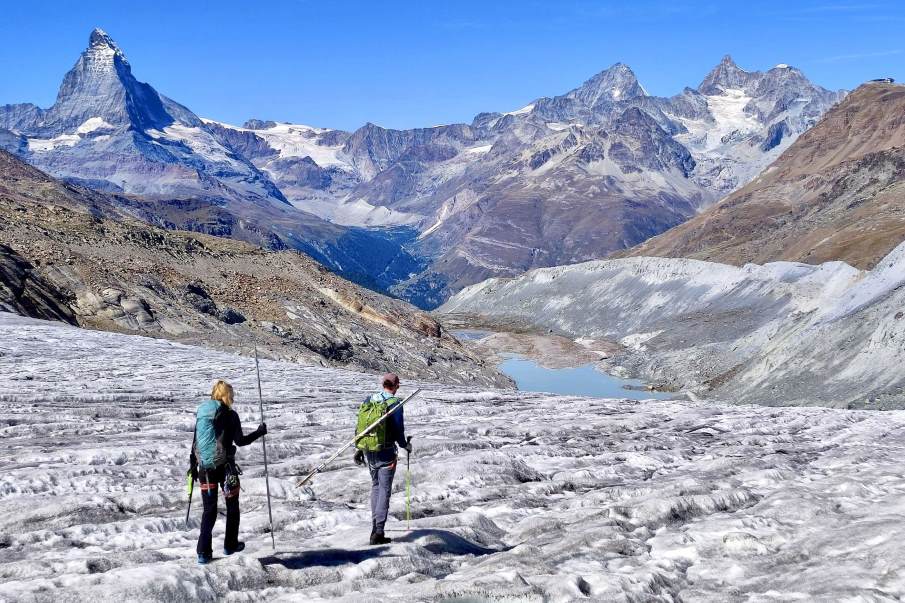
Perched at an altitude of 3,454 meters, Jungfraujoch is Europe’s highest railway station and a popular observation point in the Swiss Alps. Situated between the towering Jungfrau and Mönch peaks, it offers sweeping views of glaciers and rugged mountain landscapes.

Visitors reach the station via a cogwheel train that climbs from Kleine Scheidegg through tunnels carved into the mountains — a remarkable engineering achievement completed in 1912. The station remains a key tourist destination, drawing travelers eager to experience the high-altitude panorama.

Satellite Image: Jungfraujoch railway station, Swiss Alps
Swiss Alps. Credit: European Union, Copernicus Sentinel-2 imagery

This Copernicus Sentinel-2 image, acquired on 11 August 2024, captures the station and a portion of the Aletsch Glacier, the longest glacier in the Alps and a UNESCO World Heritage Site.

Copernicus satellite data plays a crucial role in tracking glacier dynamics, equipping scientists and policymakers with valuable insights into the long-term environmental changes affecting Europe’s mountain regions.

Featured image credit: European Union, Copernicus Sentinel-2 imagery

Image
Novel spectroscopy technique sheds light on NOx reductionScience

Novel spectroscopy technique sheds light on NOx reduction

By Lehigh University When power plants burn fossil fuels at high temperatures, nitrogen and oxygen molecules break apart and then recombine to form a class…
SourceSourceJuly 1, 2024 Full article
Image
World’s island states blame richest countries for climate threatsClimateNews

World’s island states blame richest countries for climate threats

By Amélie BOTTOLLIER-DEPOIS | AFP United Nations, United States (UPDATED) - Extremely vulnerable to climate change, not rich enough to stop it on their own,…
SourceSourceMay 27, 2024 Full article
Image
New model uses satellite imagery, machine learning to map flooding in urban environmentsClimateScience

New model uses satellite imagery, machine learning to map flooding in urban environments

By Joey Pitchford | North Carolina State University As climate change causes storms to intensify, new tools are needed to map where flooding occurs in…
SourceSourceJuly 31, 2024 Full article