Algal blooms frequently appear in the Gulf of Oman, driven by nutrient availability, temperature, and light conditions. One of the most striking contributors is Noctiluca scintillans, a bioluminescent plankton species that exists in red and green forms. The green variety, seen in this event, contains a photosynthetic symbiont called Pedinomonas noctilucae, which gives it its vivid coloration. While visually striking, these blooms can disrupt marine ecosystems by depleting oxygen and altering food chains, impacting local fisheries and biodiversity.

Satellite Image: Algal bloom in the Gulf of Oman
Gulf of Oman. Credit: European Union, Copernicus Sentinel-2 imagery

This Copernicus Sentinel-2 image, acquired on 30 March 2025, captures the swirling green bloom in the Gulf of Oman. Such satellite observations are crucial for tracking algal bloom events and assessing their impact on marine environments.

Unlike traditional phytoplankton, Noctiluca scintillans thrives in stratified, low-nutrient waters, creating conditions that can be detrimental to marine life. The Copernicus Sentinel satellites and the Copernicus Marine Service provide essential data to monitor these changes, helping policymakers develop strategies to mitigate their effects and protect coastal communities.

Featured image credit: European Union, Copernicus Sentinel-2 imagery

Image
Global water resources at risk: WMO report warns of increasing hydrological instabilityClimate

Global water resources at risk: WMO report warns of increasing hydrological instability

The year 2023 marked a critical low point for global water resources, according to the World Meteorological Organization’s (WMO) latest State of Global Water Resources…
Adrian AlexandreAdrian AlexandreOctober 7, 2024 Full article
Woman Drinking Water
EU watchdog reduces safe level of exposure to ‘forever chemical’ TFANews

EU watchdog reduces safe level of exposure to ‘forever chemical’ TFA

Rome, Italy | AFP | Muser NewsDesk The EU's food safety agency said Wednesday it has dramatically reduced the acceptable daily intake level of the so-called…
SourceSourceJuly 22, 2026 Full article
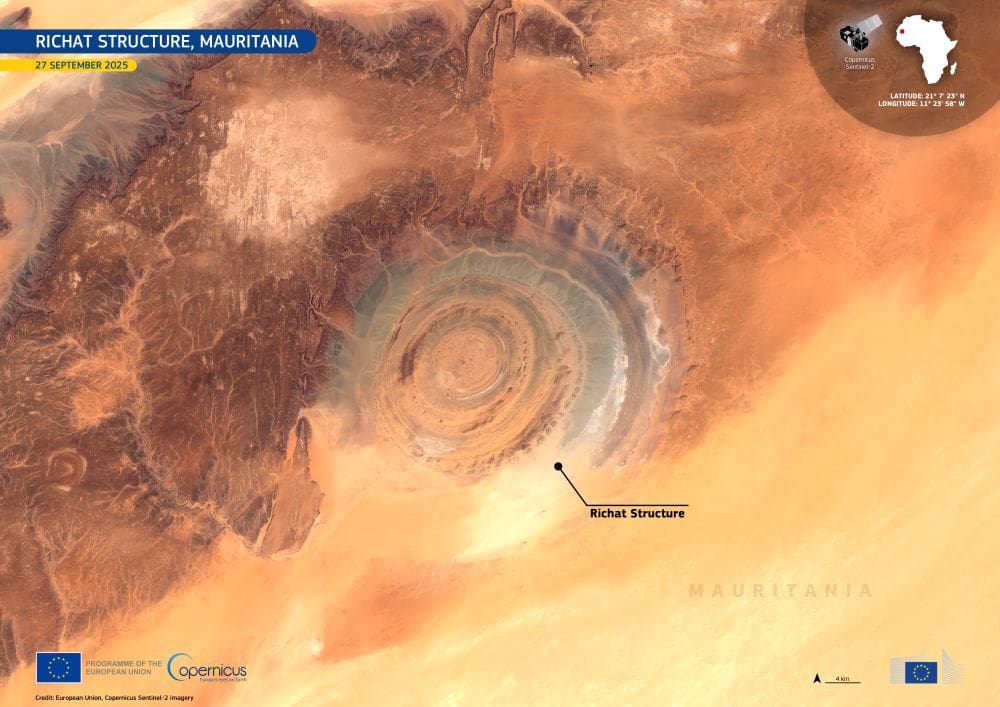
Satellite Image: The Richat Structure, Mauritania
Image of the day: The ‘Eye of the Sahara’News

Image of the day: The ‘Eye of the Sahara’

The Richat Structure in Mauritania’s Sahara Desert is one of Earth’s most recognisable geological formations, easily visible from space for its near-perfect circular shape. Measuring…
Muser NewsDeskMuser NewsDeskOctober 4, 2025 Full article