Summary:
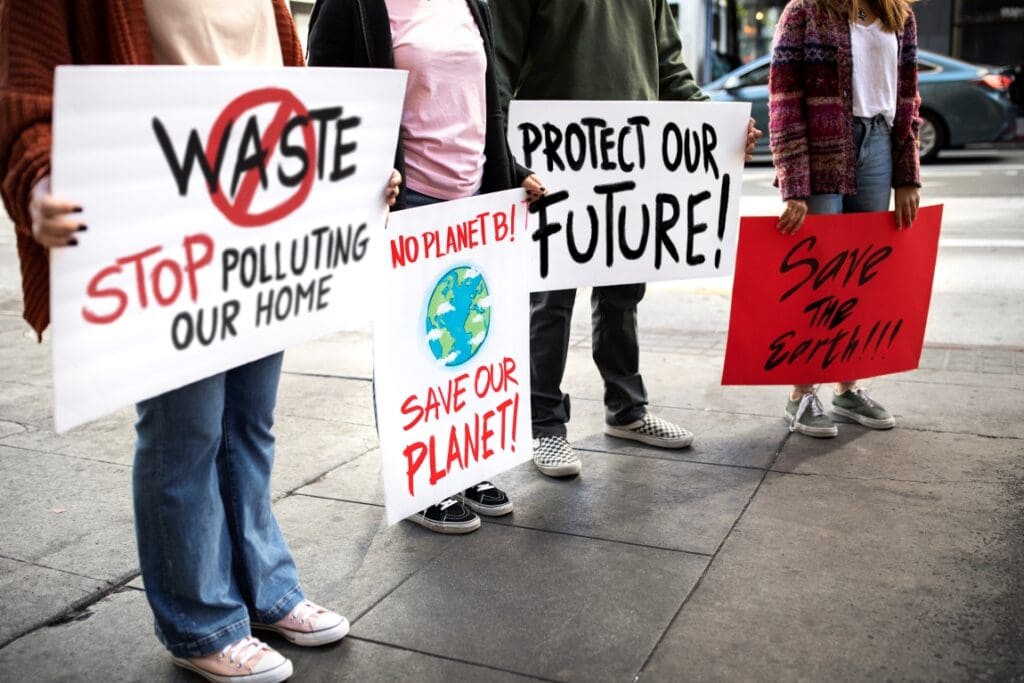
Climate change is disrupting the social connections that help people survive disasters and recover, according to a study published in Nature Human Behaviour. Researchers from the University of Sydney and international institutions found that heatwaves, air pollution, droughts and extreme weather events can reduce social interaction, isolate vulnerable groups and weaken community support networks.
The review combined evidence from multiple countries showing that climate pressures increasingly affect everyday human relationships and psychological wellbeing. Heat and poor air quality can keep people indoors and away from shared public spaces, while floods, bushfires and cyclones often displace communities and break long-standing social ties. The researchers found that people already facing disadvantage, including low-income households, disabled people and socially isolated groups, are often more exposed to climate risks while also having fewer support systems available during emergencies.
According to the authors, weak social connections can increase mortality during extreme events and reduce communities’ ability to respond collectively to climate threats. The researchers argue that social health should be treated as part of climate resilience planning alongside housing, infrastructure and emergency response systems.

— Press Release —
Climate change costs lives by breaking down social connection
Climate change is widely understood as an environmental and economic threat, but new research from the University of Sydney shows it is also a growing social crisis, weakening the relationships people rely on to survive.
Published in Nature Human Behaviour, the international study found climate change is eroding social connection at a time when those ties are most needed, creating a feedback loop where disruption to relationships reduces people’s ability to adapt and recover.
“Climate change isn’t just something happening ‘out there’,” said lead author Dr Marlee Bower from the Matilda Centre for Research in Mental Health and Substance Use. “It’s reshaping how we live, how we connect, and ultimately who has support when things go wrong.”
How climate change is breaking down social connection
The research draws together global evidence showing that climate pressures are reducing everyday opportunities to connect. Heatwaves and air pollution are pushing people indoors and away from shared public spaces, while interruptions to school and work make it harder to maintain relationships.
Evidence from China and Tuvalu shows these pressures can reduce social activity, increase depression, and in some cases lead people to withdraw from community life altogether.
When disasters like floods, cyclones and bushfires strike, the effects are more immediate, with displaced communities, damaged homes and public spaces, and disrupted daily routines. Case studies in the Dominican Republic and Japan show that even when relocation improves physical safety, it can leave many people more socially isolated and in poorer health.
Slower-moving impacts can have similar consequences over time. In rural Australia, prolonged drought has been linked to declining participation in community life and increasing isolation, while financial strain, food insecurity and misinformation create further barriers to connection and trust.
Climate change is widening the gap in who stays connected
The study finds these impacts are not shared equally. People already facing disadvantage, such as those on low incomes, in poor-quality housing, living with disability, or from marginalised communities, are more exposed to climate risks and less able to stay connected.
“Many face a double burden,” Dr Bower said. “They are more vulnerable to climate impacts because of where and how they live, and have fewer social and financial supports to draw on.”
As these pressures build, the researchers describe a widening “social health gap” between people who remain well connected and those who become increasingly isolated.
Social connection is critical for climate action
Experts say the strength of social ties shapes how communities respond to climate change, with higher trust linked to greater support for climate action and collective responses.
“When people feel disconnected, they are less likely to participate, cooperate or help each other,” Dr Bower said. “That limits our ability to respond to climate change in a meaningful way.”
The consequences are more visible during disasters, where people with weaker social ties are consistently more likely to die than those with strong support networks.
During the 2021 British Columbia Heat Dome, which caused more than 600 deaths, people with schizophrenia – a group more likely to experience social isolation – accounted for around eight percent of heat-related deaths, highlighting how social isolation can compound risks.
“If we ignore social health, we miss a major driver in who survives climate events and who doesn’t,” said Dr Bower.
Social connection must be treated as climate infrastructure
Despite its importance, social health remains largely absent from climate policy. The researchers highlight that while governments invest heavily in infrastructure and emergency response, far less attention is given to the social systems that determine who receives help.
With social disconnection already affecting up to one in four people globally and impacts on mortality comparable to smoking and obesity, the authors argue that social connection should be treated as essential climate infrastructure, embedded in housing, transport, urban design and public spaces.
“If we keep treating climate change as a scientific or technical problem, climate policy will fail,” said Dr Bower. “Social health allows communities to survive and recover.”
Evidence from Australia’s Black Summer bushfires shows people with strong community ties experienced lower distress and greater resilience long after the fires, provided those connections existed before disaster struck.
“There’s often a surge of togetherness immediately after an event, followed by exhaustion months later,” Dr Bower said. “The people who fare best are those who were connected beforehand.”
Journal Reference:
Bower, M., Filia, K., Lawrance, E.L. et al., ‘Climate change and social health’, Nature Human Behaviour (2026). DOI: 10.1038/s41562-026-02455-y
Article Source:
Press Release/Material by Emily Fraser | University of Sydney
Featured image credit: Sanjeev Kumar | Pexels