Frankfurt, Germany | AFP | Muser NewsDesk
European Central Bank chief Christine Lagarde on Wednesday urged the eurozone to adapt faster to climate change as the economic costs mount, after a summer of punishing heatwaves.
Europe, the world’s fastest-warming continent, faced record-breaking temperatures, droughts and wildfires over the summer that caused tens of thousands of excess deaths.

It hit economies in a number of ways, such as through lower agricultural production in fire-hit areas and disrupted goods transport on rivers where water levels fell to record lows.
The “human and environmental tragedy” of the heatwaves should serve as a warning, Lagarde said in a blog post.
“Their economic impact has so far been limited, but the costs of climate change are rising and future shocks may be harder to absorb,” she wrote.
“Europe needs better protection against the financial fallout of climate change and a more flexible energy system that makes the most of clean power.”
Economic activity in affected regions is 1.5 percent lower two years after a heatwave and three percent lower four years after a drought, driven by lower productivity and people relocating, according to ECB estimates.
Lagarde called for Europe to better prepare for more frequent bouts of extreme weather, praising new rules unveiled by the European Union last week to force member states to act.
She said heatwaves and drought could push up power costs as people use air conditioning more, and lower water levels reduce hydropower generation.
Lagarde, who last week announced she would step down as ECB chief in February, several months before her term ends, urged Europe to upgrade its power grids so they could make better use of renewable energy.
While solar and wind power are being produced in growing quantities, ageing grids and a lack of storage sometimes mean those sources cannot be used as efficiently as they could be.
She also urged the EU to come up with rules to make it easier for companies to generate power, such as through their own solar panels, and share this with the wider grid if it comes under strain.
Article Source:
Press Release/Material by Agence France-Presse
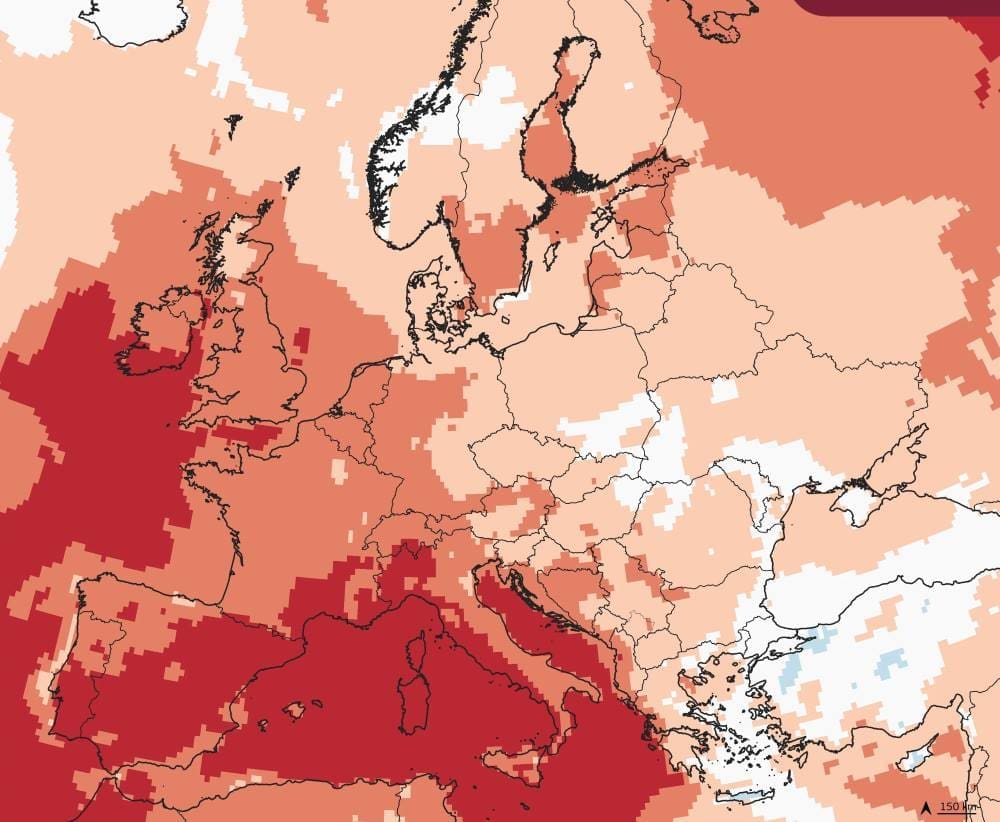
Featured image: Temperature anomalies across Europe in September 2026, the continent’s third-warmest September on record, according to Copernicus climate data. Credit: European Union | Copernicus Climate Change Service data