By Linda GIVETASH | AFP
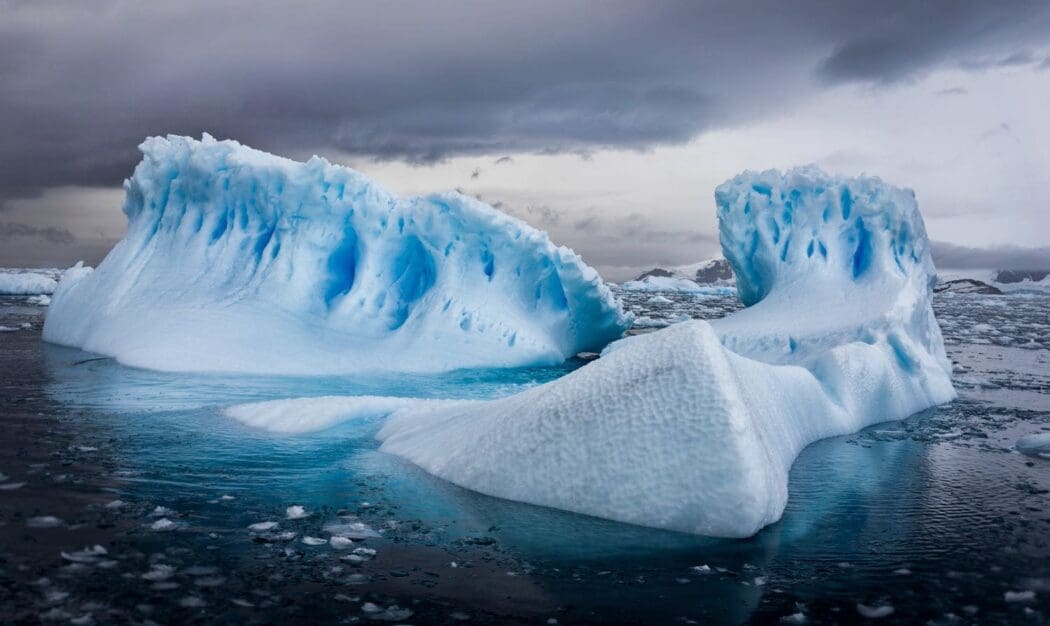
Paris, France – Climate change played a key role in last year’s record-low levels of Antarctic sea ice, a study published on Monday found, marking an abrupt shift from the growth seen in previous decades.
Scientists from the British Antarctic Survey (BAS) found that human-caused global warming resulted in a once-in-2,000-year low in ocean surface around the continent blanketed by ice.
Compared to an average winter over the last several decades, the maximum extent of Antarctic sea covered by ice shrank by two million square kilometres — an area four times the size of France, the BAS said.
“This is why we were so interested in studying what climate models can tell us about how often large, rapid losses like this are likely to happen,” the study’s lead author Rachel Diamond told AFP.
Scientists, having analysed 18 distinct climate models, found that climate change quadrupled the likelihood of such large and rapid melting events.
Understanding the cause of sea ice melt is complex as there are many variables — from ocean water to air temperature to winds — that can effect it, scientists say.
But determining the role of climate change is critical since ice formation has global impacts from ocean currents to sea-level rise.
Sea ice, which forms from freezing salt water already in the ocean, has no discernable impact on sea levels.
But when highly reflective snow and ice give way to dark blue ocean, the same amount of the Sun’s energy that was bounced back into space is absorbed by water instead, accelerating the pace of global warming.
Recovery unlikely
Unlike the Arctic, where sea ice has been declining since satellite records began in the 1970s, the melt trend in Antarctica is a more recent phenomenon.
Antarctic sea ice increased “slightly and steadily” from 1978 until 2015, according to the BAS.
But 2017 brought a sharp decline, followed by several years of low ice levels.
In the study published in the journal Geophysical Research Letters, BAS researchers also ran projections to see whether the ice would return.
“It doesn’t completely recover to original levels even after 20 years,” Diamond told AFP. That means “the average Antarctic sea ice may still stay relatively low for decades to come”, he added.
“The impacts… would be profound, including on local and global weather and on unique Southern Ocean ecosystems — including whales and penguins,” co-author Louise Sime said.
Previous studies by the BAS have shown that the abnormal melt has led to the deaths of thousands of emperor penguin chicks.
Reared on the ice sheets, they perished when they were plunged into the ocean before they had developed their waterproof feathers.
giv/mh/jj
© Agence France-Presse
Featured image credit: wirestock | Freepik