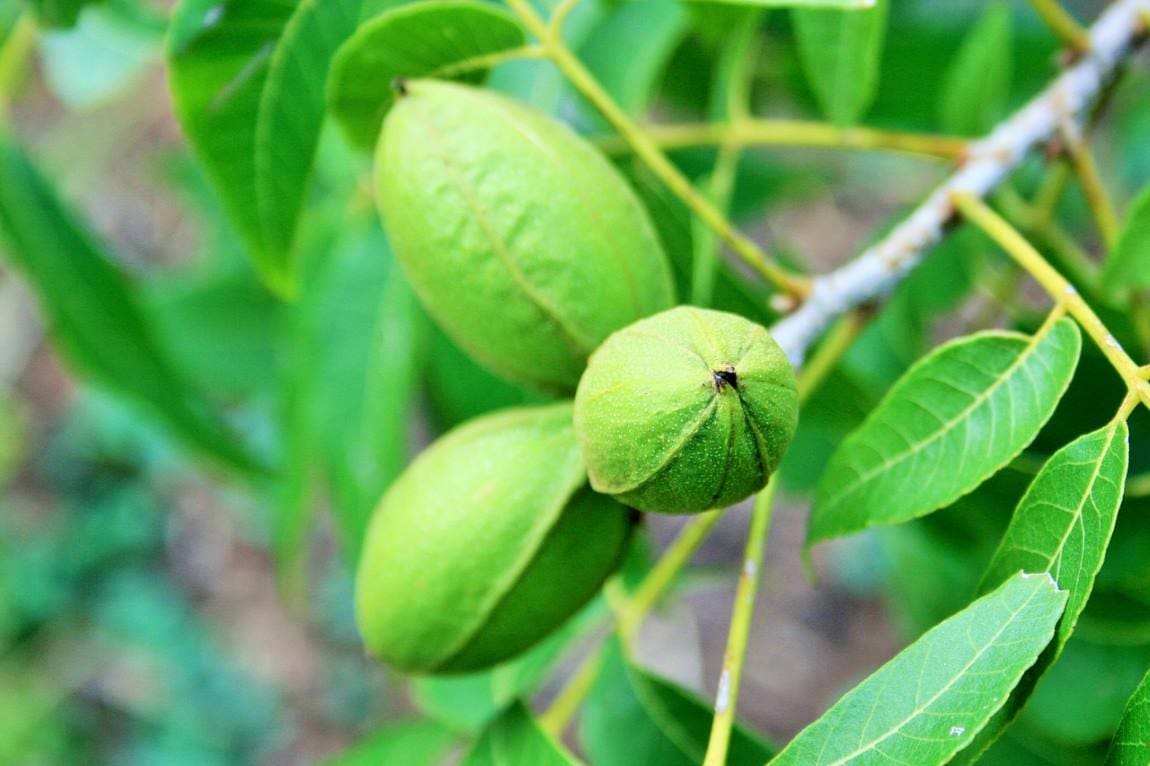
EL PASO, Texas | UTEP – How are U.S. agricultural crops affected by climate change? A research team from The University of Texas at El Paso aims to find out, starting with the region’s pecan farms.
The research is supported by a grant of nearly $250,000 from the National Science Foundation and led by Hugo Gutierrez-Jurado, Ph.D., associate professor in UTEP’s Department of Earth, Environmental and Resource Sciences.
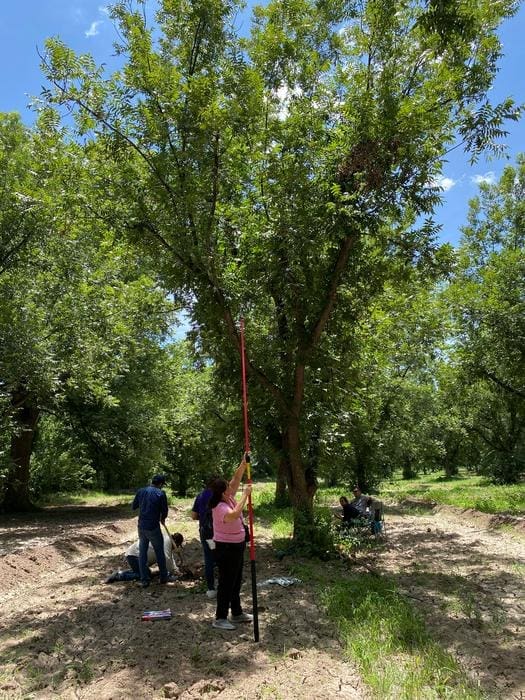
“Climate change is increasing the frequency and severity of extreme weather events, which are already having a profound impact on the crops in large agricultural areas across the country’s arid regions,” said Gutierrez-Jurado. “We are seeing decreases in crop productivity due to plant stress from excessive dry and warm conditions.”
Pecans are one of the most economically significant crops for communities across the Chihuahuan Desert region on both sides of the U.S.-Mexico border, Gutierrez-Jurado said. According to Iowa State University’s Agricultural Marketing Resource Center, the pecan crop in the U.S. alone was valued at $500 million in 2022.
The UTEP study will look at how drought, heat waves and soil impact the cycle of water and carbon between plants and the atmosphere in dryland agricultural ecosystems. It will focus on two orchards, one in the El Paso area and another in the Conchos River basin near the city of Delicias in the Mexican state of Chihuahua.
The research team will monitor tree and root system growth, soil-plant water status and canopy temperature. Their goal is to develop a detailed understanding of how soil structure and management practices can either mitigate or exacerbate the stress that plants experience during extreme weather events. Additionally, the project will explore how these stressors affect the ability of crops to sequester, or capture and store, carbon dioxide, a critical factor in addressing climate change.
“This is a new way of looking at this problem. There has been a lot of research into how to make pecans and other crops more productive through input control, especially irrigation levels, but much of that work has failed to take into account the changes that trees and plants experience as a result of climate-related stress,” Gutierrez-Jurado said.
The goal of the study is to uncover valuable insights for farmers and policymakers on how to improve water use efficiency and enhance carbon sequestration in agro-ecosystems. If successful, the work will bring innovation to an area of agricultural practice known as precision farming, the team said, which seeks to improve productivity by taking a detailed look at the characteristics and unique variables that affect a specific plot of land.
“This research aims to determine the optimal timing for irrigation, which is vital information for agricultural producers, both local and beyond, as it will help improve orchard efficiency and conserve valuable resources,” said Robert Kirken, Ph.D., dean of the UTEP College of Science. “I congratulate Dr. Gutierrez-Jurado and his team for receiving this award from NSF.”
Gutierrez-Jurado’s project continues a study initially funded by UTEP’s U.S.-Mexico Collaboration Fellowship, a program aimed at strengthening relationships between researchers on both sides of the border and promoting academic work that benefits the entire Paso del Norte region.
Throughout both phases of his project, Gutierrez-Jurado has collaborated closely with colleagues from Mexican institutions, including the Universidad Autónoma de Chihuahua and the Instituto Nacional de Investigaciones Forestales, Agrícolas y Pecuarias.
The research team will also collaborate with a local museum in El Paso to create hands-on, interactive learning experiences for the public, with a focus on climate change and its impact on the region’s agriculture.
***
About The University of Texas at El Paso
The University of Texas at El Paso is America’s leading Hispanic-serving university. Located at the westernmost tip of Texas, where three states and two countries converge along the Rio Grande, 84% of our 25,000 students are Hispanic, and more than half are the first in their families to go to college. UTEP offers 170 bachelor’s, master’s and doctoral degree programs at the only open-access, top-tier research university in America.
Article Source:
Press Release/Material by University of Texas at El Paso
Featured image credit: PublicDomainPictures | Pixabay