Marisa Ramiccio | University of Central Florida – Solar energy may be abundant in the hot and muggy climate of Florida, but it can be intermittent during inclement weather and inconsistent during the night or peak usage.
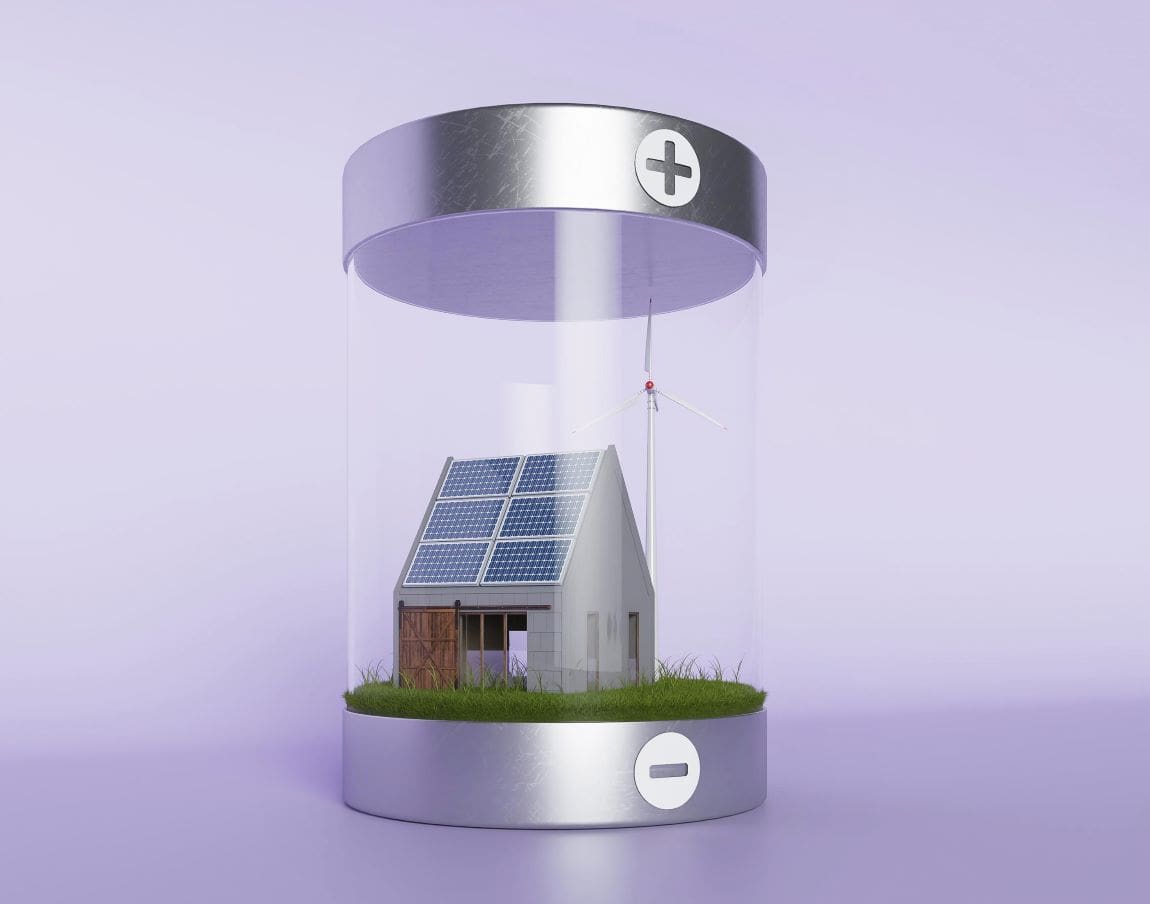
To keep the power grid reliable, UCF Department of Mechanical and Aerospace Engineering Associate Professor Like Li is developing a novel energy storage system that can reserve solar energy for future use. The project is supported through a three-year, $3.8 million grant from the U.S. Department of Energy Solar Energy Technologies Office.
“The goal is to contribute to the global transition to clean energy and to achieve net zero carbon emissions by 2050,” Li says. “In order to meet that goal, there is a lot of effort to use renewable energy for the decarbonization of the power grid and various industrial processes.”
Li will work with engineers from Sandia National Laboratories, Oregon State University, the University of Houston and Redoxblox, a startup that specializes in low emission energy storage units. Together, they will develop a thermochemical energy storage (TCES) system, which uses chemical reactions to either absorb or release heat for the respective charging and discharging steps.
The high temperature heat for the charging step will be from the concentrating solar-thermal power (CSP). It can also be charged by electric furnaces powered by any type of renewable energy such as solar panels or wind power. A TCES system can store a large amount of energy at very high temperatures for less money, making it advantageous. The high temperature heat released during discharging can be used to drive high-efficiency power cycles or as process heat for a wide range of industrial processes.
Li and his team have been using computational modeling and lab-scale reactor testing to design a solar receiver and chemical reactor. Once the parts are fabricated, they will conduct demos at Sandia using sunlight and a solar furnace.
“These demos are important because the technology is new,” Li says. “Most TCES reactors are at lab scales, our goal is to demonstrate an integrated TCES system coupled with CSP under real conditions.”
The demos are also important to the postdocs and graduate students in Li’s lab, who will have the opportunity to travel to Sandia to assist with the testing. He says this is a great chance for them to work with industry professionals, gain research experience and potentially find future job opportunities.
The work can also benefit companies in Orlando that have a vested interested in thermal energy storage, such as Siemens or Duke Energy.
“Now is a crucial time in history to redefine a cost-effective energy storage system to achieve energy decarbonization,” Li says. “If we can demonstrate that capability, we can apply our research and demos and attract attention that can lead to fruitful collaborations in the future, especially when we start to scale up those energy storage systems.”
***
About the Researcher
Li joined UCF as an associate professor in 2023. He is a member of the UCF Center for Advanced Turbomachinery and Energy Research, and he leads the Thermal Energy Storage and Decarbonization Lab, which focuses on advanced energy storage technologies. Li previously worked in the mechanical engineering department at Mississippi State University and earned his doctoral degree in mechanical engineering from the University of Florida. His work has been funded by the National Science Foundation, the U.S. Department of Energy, the Tennessee Valley Authority and Duke Energy.
Article Source:
Press Release/Material by University of Central Florida
Featured image credit: Freepik