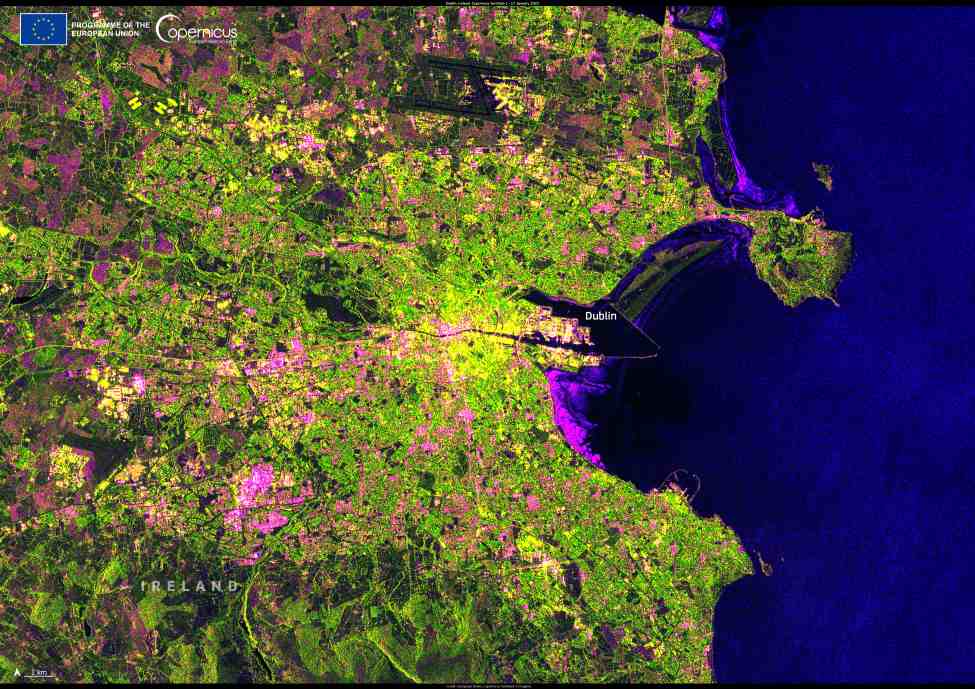
On 24 January 2025, Storm Éowyn struck Ireland, marking one of the most severe storms to hit the region in recent years. With winds exceeding 180 km/h, the storm left over 725,000 homes without power, forced the closure of schools, offices, and airports, and severely disrupted transport services.

Coastal areas endured the greatest impact, as authorities issued red weather alerts, urging residents to stay indoors to avoid the dangers posed by falling trees and flying debris.

Data Visualization: Storm Éowyn, Ireland
Storm Éowyn, Ireland. Credit: European Union, Copernicus Marine Service Data

This striking data visualization showcases wind patterns over the Atlantic Ocean at 08:00 UTC on 24 January 2025, as Storm Éowyn swept across Ireland. The image was created using data provided by the Copernicus Marine Service, illustrating the storm’s intensity in vivid detail.

Thanks to open-access data from the Copernicus Sentinel satellites, meteorologists and scientists can closely monitor extreme weather events like Storm Éowyn. This enhanced monitoring capacity supports better preparedness and response measures, ultimately reducing the impacts on affected communities.

Featured image credit: European Union, Copernicus Marine Service Data

The growing threat of ‘Day Zero’ and the push for wastewater reuseNewsScience

The growing threat of ‘Day Zero’ and the push for wastewater reuse

“Can you imagine a day when you turn on your faucet and no water comes out?” This chilling question, posed by researchers at the University…
Adrian AlexandreAdrian AlexandreOctober 20, 2024 Full article
Illustration 3d letter blocks forming the word news
Restoring Europe’s sponge landscapes: The ‘SpongeBooster of the year 2026’ award opens for applicationsNews

Restoring Europe’s sponge landscapes: The ‘SpongeBooster of the year 2026’ award opens for applications

The EU-funded SpongeBoost project invites both organisations and private individuals, aimed at restoring sponge landscapes across Europe, to apply for the 'SpongeBooster of the Year…
SourceSourceOctober 29, 2025 Full article
Breathtaking sunset in the evening
June-August 2024 were hottest ever recorded: EU monitorNews

June-August 2024 were hottest ever recorded: EU monitor

By Benjamin LEGENDRE | AFP Paris, France - The 2024 northern summer saw the highest global temperatures ever recorded, beating last year's record and making…
SourceSourceSeptember 6, 2024 Full article