
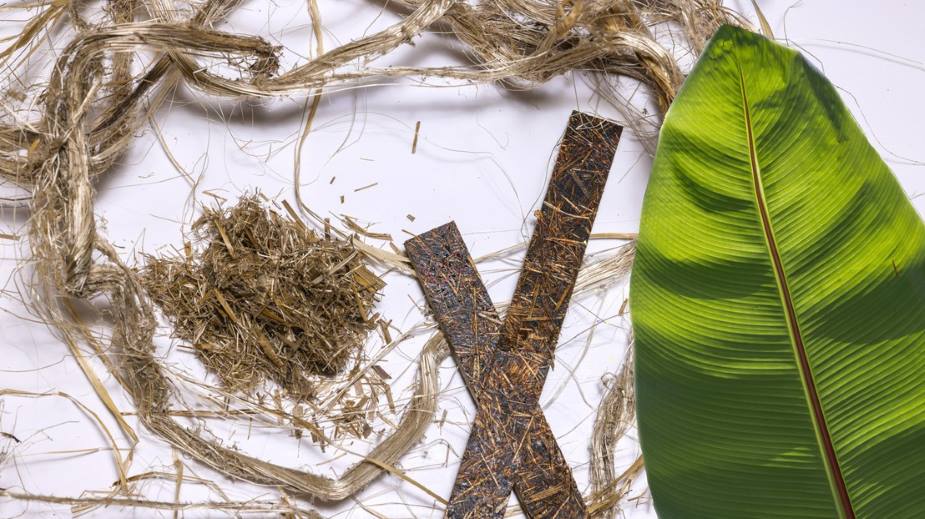
Researchers at EPFL and its startups are exploring innovative composites that are self-repairing, self-curing and reusable, in an effort to help drive the transition to a low-carbon, circular economy.
Composite materials are inconspicuous, lightweight, fatigue- and weather-resistant, and easy to mold, , and therefore appropriate for a range of applications: airplane wings, wind turbine blades, bicycle frames, medical prostheses, and more. Their unique properties have been inspiring scientists and engineers since the early 20th century.
Composites initially took hold in the aerospace industry in the 1960s, as they offered a lightweight alternative that drastically reduced the need for fuel. Amid the excitement, questions about the materials’ environmental footprint and recycling potential took a back seat.
Today, however, many composite parts are reaching the end of their useful lives, and concerns about environmental and societal impacts are growing. In response, scientists have been developing a new generation of composites that are designed for the circular economy. These innovative materials draw on advancements in plant fibers, bio-based resins, self-repairing compounds and energy-light production methods. We took a look at some of the breakthroughs being developed at EPFL and its startups.
Both resistant and malleable
Composites’ exceptional proprieties result from the fact that they’re made by combining two or more materials – usually a polymer matrix and a network of glass or carbon fibers – in a structure that optimizes force distribution and delivers better performance than any one single material. Some composites are used in applications involving extreme conditions and must be highly resistant, such as for aircraft fuselages and space rockets.
In other applications, such resistance isn’t needed and more ecological materials and less-intensive production methods can be used. Flax and hemp fibers, for instance, are already fairly common in some of the parts for boats, cars and airplane cabins.
“Today, engineers are taking a full lifecycle approach to the design of composite parts,” says Prof. Véronique Michaud, head of EPFL’s Laboratory for Processing of Advanced Composites (LPAC) in EPFL’s School of Engineering. “For example, parts made from carbon fiber are less environmentally friendly to produce, but when they’re used in airplanes, they can significantly reduce the amount of fuel that’s needed over the entire life of the aircraft.
“Plant fibers, on the other hand, have the advantage of being a renewable resource, but we need to consider the pesticides, fertilizer and water used to grow them. Banana tree fibers are one promising option, since banana farmers in any case uproot their trees every three years. We could reuse these fibers instead of letting them go to waste.”
Resins are another type of composite, but they’re often criticized for their environmental impact because they’re made mainly from petroleum derivatives. Chemists are exploring a number of bio-based alternatives that are now being incorporated into polymers to varying degrees. Yet the real revolution in this area may come from vitrimers, which are next-generation resins that have garnered attention from numerous materials scientists. Vitrimers are an ideal composite, as they combine the properties of two very different groups of conventional polymers: high resistance, which unfortunately makes the materials hard to recycle; and malleability, which makes the materials easy to process and reuse but also less durable.
“Vitrimers open the door to a world of possibilities,” says Michaud. “At LPAC, we’re taking part in the ZeroPol project funded by Innosuisse, which aims to shrink the carbon footprint of plastics throughout their lifecycle. Our role involves testing various compounds developed by a large Basel-based company to see how they can be used in composites. Specifically, we’re fabricating sample parts and then measuring their properties.” LPAC is also participating in an EU-funded project to develop a relatively soft vitrimer that can be remolded by applying a small amount of heat. One potential application for this technology is headphones.
Cutting carbon emissions with self-curing composites
When it comes to high-performance composites, much of their environmental impact results from the energy-intensive process used to make them. These materials are usually cured at high temperatures in an autoclave, which is a piece of equipment similar to a giant pressure cooker.
“Nearly 95% of the energy that’s consumed goes to heating the autoclave up to the right temperature,” says Michaud. To lower this energy use, scientists at LPAC are developing a self-curing resin that requires much less outside heat. “The idea is to apply UV radiation to a corner of the composite part, and then let the heat propagate on its own thanks to the material’s molecular structure.”
The technique has proven to work on samples, but a few more years of research are needed before it can be implemented on a large scale. However, LPAC has developed other curing methods that don’t require an autoclave. These have been tested successfully and one of them was used in the early 2000s to create the hull of the Alinghi race boat.
Beyond Gravity (formerly RUAG Space), an aerospace company based in Zurich, used a similar procedure to manufacture the payload fairings for Ariane rockets.
From self-healing composites to smart fibers
While composites may be extremely resistant, they aren’t immune to severe shocks that can alter their structure. Both university researchers and manufacturers are keen to develop self-healing composites that can be used to manufacture parts with a longer life. These composites contain self-healing agents that are released when cracks or bumps form. EPFL spin-off CompPair is marketing such technology; its resins can repair themselves when heat (approximately 100°C) is applied to the damaged spot.
Yet this tackles only part of the problem. When composite parts fail, it’s often due to a flaw in how their components are bound together rather than to an issue with the material itself. That’s what happens with wind turbine blades, for example. Here, LPAC is working with EPFL’s Composite Mechanics Group (GR-MeC) to develop a glue consisting in part of polymer microparticles that give the mixture just the right consistency and enable cracks to be repaired by simply applying heat.
Another research avenue is to add smart fibers to composite materials so that data can be collected directly inside the part itself to detect when repairs are needed or when the part should be scrapped. LPAC is working with EPFL’s Laboratory of Photonic Materials and Fibre Devices led by Fabien Sorin, which specializes in smart fibers, on several projects in this area.
What happens to end-of-life composites?
The intricate combination of materials is what makes composites useful, but it also poses a problem when it comes time to recycle. First-generation composite parts are now reaching the end of their useful lives, and most of them are being either incinerated or buried because their component materials are outdated. However, architects and civil engineers are examining ways of reusing old structures made of composites.

“It’s still a niche application for now, but it could very well expand,” says Prof. Anastasios Vassilopoulos, who heads the Composite Mechanics Group. “We worked with Clemens Waldhart, at AAF Architects and lecturer at EPFL’s Laboratory of Elementary Architecture and Studies of Types, on projects to reuse wind turbine blades as construction materials [image 1] and to create an overhang for the Lausanne south bypass and then install solar panels on them [image 2]. Both projects under development and in search for sufficient support from the various involved stakeholders.”

In another approach, end-of-life composites can be broken down into their component materials – fibers and polymers – through the use of solvents or a procedure called pyrolysis, which entails heating the composites to high temperatures. Several companies, including EPFL-based Composite Recycling and Verretex, are working to make these methods greener and more profitable.
Composite Recycling has developed a portable system that can recover used boat parts directly at the port. Its system produces pieces of recycled fiber that are long enough to be reemployed without a prior melting step. Meanwhile, Verretex has invented a recycling process that creates unwoven, short fibers with the same quality as original fibers and that can be sold in bulk.
More info (links):
Laboratory for Processing of Advanced Composites
Composite Mechanics Group (GR-MeC)
Article Source:
Press Release/Material by Cécilia Carron | EPFL
Featured image: A promising avenue for certain composites: banana fiber. Credit: Alain Herzog | EPFL | CC-BY-SA 4.0