Stretching along the Pacific coast of central Panama, the wetlands of Parita Bay form one of the country’s most important habitats for migratory birds and coastal biodiversity. The bay’s network of mudflats, mangroves, and freshwater marshes sustains large flocks of shorebirds, including western sandpipers (Calidris mauri) and short-billed dowitchers (Limnodromus griseus), and has been recognised as an Important Bird Area.
Several protected areas lie within this landscape, among them the Cenegón del Mangle Wildlife Refuge, Sarigua National Park, Peñón de la Honda Wildlife Refuge, and Las Macanas, one of Panama’s largest freshwater wetlands. Sarigua, once a premontane dry forest, now shows desert-like features caused by salinisation and erosion from past land use, while Las Macanas has faced seasonal water loss that threatens bird populations.

Over recent decades, agriculture, shrimp farming, and coastal development have fragmented the bay’s ecological connectivity. In response, local communities, municipal authorities, and conservation groups have launched joint initiatives, including the Wetland Conservation Plan for Parita Bay and the Governance Plan and Green Infrastructure to Mitigate Impacts in Parita Bay.
This work is supported by the Ramsar Regional Center for Training and Research on Wetlands for the Western Hemisphere (CREHO), which collaborates with Panama’s Ministry of Environment to strengthen wetland governance. Panama’s six Ramsar sites demonstrate the country’s long-standing commitment to wetland protection, and the collaboration with CREHO reflects the same dedication to conserving Parita Bay and its surrounding ecosystems.
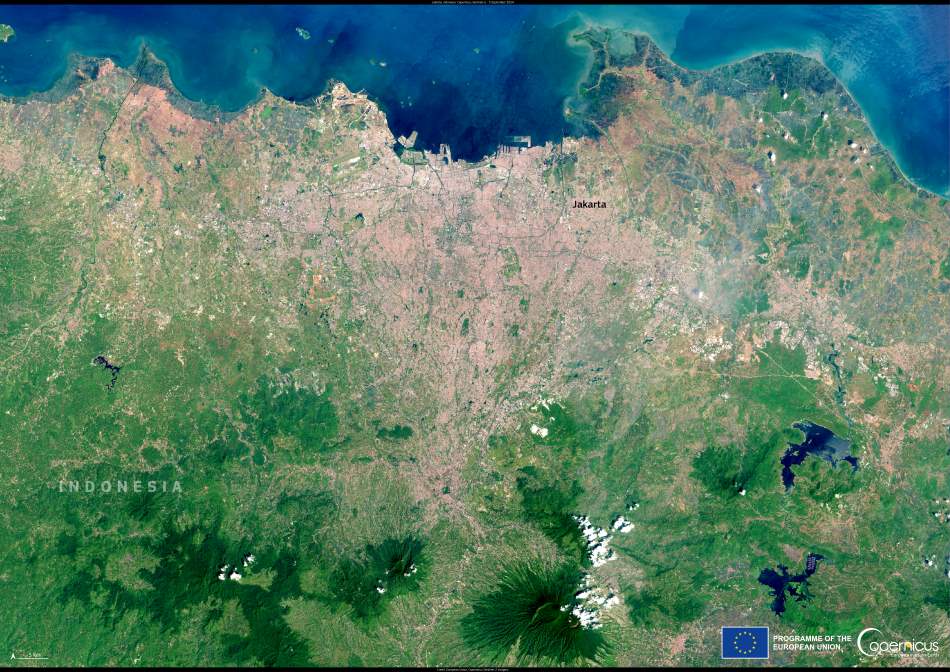
This image, captured by one of the Copernicus Sentinel-2 satellites on 2 March 2025, shows the extent of Parita Bay and its surrounding wetlands. Satellite observations are central to monitoring coastal ecosystems, tracking habitat changes, and supporting decisions aimed at protecting the diverse species that depend on them.
Featured image credit: European Union, Copernicus Sentinel-2 imagery