Along Belgium’s North Sea shoreline, Zeebrugge occupies a position where natural coastal processes meet one of Europe’s busiest maritime gateways. The town, administratively part of Bruges, has long been shaped by its relationship with the sea, combining a wide sandy beach with extensive port infrastructure that connects inland waterways to international shipping routes.
The coastal waters off Zeebrugge are shallow and strongly influenced by tides, conditions that make suspended sediments a persistent feature of the seascape. Fine particles are regularly lifted from the seabed as tidal currents move in and out, creating visible variations in water colour along the coast. These patterns are not static – they shift with changing currents, weather conditions and human activity linked to port operations and navigation channels.
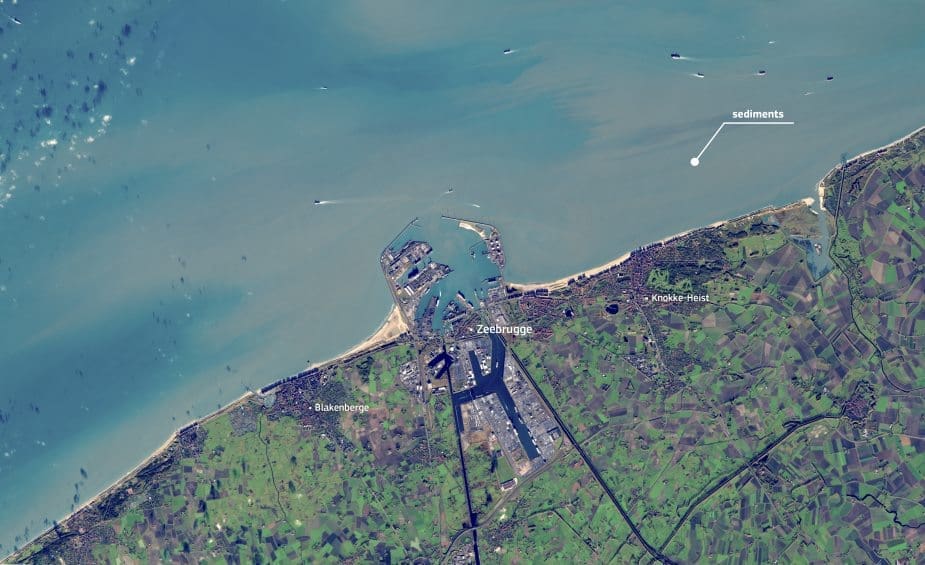
This Copernicus Sentinel-2 image, acquired on 3 December 2025, captures pronounced colour contrasts in the waters surrounding the Port of Zeebrugge, where lighter-toned plumes indicate elevated concentrations of suspended sediments. The interaction between tidal circulation and port structures alters local water movement, shaping how sediments are redistributed along the shoreline and around harbour basins.
Beyond its industrial role, Zeebrugge is also known for its fishing tradition and its reputation as Belgium’s “fish capital,” with seafood markets and restaurants closely tied to the surrounding waters. The town’s large beach, the widest on the Belgian coast, sits only a short distance from container terminals, ferry berths and marinas, illustrating the close coexistence of tourism, fisheries and heavy maritime traffic.
Copernicus Sentinel-2 satellites provide open-access data that allow scientists and authorities to monitor coastal sediment dynamics and water quality over time. Such observations are particularly valuable in intensively used coastal zones like Zeebrugge, where understanding sediment movement supports port management, environmental monitoring and long-term planning along Europe’s North Sea coast.
Featured image credit: European Union, Copernicus Sentinel-2 imagery