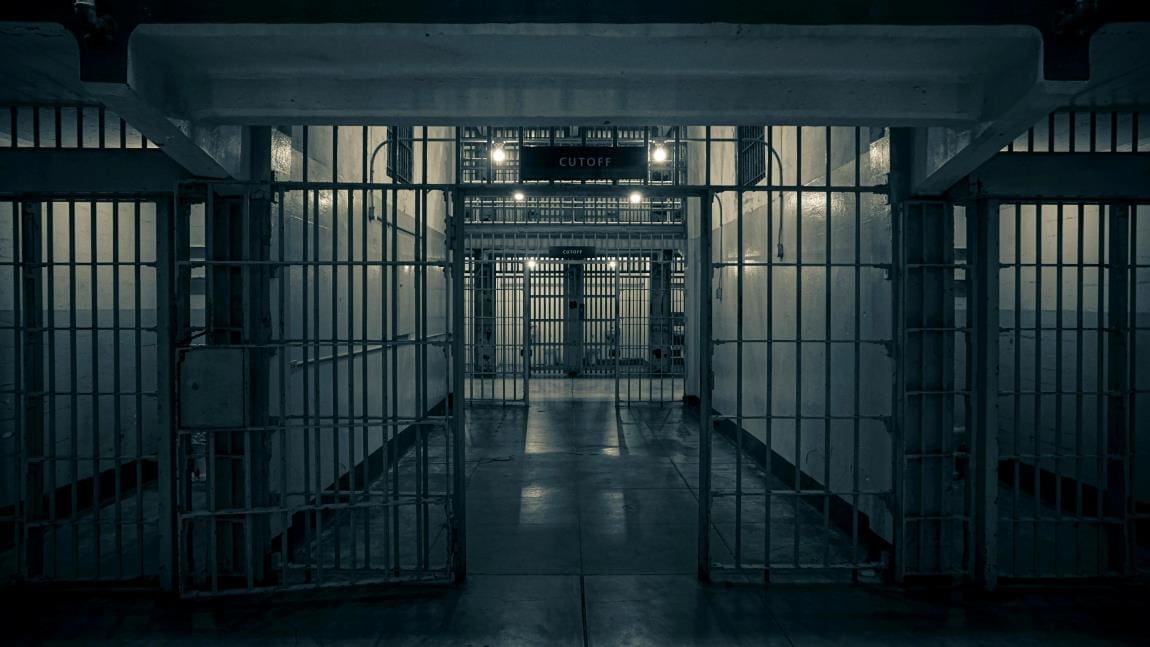
Amid extreme weather events spurred by climate change, Colorado’s prisons are struggling to provide adequate protection for incarcerated individuals against escalating environmental hazards, a new study from the University of Colorado Boulder reveals.
Drawing on the accounts of nearly three dozen formerly incarcerated individuals, the research exposes the challenges faced by Colorado’s prisons and jails in addressing surging climate risks, including intense heat, wildfire smoke, and flooding.
According to the study, aging infrastructure and insufficient policies leave incarcerated people acutely vulnerable to these hazards, with limited access to basic safety measures in times of climate crisis.
How prisons fall short in protecting the incarcerated from climate disasters
By Yvaine Ye | University of Colorado at Boulder – Blistering heat, freezing cold, and overflowing sewage water: These were the living conditions that formerly incarcerated people in Colorado said they suffered inside the state’s prisons and jails.
In a new paper, drawing on accounts from nearly three dozen previously incarcerated people, researchers at the University of Colorado Boulder reveal a disturbing story of how prisons and jails in Colorado have failed to provide humane protections from growing environmental hazards brought on by climate change. In many cases, the authors report, inadequate policies and dated infrastructure leave incarcerated people uniquely vulnerable to these harms, such as extreme heat and wildfire smoke.
The study was published in the journal Environment and Planning E: Nature and Space.
“There are so many harrowing accounts of how this system is built to operate in one way and is not good at changing or responding dynamically,” said the paper’s first author, Ben Barron, who did the research as a doctoral student in the Department of Geography. “As climate hazards become more frequent and intense, dynamic responses are the only thing that’s going to protect these people when their agency is severely limited.”
The study comes on the heels of multiple reports of Florida and North Carolina prisons failing to evacuate incarcerated people when two deadly hurricanes, Helene and Milton, struck the East Coast. People in those facilities reportedly had no power or running water for days, with sewage overflowing into their cells.
Increasing climate risks
Studies have shown that climate change is likely to increase the intensity and frequency of extreme climate events. In Colorado, that means people are more likely to experience strong heat waves, winter storms, flooding and poor air quality from wildfires.
Barron and a team of experts in engineering, environmental design, and environmental justice set out to study how incarceration facilities cope with increasing climate hazards, an understudied topic in academia.
“As an engineer, it’s shocking to me how little is included in our education and training about these social injustices and our role in amplifying them,” said co-author Shideh Dashti, associate professor in the Department of Civil, Environmental and Architectural Engineering. “There is a lot of focus on the strength and stability of these facilities and little to no attention to the wellbeing and safety of incarcerated people.”
In their previous research, the team uncovered that at least three-quarters of Colorado’s jails and prisons – housing over 80% of the state’s incarcerated population – are susceptible to at least one natural disaster in the coming year. About half of the facilities are at risk of extreme heat.
To better understand how disaster planning works inside prisons and jails, the team first reached out to carceral facilities. But the authors said none of the facilities responded to the team’s interview request. So they decided to speak directly with those who have lived through climate hazards there.
Barron interviewed 35 formerly incarcerated individuals from 23 prisons and 15 jails in Colorado. The team found that over 60% of the interviewees said they had direct experience with at least one of the four main climate hazards in Colorado: extreme heat, extreme cold, wildfires and floods. All participants said they had experienced uncomfortable temperatures, poor air quality, or water issues, such as burst pipes and sewage backups.
“It’s so important to have this opportunity to amplify the voices and experiences of these people, especially in a context where the system is actively trying to keep those stories from being heard,” Barron said. The researchers said there have been incidents in which incarceration facilities attempted to cover up conditions by falsifying data, such as indoor temperatures.
Failing infrastructure
Summer 2024 was the hottest on record in the Northern Hemisphere and the second hottest in Denver. But many prisons and jails lack air conditioning or don’t use it properly, the team found.
Interviewees mentioned that some facilities only turn on the air conditioning on an arbitrary date that does not correlate with the actual outside temperature. As a result, residents can be stuck in an extremely hot or cold cell for weeks.
“That kind of discomfort, over long periods of time, I suppose is a very small form of torture,” one interviewee, who spent 34 years incarcerated, told Barron.
More than one-third of interviewees experienced at least one wildfire while incarcerated. They described how smoke entered from cracked windows and ineffective ventilation systems and burnt their noses and eyes. People said they were left to breathe soot and ash for days.
To date, Colorado has only evacuated one prison due to wildfires. In 2013, the Royal Gorge fire forced a facility in southern Colorado to evacuate 900 incarcerated people to an empty facility. The process was poorly organized and inefficient, according to one interviewee who was evacuated.
“These buildings are designed to keep people in, not effectively get them out,” said Barron, adding that they were unable to confirm whether the facilities have set evacuation plans.
The researchers say their findings reflect a national pattern.
In North Carolina, where torrential rain from Hurricane Helene inundated the western part of the state, individuals held in several incarceration facilities reported living without light or running water for days, with some forced to sleep in rooms where toilets overflowed with feces. Similarly, several jails and prisons in Florida refused to evacuate their residents ahead of Hurricane Milton, despite mandatory evacuation orders issued for the areas.
“The fact that in the U.S. someone could be arrested for abandoning a dog in a flood, but nobody’s being held accountable when human beings are left in jail cells when water rises, is a huge contradiction in our system,” said co-author Phaedra Pezzullo, professor in the Department of Communication.
A difficult battle
Some study participants said that they could be punished for filing complaints about their living conditions.
Many of them came up with their own solutions. For example, some intentionally flooded their cells to cool down in the water. Others used cardboard and plastic to block cracks in the windows and keep wildfire smoke out.
The team hopes the study will inspire more research around climate change adaptation, mitigation and prevention while considering these underheard voices.
The researchers note that some state legislators are already working to improve conditions inside incarceration facilities, but progress often hits roadblocks, partly due to differing opinions on what punishment should look like.
“Even if we fully agree that the response to a crime is that you should be locked in a cell for a certain amount of time, nowhere in the law does it say you should be exposed to poor air quality, extreme temperatures, or the risk of living in sewage water for a week,” Barron said. “These vastly exceed unreasonable, disproportional punishment.”
Journal Reference:
Barron, B. N., Roudbari, S., Pezzullo, P. C., Dashti, S., & Liel, A. B., ‘Because we’re dying in here”: A study of environmental vulnerability and climate risks in incarceration infrastructure’, Environment and Planning E: Nature and Space (2024). DOI: 10.1177/25148486241289006
Article Source:
Press Release/Material by University of Colorado at Boulder
Featured image credit: Xiaoyi | Pexels