Snowfall across the Netherlands in early January 2026 brought daily life and transport networks under strain, as icy conditions spread across large parts of the country and prompted weather alerts in several provinces. Roads clogged with long tailbacks, accidents increased on slippery surfaces, and hundreds of flights were cancelled or delayed at Schiphol Airport as crews struggled with snow and ice.
Rail travel was also affected. Snow-covered tracks led to delays and cancellations on key routes, including connections between Utrecht, Amsterdam, and other major cities. Authorities urged people to avoid unnecessary journeys as conditions deteriorated, particularly during the morning and evening rush hours.
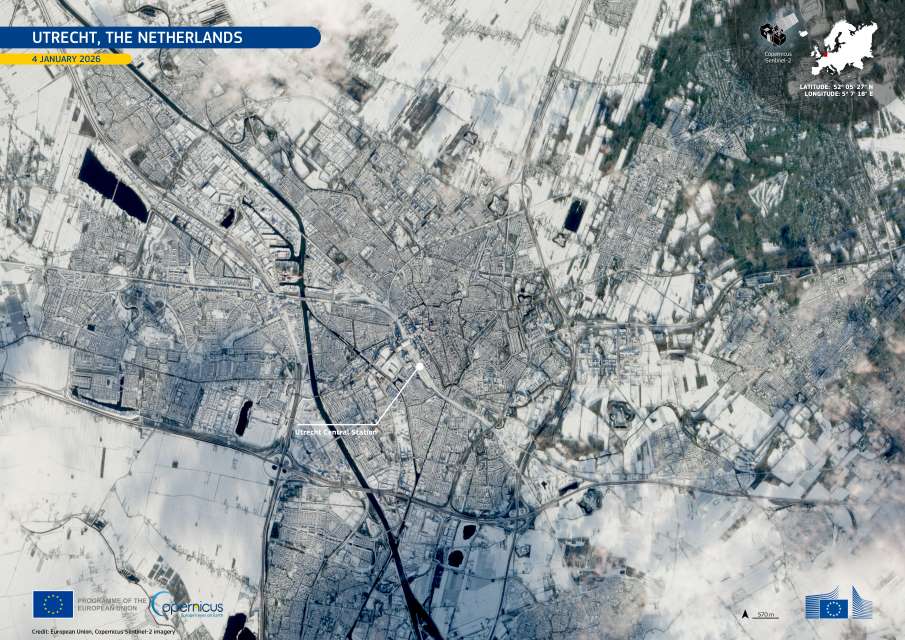
Utrecht – one of the Netherlands’ main transport hubs – is shown beneath a widespread blanket of snow in this Copernicus Sentinel-2 image, acquired on 4 January 2026. The city’s dense rail lines, roads, and surrounding urban areas stand out against the white landscape, illustrating how quickly winter weather can affect infrastructure in a country heavily reliant on coordinated transport systems.
The disruption was compounded by continuing snowfall and freezing temperatures, which made it difficult to restore normal services. At Schiphol, de-icing operations limited airport capacity, leaving many passengers stranded and forcing airlines to cut schedules over several days.
Copernicus satellite data plays a key role in monitoring snow cover and winter hazards across Europe. By providing detailed, timely imagery, it helps authorities assess impacts on roads, railways, and airports, and supports planning and preparedness for extreme winter weather events.
Featured image credit: European Union, Copernicus Sentinel-2 imagery