April 2025 continued an unrelenting streak of high global temperatures, becoming the second warmest April ever recorded, according to the latest Climate Bulletin from the Copernicus Climate Change Service (C3S). The average surface air temperature for the month was 14.96 °C – 0.60 °C above the 1991–2020 average, and 1.51 °C above the pre-industrial benchmark.
This places April 2025 just behind April 2024, which remains the warmest April on record globally. Since June 2023, every month has set a new global temperature record for its respective calendar month, and the 12-month period leading up to April 2025 holds the highest average temperature ever documented.
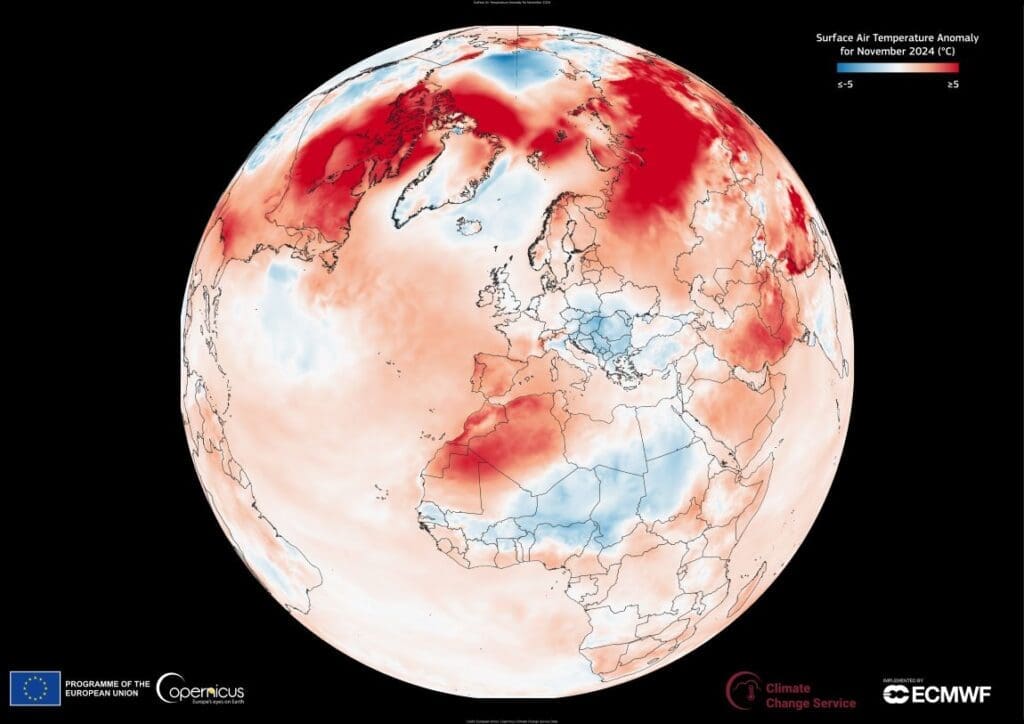
Europe reflected this broader pattern. The continent recorded an average surface air temperature of 9.38 °C in April, which is 1.01 °C above the 1991–2020 average. Particularly high temperatures were observed over parts of Scandinavia and western Asia, where warm anomalies stood out prominently in the C3S temperature visualisation. These areas, shaded deep red in the data map, highlight regions where conditions were significantly above normal.

The Copernicus visualisation illustrates the temperature anomalies across the Northern Hemisphere for April 2025. Red hues represent above-average temperatures, while cooler-than-average areas are marked in blue. Among the cooler regions were Greenland and parts of the northern Atlantic Ocean, which bucked the overall warming trend. While such regional variations are typical in global climate systems, they stand in stark contrast to the pervasive global heat.
The rise in temperatures is driven by a combination of persistent greenhouse gas emissions and lingering El Niño effects. Although El Niño is currently weakening, it continues to influence atmospheric patterns and elevate global averages. Scientists expect the broader warming trend to persist in the coming months, even as the El Niño phase tapers off.
These results add to a growing body of data documenting the accelerating impacts of climate change. C3S Director Carlo Buontempo has previously commented that the steady stream of record-breaking months is more than just a series of anomalies, it’s part of a clear and ongoing trend that reflects long-term human influence on the climate system.
As summer approaches, April’s climate data underscores the urgency for global efforts to mitigate emissions and adapt to increasingly extreme conditions. Policymakers, researchers, and the public alike are being urged to prepare for what could be another summer marked by heatwaves, droughts, and other climate-related events.
The full Climate Bulletin for April 2025, along with interactive data visualisations and regional breakdowns, is available via the Copernicus Climate Change Service website.
Featured image credit: European Union, Copernicus Climate Change Service Data