
Summary:
Plastic production is deeply embedded in modern industry, shaping everything from packaging and textiles to food containers and consumer goods. While its durability and low cost have made it indispensable, mounting environmental concerns have accelerated efforts to develop alternatives. Researchers at the École polytechnique fédérale de Lausanne (EPFL) are working on plant-based materials that could replace plastic in selected applications, particularly disposable products.
One team has created a method to transform wood fibers into durable biopolymers in a single step, preserving the plant’s natural structure to improve strength and biodegradability. An EPFL spin-off has already produced several metric tons and is developing packaging and adhesive prototypes. Other researchers are studying cellulose, protein-based compounds and mycelium – a fungal material that grows with limited energy input and decomposes far faster than petroleum-based plastics.
Yet technical advances alone will not be enough. Biomass supply, land use constraints, high start-up costs and industrial systems designed around petrochemicals complicate large-scale adoption. Replacing single-use plastic may be feasible, but a broader shift in manufacturing and sourcing will determine whether alternatives can move beyond niche markets.
— Press Release —
Can plastic be replaced? Solutions? Yes. Miracle? No.
Many of the items we use on a daily basis are made of plastic: water bottles, single-use bags, packaging, clothing and more. While the material offers several benefits – it’s lightweight, solid and cheap to manufacture – it has one major drawback: its environmental impact. As plastic accumulates in natural environments, it breaks down into small particles that can be ingested and become toxic to living organisms, and it also contributes to global warming. So can it be replaced? Yes, but not for everything and not in any old way.
At EPFL, a number of scientists are developing promising alternatives. For instance, Jeremy Luterbacher and his team at the Laboratory of Sustainable and Catalytic Processing (LPDC) have invented new biodegradable compounds. Some compounds of this type, known as bioplastics, already exist, such as polylactic acid (PLA), used to produce food bags and 3D printer filament. “Bioplastics are useful substances but they are not suitable for applications where high performance is required,” says Luterbacher. “It’s chemically possible to obtain biological materials with better properties, but it requires highly complicated, energy-intensive processes involving several steps.”
Structures that are compatible with Mother Nature
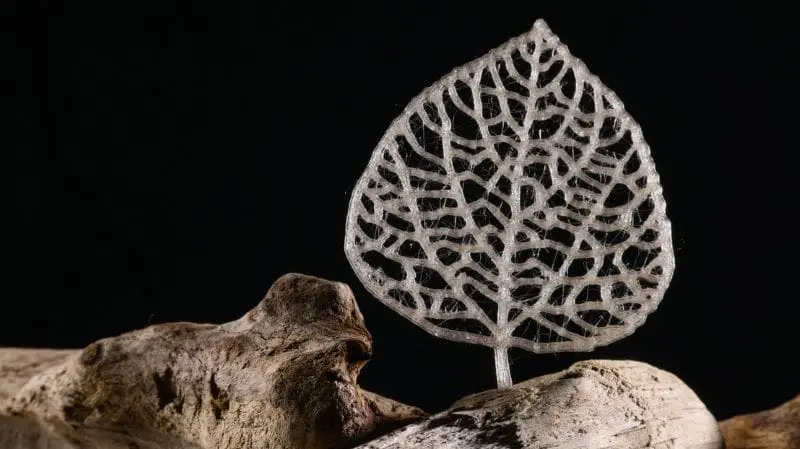
Luterbacher’s team has found one way around this obstacle. They’ve developed a procedure for creating biopolymers from wood while retaining the natural structure of the plant fibers, resulting in a more robust bioplastic. “The advantage to our approach is that it’s simple,” says Luterbacher. “We cook the wood fibers together with another compound to produce our base material in a single step. But that’s not the only plus – since we employ structures that nature already knows how to handle, our products aren’t toxic and are more readily biodegradable.”
This innovative procedure is being taken to market by EPFL spin-off Bloom, which recently produced three metric tons of its bioplastic, an achievement that shows how advanced the method is. Bloom is currently developing prototypes of packaging, adhesives and additives.
The LPDC scientists have also used the procedure to create an alternative to bisphenol A. This petrochemical, which is added to products to make them stiffer and transparent, has been identified as a possible endocrine disruptor.
“An extraordinary material”
Meanwhile, Tiffany Abitbol and her team at EPFL’s Sustainable Materials Laboratory (SML) are studying biopolymers from a different perspective. Their goal isn’t to create them via chemical reactions, but instead to examine how naturally occurring ones interact with other materials and could serve various functions. The SML scientists are looking at three main types of biopolymers: cellulose, protein-based compounds and mycelium, which is the root-like material produced by fungi.
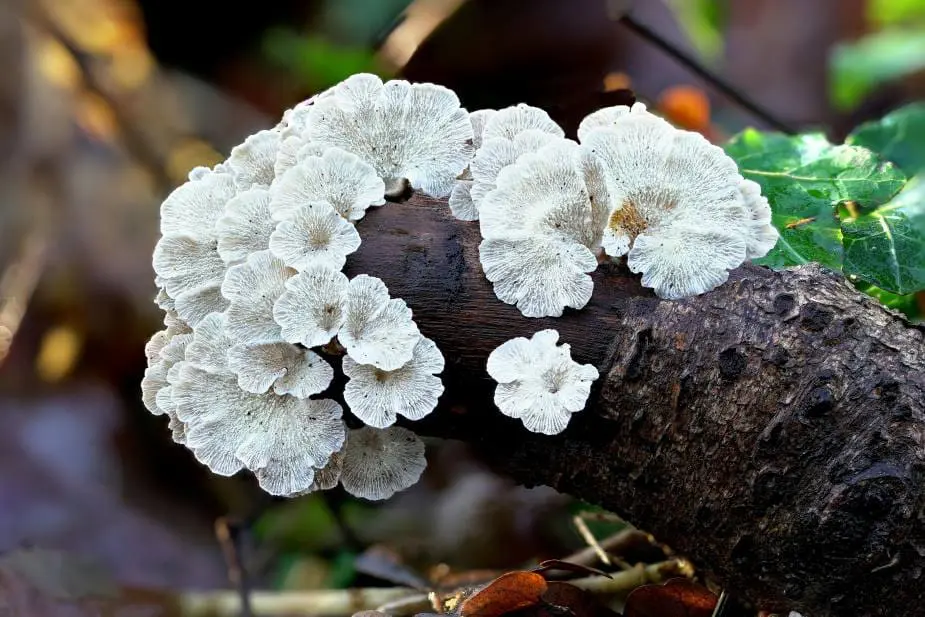
“Mycelium is an extraordinary material,” says Abitbol. “It requires little energy to produce, decomposes easily and can bind particles together in a network – kind of like a universal glue.” It is currently used to make things such as foam and panels, and it could be combined with timber residue and plant waste to create a variety of other objects.
Each of these novel materials could replace plastic in certain applications. “Our first target should be the plastic in disposable items – packaging, textiles and the film coating used inside paper containers for holding food and drugs,” says Abitbol. “Put together, they constitute a huge amount of industrial plastic. Making this change would already improve things considerably. Then we could expand it to other plastic products.”
Don’t mess with farming
According to Abitbol and Luterbacher, plastic alternatives are promising but many hurdles remain before they can be commercialized and adopted on a large scale. Issues still need to be resolved along the entire chain, from sourcing the raw material to disposing of the end-of-life products.
For instance, even though many different kinds of biomass – crop residue, household organic waste, unconsumed food and so on – can be used to create biopolymers, not all of them are feasible or even worthwhile. “Plant waste is very heterogeneous and isn’t produced in sufficient amounts to enable the large-scale manufacture of bioplastic,” says Luterbacher. “We would need to grow crops specifically for this purpose, which means using fertile land and entering into competition with food production. That’s not something we want to do.” His research group has therefore decided to focus on wood from responsibly managed forests – an easy-to-source raw material that wouldn’t compete with farmland.
Rethinking our industrial system
Other significant hurdles to the adoption of bioplastic relate to economics and structural factors. The production process for conventional plastic is deeply entrenched: it’s long, energy-intensive and entails numerous steps to turn petroleum into an end product. Making any changes to this complex, finely honed system would be extremely difficult.
“We live in a plastic-based society, and our industrial system has been designed to serve it,” says Abitbol. “If a manufacturer wants to do things differently, it will soon run up against high costs and other constraints. It’s a real uphill battle.”
Luterbacher adds: “Some manufacturers have tried to switch to biopolymers, but all they did was substitute plant-based materials for petrochemicals without adapting the manufacturing process. That proved to be complicated and costly. What’s needed instead is a rethink of the entire philosophy.” He also mentions the challenges inherent in taking a bioplastic product to market. “The start-up costs are high, making it impossible to compete immediately with traditional industries that have sometimes been established for a hundred years.”
At an apple’s pace
Abitbol estimates that the bioplastics she’s developing would decompose at the same rate as an apple. That’s one million times faster than conventional, petroleum-based plastic, which lasts hundreds of years. So this approach makes sense. That said, it’s not easy to calculate exactly how long a new material would take to decompose.
“The degradation process depends on factors including how the bioplastic is used, the kind of environment in which it’s disposed of, and the microorganisms present in that environment,” she says. Luterbacher points out that “a whole array of studies, along with a lot of time, are needed to gain a better understanding of how these new materials change over time: how their molecules split apart, where they go and what chemical reactions are triggered when they come into contact with soil, water and other substances.”
Article Source:
Press Release/Material by Sarah Perrin | EPFL
Featured image credit: Cornelis Johannes (Kees) van Leeuwen | Pexels