Summary:
Carbon emissions from Swedish wildfires may be significantly underestimated, with the largest releases occurring below ground in peat and organic soils rather than in visible flames. A study published in Science Advances presents the most detailed map to date of carbon emissions from forest fires in Sweden, combining field measurements, satellite data, and national agency records to assess both local and regional impacts.
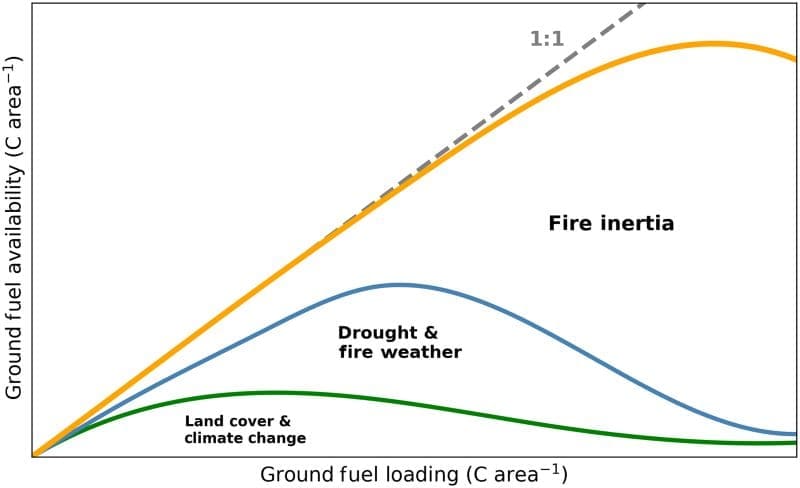
Focusing on the extreme fire season of 2018, when 324 forest fires were recorded across Sweden, researchers at Lund University found that emissions from deep organic soils were underestimated by up to 50 percent. In contrast, emissions from intense above-ground fires appear to be overestimated in existing fire databases. Smoldering underground fires, which can persist for long periods and are often invisible in satellite imagery, were shown to release large amounts of stored carbon.
The study also highlights how fire location, land use, and forest management influence total emissions. A single peat-rich fire, such as the 2014 Sala wildfire, may release as much carbon as hundreds of more visible surface fires combined.
— Press Release —
Large forest fire emissions are hidden underground
During the extremely hot summer of 2018, 324 forest fires were reported in Sweden. Using field measurements, models, and data from the Swedish Forest Agency, the Swedish Environmental Protection Agency, and the Swedish Meteorological and Hydrological Institute, researchers have now mapped where and why the carbon was released.
The study shows that emissions from intense above‑ground fires are overestimated in fire databases. Emissions from deep organic soils and peatlands, on the other hand, are underestimated – during the summer of 2018 by as much as 50 percent. These smoldering underground fires are rarely visible in satellite images, but can release very large amounts of carbon.

“What looks dramatic from above is not always what affects the climate the most. The significantly large emissions actually occur silently underground,” says Johan A. Eckdahl, forest fire researcher at Lund University and the University of California, Berkeley.
In boreal forests – the coniferous forest region that stretches around the Northern Hemisphere – more carbon is stored than exists in the atmosphere today. A large portion is found in deep peat soils that have built up over thousands of years. When these soils dry out and ignite, they can continue to burn below the surface for long periods. This means that traditional methods used in today’s fire databases, which rely on the size of the burning area, smoke density, and visible fire intensity, risk missing a crucial part of forest fires’ climate impact.
A telling example is the comparison between the 2018 year of fires and the 2014 forest fire in Sala, Sweden. Despite the total burned area being much larger in 2018, the results show that the Sala fire alone released roughly as much carbon as all 324 fires in 2018 combined.
“What matters is where it burns. A fire in deep peat soils can have a greater climate impact than hundreds of more intense fires on land with thin soil layers,” says Eckdahl.
The study also provides new perspectives on forestry and land use. The high‑resolution maps show certain patterns suggesting that recently clear‑felled areas could serve as pathways for fire to spread into older, carbon‑rich forests and wetlands. The researchers also conclude that population density plays an important role in enabling early containment of high‑intensity fires. There were also some indications that early firefighting efforts and active forest management can reduce fire damage.
The researchers believe that the findings have relevance far beyond Sweden’s borders. If emissions have been underestimated during a Swedish year of fires of the scale seen in 2018, it raises the question of how large emissions may have been during recent extreme fires in North America and Siberia in 2021. In the latter case, adequate baseline data is lacking, making it difficult to calibrate satellites and models.
“Satellites that show burning above ground are important for understanding where underground burning will begin. However, we need to combine satellite overviews with field work. Only then can we understand how much carbon is actually released, and how to best protect the most vulnerable carbon stores in a warming climate,” concludes Eckdahl.
Journal Reference:
Johan A. Eckdahl et al., ‘Reassessing boreal wildfire drivers enables high-resolution mapping of emissions for climate adaptation‘, Science Advances 12 , 9: eadw5226 (2026). DOI: 10.1126/sciadv.adw5226
Article Source:
Press Release/Material by Johan Joelsson | Lund University
Featured image credit: Johan A. Eckdahl