Strong winds, low humidity and dry grasslands created conditions for multiple wildfires across parts of the Texas Panhandle in March 2026, as a series of fast-moving fires spread through the region within days. Local authorities issued evacuations and closed roads in several areas as flames advanced rapidly across open rangeland, driven by gusts and shifting weather patterns typical of the season.
The southern Great Plains is especially exposed to this type of fire activity at the end of winter. Dormant grasses form a continuous layer of fine fuel that ignites easily and allows fire to travel quickly over long distances. Under these conditions, fires are shaped primarily by wind, with sudden changes in direction capable of expanding the affected area in a short time.
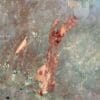
One of the largest incidents during this period was the ‘Yellow Fire’, which burned through parts of Oldham County in northwestern Texas. By mid-March, the fire had left a burn scar covering more than 5,000 hectares, visible from satellite data collected on 15 March 2026.
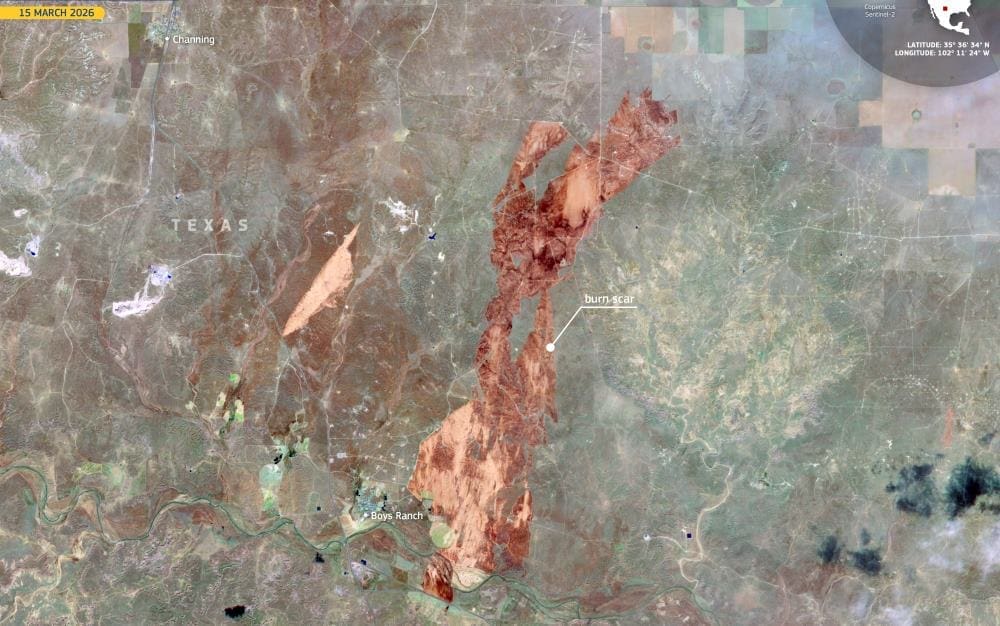
The affected area appears as a broad, darkened swath cutting across lighter grassland, marking the extent of the burned surface. Its elongated form reflects wind-driven spread, while irregular edges point to the rapid, surface-level advance typical of grassfires. The absence of active flames or dense smoke indicates the fire had largely been contained by the time of observation.
The ‘Yellow Fire’ developed alongside other wildfires in the region, with several fires reported across the Texas Panhandle during the same period, all linked to the same combination of dry fuels, strong winds and low humidity. These simultaneous outbreaks illustrate how quickly fire conditions can escalate across the Texas Panhandle.
Although grasslands can recover relatively quickly, repeated fires and prolonged dry periods may influence vegetation patterns and increase future fire risk. Satellite observations provide consistent measurements of burned areas, supporting both emergency response and longer-term land management.
Copernicus Sentinel-2 data are widely used to monitor wildfire impacts and track changes across affected landscapes, contributing to a better understanding of fire dynamics in vulnerable regions.
Featured image credit: European Union, Copernicus Sentinel-2 imagery