Valencia, Spain | Muser NewsDesk
Summary:
A new Horizon Europe project, INDTEGRATE, has been launched to explore how green hydrogen can help reduce emissions from energy-intensive industries such as glass and ceramics manufacturing. Coordinated by KERIONICS S.L. (Spain), the three-year initiative brings together industrial companies, research organisations, universities and technology developers from across Europe.
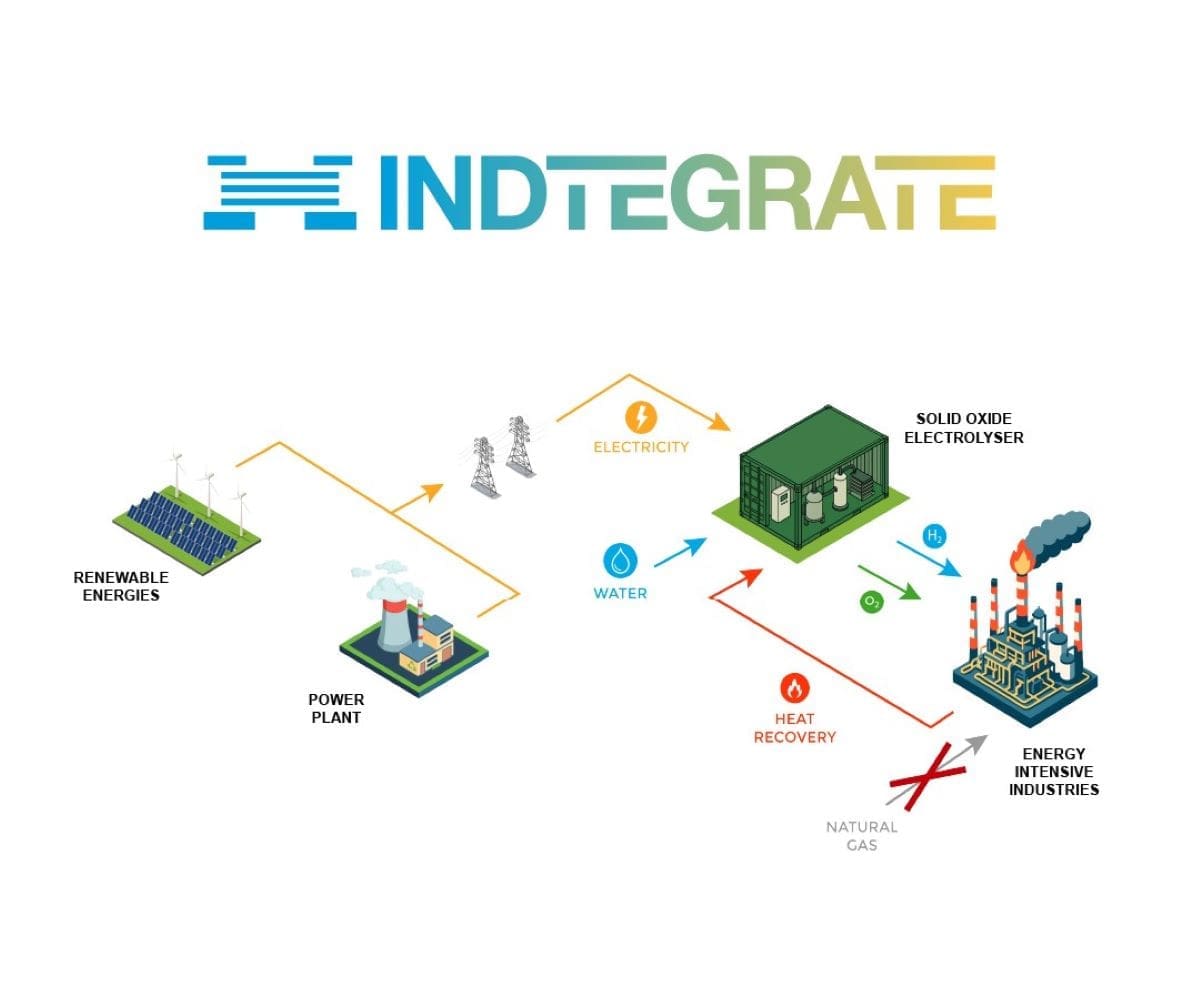
The project will focus on integrating Solid Oxide Electrolyser Cell (SOEC) technology with renewable electricity, industrial waste heat recovery and digital tools for system management and optimisation. Partners plan to develop digital models and digital twin systems to support the design and operation of hydrogen production processes, alongside a modular 220 kW SOEC system that will be tested at industrial pilot sites in Spain and Slovenia.
According to the consortium, the demonstrations will assess the technical performance, operational flexibility and economic viability of producing green hydrogen for high-temperature industrial processes that are difficult to electrify directly. The project also includes stakeholder engagement, training activities and the development of a roadmap intended to support wider deployment of the technology across Europe.

— Press Release —
Advancing green hydrogen integration for the decarbonisation of energy-intensive European industries
The EU has set an ambitious goal for Europe to become the first climate-neutral continent by 2050. The transition towards a green and sustainable society is underway.
Energy-intensive industries such as the ceramics and glass sector account for a significant share of Europe’s industrial energy consumption and CO₂ emissions. Decarbonising these sectors is therefore essential to achieving the European Union’s climate and industrial competitiveness objectives. While electrification will play a key role, additional solutions are needed to address high-temperature industrial processes where direct electrification remains challenging.
INDTEGRATE, a Horizon Europe Innovation Action that addresses this challenge, was officially launched.
The project brings together a multidisciplinary consortium of industrial companies, technology developers, research organisations, universities, and innovation experts from across Europe to accelerate the integration of Solid Oxide Electrolyser Cell (SOEC) technology into energy-intensive industries. By combining renewable electricity, industrial waste heat recovery, advanced digital technologies, and green hydrogen production, INDTEGRATE aims to demonstrate a practical and scalable pathway towards industrial decarbonisation. The project will develop a suite of advanced digital tools, including reduced-order models, Process and Electrolyser Digital Twins, to support the design, optimisation and operation of hydrogen production systems in the glass and ceramics sectors.
Building on these digital capabilities, INDTEGRATE will engineer and validate a modular 220 kW SOEC system combining renewable electricity and industrial waste heat recovery to produce green hydrogen more efficiently. Through pilot demonstrations in operational industrial facilities, INDTEGRATE will assess the technical performance, operational flexibility and economic viability, while supporting the wider adoption of hydrogen technologies through stakeholder engagement, skills development, training activities and a roadmap for large-scale replication across Europe.
Read also: European Green Deal: a global emissions paradox
Kick-off meeting overview and outcomes
Hosted by the project coordinator, KERIONICS S.L. (Spain), the kick-off meeting marked the official start of INDTEGRATE and brought together representatives from all partner organisations to establish a common vision and implementation strategy for the next three years.
During the meeting, consortium partners presented their respective roles and responsibilities and discussed the project’s technical, managerial, and communication activities. Particular attention was given to the development of the SOEC system, digital twin technologies, energy management solutions, and the preparation of the industrial pilot demonstrations in Spain and Slovenia. Partners also exchanged views on expected impacts, collaboration mechanisms, risk management procedures, and opportunities for creating synergies with other European initiatives supporting industrial decarbonisation and hydrogen technologies.
The discussions confirmed a shared commitment to delivering innovative, industry-driven solutions capable of accelerating the adoption of green hydrogen in energy-intensive sectors while supporting Europe’s broader sustainability ambitions.
Next steps
Over the coming months, the INDTEGRATE consortium will focus on the detailed design and development of the project’s technological building blocks, including digital modelling tools, energy management systems, and SOEC integration strategies. Preparatory activities for the pilot demonstrations will also begin, alongside stakeholder engagement, dissemination, and collaboration activities designed to maximise the project’s impact.
The first technical results and project developments are expected to be shared through the project’s communication channels and stakeholder engagement activities, contributing to the advancement of sustainable hydrogen solutions and the decarbonisation of European industry.
***
The INDTEGRATE project is funded by the European Union’s Horizon Europe research and innovation programme under Grant Agreement No. 101294637. Views and opinions expressed are however those of the author(s) only and do not necessarily reflect those of the European Union or the European Research Executive Agency (REA). Neither the European Union nor the granting authority can be held responsible for them.
Disclaimer:
The use of brand names and/or any mention or listing of specific commercial products, organisations or services herein is solely for informational purposes and does not imply endorsement by Muser Press or its partners, nor discrimination against similar brands, products, organisations or services not mentioned.
Article Source:
Press Release/Material by INDTEGRATE
Featured image credit: INDTEGRATE