Summary:
Antarctic Intermediate Water (AAIW), a major ocean water layer that helps redistribute heat, freshwater and carbon across the Southern Hemisphere, has become saltier and denser after decades of freshening. New research links this reversal to reduced seasonal meltwater input, with potential consequences for how the ocean stores heat and carbon.
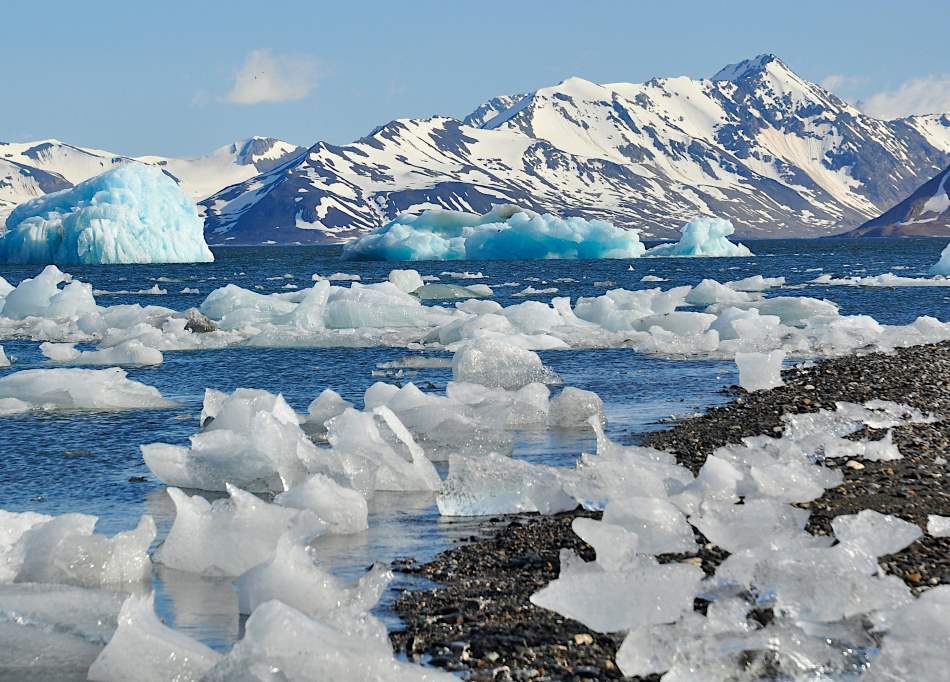
Published in Nature Climate Change, the study examines how declining sea ice has altered this water layer, which forms in the Southern Ocean and spreads northward into the Atlantic, Indian and Pacific oceans. Between 1995 and 2015, increasing freshwater input from seasonal ice melting helped keep the upper ocean fresher and more strongly layered. Since 2016, shrinking sea ice has reduced that input, reversing the earlier trend.
Researchers from the Indian Institute of Science, the University of Melbourne and the University of Southampton analysed measurements from the Argo network alongside satellite and reanalysis datasets.
The shift could influence how heat, carbon and oxygen move through the ocean, with potential implications for deep-ocean warming, sea levels and wider circulation patterns. However, the extent and timing of these longer-term effects remain uncertain.

— Press Release —
Antarctic sea ice loss batters ocean’s freshwater engine
The Antarctic Intermediate Water (AAIW) – a vast layer of fresh water spanning much of the Southern Hemisphere’s ocean – has rapidly reversed its long-term trends in salinity and density, according to new research. The AAIW helps store carbon, supply oxygen and drive global ocean currents.
The AAIW plays a role in heat, freshwater and carbon redistribution around the planet. The international research team say their findings, published in Nature Climate Change, show we may have underestimated the extent of deep-ocean warming and rising sea levels.
Led by Associate Professor Bishakhdatta Gayen, (University of Melbourne and the Indian Institute of Science (IISc)) and PhD student Kaushik Mishra (IISc), with co-author Professor Alberto Naveira Garabato (University of Southampton (UK)), the paper describes how, from 1995 to 2015, the AAIW was kept healthy by the Antarctic summer ice melt. From 2016 to 2024, that trend abruptly reversed when reduced freshwater input led the layer to become saltier, denser and deeper.

It is the first direct observational evidence of this change in AAIW properties.
The team analysed data from the global Argo program – a network of around 4,000 robotic floats that sample the upper oceans – as well as satellite and atmospheric datasets.
Associate Professor Gayen said the last time the AAIW switched was at the end of the last interglacial period, around 130,000 years ago, when there was very little ice in the Antarctic.
“That transition took thousands of years, not two decades,” Associate Professor Gayen said.
“The Antarctic region is the freshwater engine of oceans around the globe. Melting Antarctic sea ice influences circulation thousands of kilometres away. Until 2016, the seasonal summer melt was triple the Amazon River’s entire annual flow of roughly 6,600 cubic km.
“From 2016, Antarctic sea ice shrank to record lows. This abruptly choked off that critical seasonal surge and the meltwater delivery dropped to roughly double the Amazon’s annual flow.”
He said oceans act as a ‘climate buffer’, absorbing and redistributing most of the excess heat and a large share of human CO₂ emissions, storing them for decades to centuries and thereby slowing and moderating atmospheric warming and its immediate impacts.
Read also: Deep ocean heat shifts toward Antarctica increasing ice shelf melting risk
“If the altered AAIW changes the way surface water is carried down into deeper layers, it could affect how much carbon the ocean locks away – although the magnitude and timing are uncertain,” he said.
“This could be the tipping point for the Atlantic Ocean and the AAIW current, leading to larger, longer-lasting changes to the climate in the Southern Hemisphere.”
Mr Mishra said the abrupt reversal reveals a critical missing feedback loop.
“The ocean absorbs over 90 per cent of all heat released into the environment by human activities, with most of that heat stored in the upper ocean. A weakened AAIW layer could push more excess heat deeper. That would mean existing models are underestimating deep-ocean warming and therefore miscalculating regional sea level rise and long-term ocean and land surface temperatures.”
Professor Naveira Garabato said the changes are an urgent reminder of how climate change is impacting almost every part of the Earth’s surface.
“As this altered, saltier and denser water mass travels north, it moves across the Atlantic, Indian and Pacific oceans. Because this water layer forms part of the upper limb of the ocean’s global ‘overturning circulation’, a sustained shift could, over years to decades, feed into the Atlantic Meridional Overturning Circulation – the deep-ocean current system often linked to climate stability in the North Atlantic.
“It could also ultimately influence atmospheric circulation, weather and storm track in the Southern Hemisphere. However, the impact can cascade globally.”
Journal Reference:
Mishra, K., Gayen, B. & Naveira Garabato, A.C., ‘Reversal of Antarctic Intermediate Water trends triggered by sea ice decline’, Nature Climate Change (2026). DOI: 10.1038/s41558-026-02758-y
Article Source:
Press Release/Material by University of Melbourne
Featured image credit: Alberto C. Naveira Garabato