Paris, France | AFP | Muser NewsDesk
Planet-warming carbon dioxide emissions from oil, gas and coal rose to a new record high this year, according to preliminary research Wednesday that found no sign the world was moving away from fossil fuels as planned.
Nations gathering in Azerbaijan for crunch UN climate talks have pledged to “transition away” from fossil fuels and aim to limit global warming to 1.5 degrees Celsius above preindustrial times.
But oil, gas and coal emissions continue to rise, according to the new findings from an international network of scientists at the Global Carbon Project.
The research found that to keep the 1.5 °C target in sight, the world would now need to reach net-zero CO₂ emissions by the late 2030s — far earlier than most countries currently plan.
While scientists said renewable power and electric vehicles are helping to displace some fossil fuels, growth in emissions from gas and oil pushed global fossil fuel emissions higher this year.
Glen Peters, research director at the Center for International Climate Research in Oslo, said the world was “frustratingly close” to a peak in its fossil fuel emissions.
“Renewables are growing strongly, electric vehicles are growing strongly, but still it’s just not enough,” he told reporters, adding that any peak in emissions would only be ascertained after several years of data.
The preliminary findings show global CO₂ emissions from fossil fuels rising 0.8 percent in 2024 compared to last year, reaching a record of 37.4 billion tonnes.
The research is based on monthly figures and projections to the end of the year and could therefore be slightly higher or lower than the current estimates.
Race to zero
Researchers said increases in CO₂ emissions from India as well as growth in international aviation drove emissions up, while emissions decreased in the European Union and the United States.
In China, which accounts for nearly a third of the global total, fossil fuel emissions in 2024 are projected to tick up marginally, with increases in CO₂ pollution from coal and gas.
“Oil has probably peaked in China, and that is thanks to the rapid rollout of electric vehicles,” Peters said. “So these technologies do help.”
Overall global CO₂ pollution, which includes emissions from land use change like deforestation, was roughly flat at 41.6 billion tonnes in 2024.
This leaves the world with an available “budget” of 235 billion tonnes of CO₂ emissions for a coin toss chance of curbing warming to 1.5C, scientists said, in an assessment that takes into account the current level of warming, as well as the future effects of other greenhouse gases.
That translates to six years at the current rate of CO₂ emissions, or a steep reduction each year to get to net zero.
“The simple maths that we show here is, without assuming any negative emissions, that you have to reach zero by the late 2030s,” said Pierre Friedlingstein, chair in mathematical modelling of the climate system at the University of Exeter.
The research found that budding technologies to remove carbon dioxide from the atmosphere and permanently store it, for example in rock, accounted for a “negligible” amount of CO₂ removal compared to nature-based processes like reforestation.
With emissions already stoking warming, the UN says 2024 is on track to be more than 1.5 °C hotter than the preindustrial average, although this does not amount to an immediate breach of the climate target, which measures temperatures over decades.
Azerbaijan President Ilham Aliyev, whose energy-rich country is hosting the COP29 climate talks, on Tuesday repeated his insistence that oil, gas and other natural resources are a “gift of the God”.
klm/dl/yad
© Agence France-Presse
Journal Reference:
Friedlingstein, P., O’Sullivan, M., Jones, M. W., Andrew, R. M., Hauck, J., Landschützer, P., Le Quéré, C., Li, H., Luijkx, I. T., Olsen, A., Peters, G. P., Peters, W., Pongratz, J., Schwingshackl, C., Sitch, S., Canadell, J. G., Ciais, P., Jackson, R. B., Alin, S. R., Arneth, A., Arora, V., Bates, N. R., Becker, M., Bellouin, N., Berghoff, C. F., Bittig, H. C., Bopp, L., Cadule, P., Campbell, K., Chamberlain, M. A., Chandra, N., Chevallier, F., Chini, L. P., Colligan, T., Decayeux, J., Djeutchouang, L. M., Dou, X., Duran Rojas, C., Enyo, K., et al.: Global Carbon Budget 2024, Earth System Science Data 17, 965–1039 (2025). DOI: 10.5194/essd-17-965-2025
Article Source:
Press Release/Material by Kelly MACNAMARA | AFP
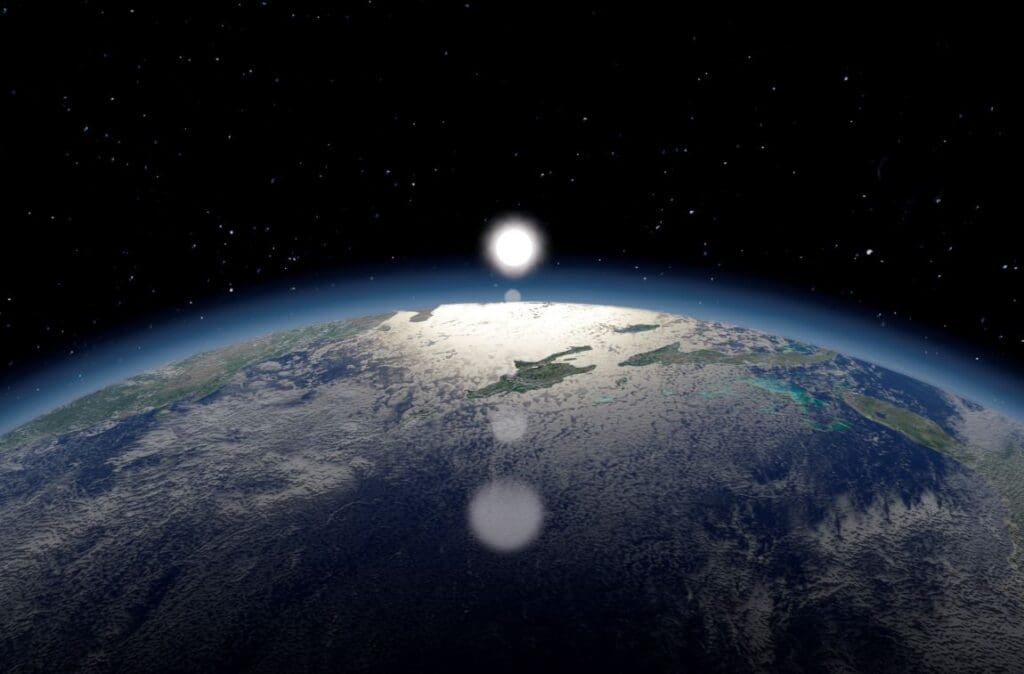
Featured image credit: Chris LeBoutillier | Unsplash