Summary:
Flies are often dismissed as mere nuisances, yet a new study reveals that nearly 600 species migrate over long distances, delivering crucial benefits to people and nature.
Published in Biological Reviews, the research highlights the ecological significance of these insects, which serve as pollinators, pest controllers, decomposers, and disease carriers. Despite their importance, many migratory fly species are threatened by climate change, habitat loss, and human activity. The study emphasizes the need for interconnected landscapes to sustain their populations, as barriers like urbanization and agricultural expansion disrupt migration routes. Hoverflies, for example, pollinate key food crops, while houseflies play a vital role in decomposition.
Scientists warn that without conservation efforts, many species could disappear before they are even documented.

Migrating flies vital for people and nature
Bugs such as houseflies, fruitflies, blowflies, hoverflies and mosquitoes all belong to an order called Diptera – which contains over 125,000 known species, and possibly over a million in total.
The new study finds that almost 600 of these species are likely to be migratory – and the true number is probably far higher.
This is important because these insects play multiple important roles, including as pollinators, pest controllers and decomposers.
With insect numbers declining worldwide, the review highlights the need for complex, connected habitats to support flies along their epic journeys.
“Migrating flies play an unparalleled range of ecological roles – making them a major force in ecosystems and the economy,” said Dr Will Hawkes, from the Centre of Ecology and Conservation on Exeter’s Penryn Campus in Cornwall.
“Many of the species that benefit humans are under threat from climate change and other human impacts – and many could disappear without ever being documented unless action is taken.
“To conserve them, it will not be enough to protect or restore habitat at single locations; the entire migratory route must be capable of sustaining these insects.”
Dr Karl Wotton said the priority should improving “connectivity” – linking insect-friendly areas across landscapes.
“Worldwide, factors including urbanisation, intensive agriculture and destruction of wetlands have made large areas unfriendly to insects – potentially creating damaging gaps on insect migration routes,” Dr Wotton said.
The study defined migratory behaviour using 13 criteria, but Dr Wotton said it could be defined as “undistracted and straightened-out continuous flight” (not stopping to feed or mate, for example).

The team found evidence of migration in species from 60 out of the 130 families in the Diptera order – with hoverflies showing the strongest evidence for migration.
While the total of 592 possible migrants is just 0.5% of recorded Diptera species, the researchers think many more may migrate.
Of the possible migrants identified, 62% are pollinators, 35% are decomposers, 18% are pests, 16% can transmit diseases, 10% are pest controllers, and all play a role in moving nutrients.
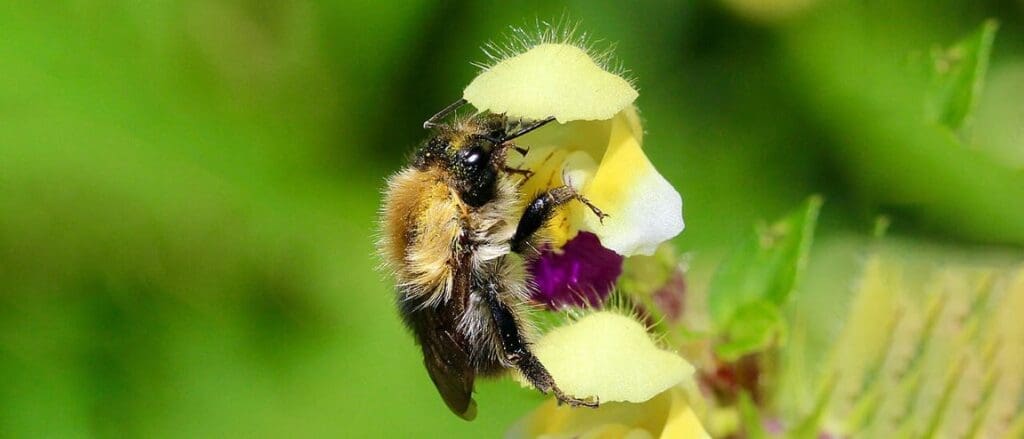
Highlighting the impact of some key migratory species, the researchers note that pollinating hoverflies alone have been found to visit 52% of major food crop plants globally (these crops have an estimated worth of around US$300 billion per year).
Highly mobile species may also connect distant habitats – moving genetic material, such as pollen, back and forth, boosting the genetic diversity of plants.
As well as the loss of direct benefits, the decline of such insects also affects wider biodiversity.
For example, numbers of insect-eating birds in North America have dropped by an estimated 2.9 billion in the last 50 years – while numbers of non-insectivorous birds have increased by 26.2 million.
The researchers highlighted examples of notable migrating flies:
- The larvae of just two hoverfly species (marmalade and vagrant hoverflies) eat an estimated 10 trillion aphids each year in southern England alone – showing their vast power as pest controllers.
- Autumn houseflies (Musca autumnalis) play a vital role as decomposers. A study on the closely related housefly (Musca domestica), showed that the larvae produced by just 50 flies (25,000 eggs) can decompose up to 444kg of pig slurry, transforming it into organic compost. Autumn houseflies have been found migrating through high passes in the Pyrenees.
- Other fly species embark on a more sinister journey: reindeer botfly may track reindeer on their own lengthy migrations – and the female flies expel their larvae into the noses of reindeer to live in their throats until spring.
- Some migrating flies are moving into new areas due to global warming; mosquitoes have recently carried malaria into mountainous regions of Nepal.
Dr Myles Menz, from James Cook University, concluded: “What we’ve uncovered is that Dipteran migrants are vital to the planet’s ecosystems, yet they are hugely underappreciated. This review will hopefully inspire many more studies into this fascinating and important world of fly migration.”
The study was funded by the Royal Society.
Journal Reference:
Hawkes, W.L., Menz, M.H.M. and Wotton, K.R., ‘Lords of the flies: dipteran migrants are diverse, abundant and ecologically important’, Biological Reviews (2025). DOI: 10.1111/brv.70017
Article Source:
Press Release/Material by Alex Morrison | University of Exeter
Featured image: Marmalade hoverfly (Episyrphus balteatus). Credit: Dr Will Hawkes