
Summary:
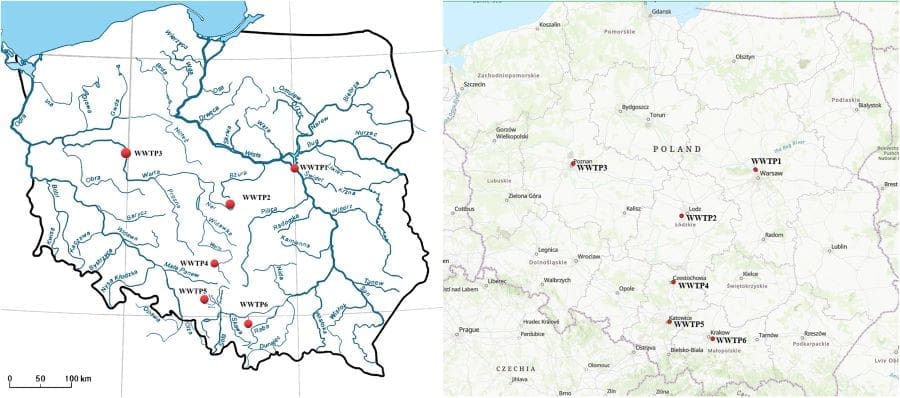
Municipal wastewater treatment plants are failing to remove many commonly used pharmaceuticals, causing antidepressants, antibiotics and allergy drugs to enter rivers and lakes, according to new research published in PLOS One. The study, led by Paulina Chaber-Jarlachowicz of the Institute of Environmental Protection – National Research Institute in Warsaw, examined samples from six municipal wastewater treatment plants in Poland serving more than 200,000 residents.
Using liquid chromatography–tandem mass spectrometry (LC-MS/MS), the researchers measured drug concentrations in incoming wastewater, treated effluent and sewage sludge. They found that all six plants discharged pharmaceuticals into the environment. While some pain relievers such as naproxen, ketoprofen and salicylic acid were effectively removed, others persisted or even increased in concentration after treatment. The antidepressant fluoxetine (Prozac), the anti-seizure medication carbamazepine and the allergy drug loratadine (Claritin) posed the highest ecological risks, with fluoxetine and loratadine particularly harmful to aquatic organisms due to their effects on hormone regulation and development.
The authors report that conventional mechanical-biological processes used in wastewater treatment are inadequate for removing pharmaceuticals, leading to annual emissions of at least 40 megagrams of active compounds into rivers in the study area.
Wastewater treatment plants are a major source of pharmaceutical pollution
Municipal wastewater treatment plants are ineffective at removing Prozac (fluoxetine) and other common pharmaceuticals in wastewater, causing the drugs to be discharged into lakes, rivers and streams where they pose a risk to aquatic organisms. Paulina Chaber-Jarlachowicz of the Institute of Environmental Protection – National Research Institute in Warsaw, Poland, and colleagues reported these findings in a new study.
Most wastewater treatment plants break down organic compounds in wastewater using microbes, which are then removed as activated sludge. Existing research, however, suggests these methods do not remove pharmaceuticals effectively, causing them to be released into waterways. While some drugs do break down eventually, most persist in the environment, where they continue to be active, even at extremely low concentrations.
In the new study, researchers collected samples from six municipal wastewater treatment plants in Poland to investigate their ability to remove more than a dozen common pharmaceuticals. They measured the levels of drugs coming into the plant in the wastewater, determined how much is discharged to the environment in the treated water and sludge, and estimated the associated ecological risks.
The researchers found that all six wastewater treatment plants released pharmaceuticals into the environment. Only the pain reliever drugs naproxen (Aleve) and ketoprofen and the antihistamine salicylic acid were effectively removed during treatment.
For some pharmaceuticals, including the antidepressant fluoxetine (Prozac), the pain reliever diclofenac, and the anti-seizure drug carbamazepine, the treatment processes actually led to higher levels of the compounds in the discharged water than in the original wastewater. Fluoxetine and the allergy drug loratadine (Claritin) posed the greatest risk to aquatic organisms, due to their ability to disrupt hormone signaling and development at the levels seen in the treated water.
The new results add to the growing body of evidence demonstrating that conventional methods used by municipal wastewater treatment facilities are unable to remove many common drugs, making the plants a source of pharmaceutical pollution. These findings will lay the groundwork for further research into the inactivation of pharmaceutical compounds and their breakdown products in sewage and sludge.
The authors add: “The study’s findings demonstrated that municipal wastewater treatment facilities using conventional mechanical-biological processes (CAS) are ineffective at removing pharmaceuticals from wastewater. The annual emissions of pharmaceuticals to rivers from wastewater treatment plants in the study area amounted to at least 40 Mg. Ketoprofen, sulfamethoxazole, carbamazepine and fluoxetine were identified as the primary contributors to the total mass load and emissions of pharmaceuticals.”
Journal Reference:
Chaber-Jarlachowicz P, Gworek B, Kalinowski R, ‘Removal efficiency of pharmaceuticals during the wastewater treatment process: Emission and environmental risk assessment’, PLoS One 20 (9): e0331211 (2025). DOI: 10.1371/journal.pone.0331211
Article Source:
Press Release/Material by PLOS
Featured image credit: freestocks | CC0