Summary:
Arctic fires were substantially more frequent in areas associated with settlements, infrastructure and industrial activity between 2001 and 2013, according to research led by the University of Zurich (UZH). The team used satellite-detected artificial nighttime light as an indicator of human activity across the Arctic.
After comparing illuminated locations with unlit areas experiencing similar climatic conditions, the researchers found that fires occurred about 2.45 times more frequently in lit areas. Fires were also more frequent closer to illuminated locations. The analysis does not identify human activity as the sole cause of Arctic fires, since temperature, moisture and drought remain important influences.
The research, reported in Communications Earth & Environment, also identified regional differences in fire occurrence near illuminated areas. The researchers say differences in prevention measures and firefighting capacity could partly explain this regional variation. Reducing ignition hazards could help protect Arctic communities and infrastructure while limiting damage to permafrost ecosystems and climate-related feedbacks.

— Press Release —
Arctic fire frequency more than doubled due to human activities
Arctic fires are not merely a regional problem, as the hazy skies over Switzerland last summer demonstrated – despite otherwise sunny weather. Smoke from large fires in northern Canada crossed the Atlantic and reached Europe. To date, large-scale studies on fires in the Arctic tundra have focused primarily on rising temperatures and drought as the main causes. The role of human activity has received far less attention, even though industrial development, settlements, roads, and other infrastructure are rapidly expanding in parts of the Arctic – particularly in connection with resource industries such as oil and gas extraction and mining.
Artificial light at night and the occurrence of fires
An international research team led by the University of Zurich (UZH) has conducted the first comprehensive study of the Arctic between 2001 and 2013 to investigate the link between human activities and the occurrence of fires. Study leader Gabriela Schaepman-Strub from the UZH’s Institute of Evolutionary Biology and Environmental Sciences collaborated with researchers from NASA’s Goddard Space Flight Center in the USA and the University of Münster in Germany. Because direct and consistent data on human activity across the Arctic are difficult to obtain, the researchers used artificial nighttime light as a satellite-based indicator of human presence, including settlements and industrial activities.
Read also: Arctic hotspots reveal vulnerable ecosystems in Siberia, Alaska, and Canada
“Our results show that fires in the Arctic occurred 2.5 times more frequently in illuminated areas than in climatically similar, unilluminated areas. They were also more frequent near illuminated areas, indicating a strong spatial correlation between human activity and fire occurrence,” says Cengiz Akandil, UZH postdoc and first author of the study. According to the researchers, this does not mean that human activity is the sole trigger for Arctic fires, as changing temperature, humidity, and drought conditions remain important factors. However, the new study demonstrates that human activity also plays a significant role.
According to Miguel Román, deputy director for atmospheres and data systems at NASA’s Goddard Space Flight Center and co-author of the study, Earth observations are most meaningful when they enhance researchers’ understanding of how environmental conditions and human activities interact. “This study underscores the importance of an interdisciplinary Earth system science: It considers human systems as part of an interconnected whole, rather than treating them separately from the environment,” Román says.
Different fire prevention and fighting methods
The researchers also identified significant regional differences in the frequency of fires near illuminated areas. Preventive measures and existing firefighting capacities could partially explain these regional variations. “Improved fire prevention and management around settlements, industrial sites, roads, and other illuminated areas could help reduce the risk of ignition and limit damage,” says Akandil.
The study’s findings are important for people in the Arctic. Fires can threaten homes, infrastructure, transport routes, livelihoods, and public health, as well as culturally significant landscapes and valuable ecosystems that support local ways of life and Arctic biodiversity. They can accelerate the thawing of permafrost and plunge tundra ecosystems into new, fire-prone conditions. “Reducing human-caused fire hazards is not only important for protecting infrastructure but also for strengthening the resilience and security of Arctic communities,” emphasizes study leader Gabriela Schaepman-Strub.
The effects extend far beyond the Arctic
Because Arctic fires release carbon and can accelerate permafrost thawing, they contribute to feedback processes that influence the global climate. The impacts extend far beyond the Arctic. Managing the fire risk associated with human activities in the Arctic is therefore a local and global issue, as Schaepman-Strub notes: “As the development of the Arctic progresses and climatic conditions become increasingly fire-prone, it is becoming ever more important to integrate fire prevention into spatial planning, industrial operations, and strategies for protecting settlements.”
Journal Reference:
Akandil, C., Heim, R.J., Plekhanova, E. et al., ‘Human activity increases Arctic fire occurrence within and near lit areas’, Communications Earth & Environment (2026). DOI: 10.1038/s43247-026-03884-3
Article Source:
Press Release/Material by University of Zürich
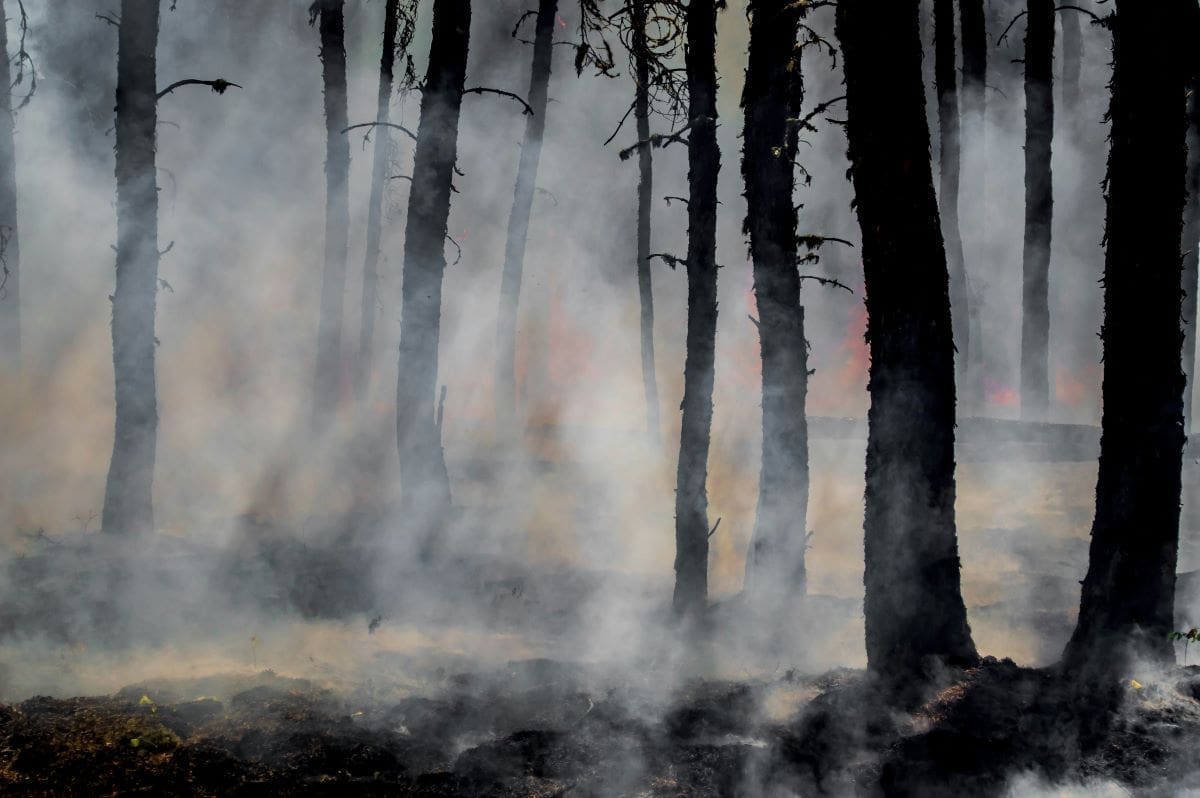
Featured image credit: Joanne Francis | Unsplash