Researchers led by Robert Blasiak of the Stockholm Resilience Centre at Stockholm University examined climate-related disclosures among the world’s 100 largest seafood companies in an analysis published in npj Ocean Sustainability. As of August 2025, 45 had made no public climate-related disclosures. Of those, 40 were privately owned, placing them outside reporting requirements associated with stock exchange listings.
The absence of public disclosures does not necessarily mean that companies are taking no action. However, it makes their preparedness difficult to assess.
Some progress is evident in emissions reporting. Among the 30 largest seafood companies, the number with publicly announced greenhouse gas reduction targets increased from four in 2016 to 18 by the time of the analysis. Ten of those companies had targets approved by the Science Based Targets initiative.
A separate 2026 assessment by the World Benchmarking Alliance found that, among 22 seafood companies evaluated, only three reported actual progress towards reducing greenhouse gas emissions. The results suggest that publicly announced climate commitments are not always accompanied by evidence of implementation.
Read also: Bottom trawling threatens ocean carbon storage, accelerating climate change

Warming oceans bring growing economic risks
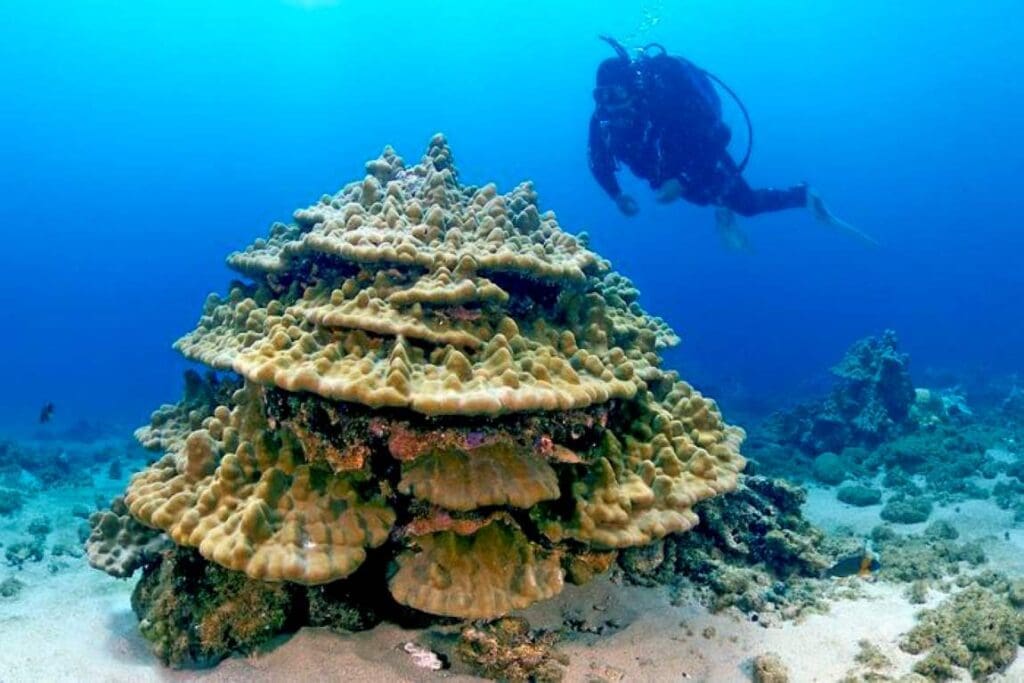
Rising ocean temperatures and changes in marine ecosystems are already affecting seafood production. Shifting fish populations, marine heatwaves and changes in ocean chemistry can influence where species are found, their abundance and the reliability of commercial operations.
Projections from the Fisheries and Marine Ecosystem Model Intercomparison Project (FishMIP) suggest that global marine fish biomass could decline by 6.7%–21% by 2100, depending on future greenhouse gas emissions.
Using these projections alongside fisheries data, the researchers estimate that industrial fishing catches could fall by approximately 24% globally by the end of the century under a high-emissions scenario, assuming the industrial share of fishing remains similar.
At current prices, the estimated reduction would be equivalent to approximately $19 billion in the annual landed value of industrial fishing catches.
These are illustrative estimates, not forecasts of actual financial losses. They do not directly measure individual companies’ exposure or account for all the economic and management changes that could occur.
The impacts would also be uneven. Under a high-emissions scenario, catches within the exclusive economic zones (EEZs) of Kiribati, Micronesia, Seychelles, Tuvalu and Vanuatu could decline by an average of 32% by the end of the century. These five countries are particularly dependent on fisheries exports relative to the size of their economies.
Changing fish distributions present another challenge. As commercially important species move across national boundaries, existing fishing agreements may become harder to maintain, increasing uncertainty over access to marine resources.
For seafood corporations, these pressures extend beyond fishing vessels to processing facilities, suppliers and international markets.
Read also: Salmon strongholds: A quiet force for global resilience
Why climate adaptation needs more attention
Reducing emissions remains important, but it cannot eliminate the physical risks already emerging across marine ecosystems. Preparing for those changes requires businesses to consider climate projections when making investment, sourcing and operational decisions.
The researchers also identify a potential danger in company-led adaptation. Businesses with greater financial resources and access to detailed climate information could gain competitive advantages by choosing new locations for processing facilities, changing suppliers or securing fishing rights in regions expected to face less severe impacts.
Such responses might benefit individual companies while increasing pressure on particular fish stocks or transferring economic risks to smaller producers and coastal communities.
Greater transparency could help regulators, investors and other stakeholders assess these developments. However, climate disclosures alone cannot establish whether companies are adapting effectively or whether their strategies benefit the wider seafood system.
More useful climate information, stronger public oversight and cooperation among scientists, businesses, governments and civil society could help address these challenges.
For an industry facing increasingly uncertain ocean conditions, the question is not only how large seafood companies protect their own operations, but whether their responses also support the resilience of the workers, producers and communities connected to them.
Journal Reference:
Blasiak, R., Conville, P., Cunningham, C. et al., ‘Mobilizing the seafood industry for climate action’, npj Ocean Sustainability 5, 61 (2026). DOI: 10.1038/s44183-026-00252-8
Article Source:
Press Release/Material by npj Ocean Sustainability
Featured image credit: Nghĩa Đặng | Pixabay