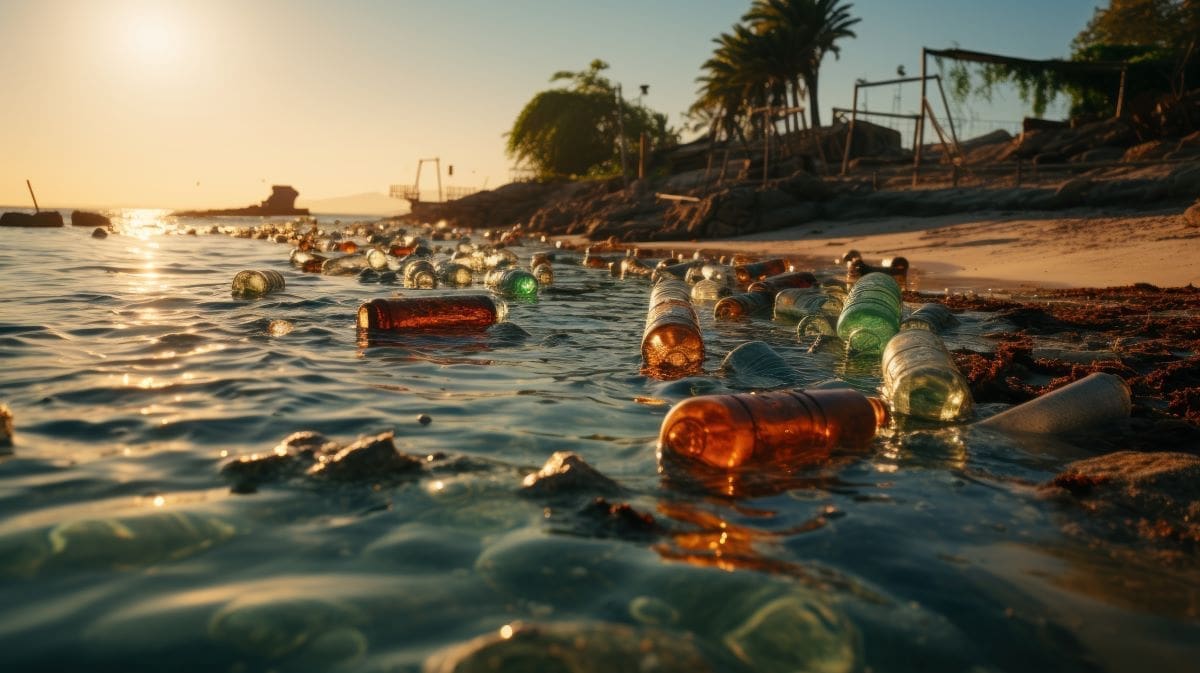
In a new report published in Nature Communications, researchers from KTH Royal Institute of Technology shed light on the interconnectedness of global warming and plastic pollution, highlighting a vicious cycle that exacerbates both crises.
Conventionally perceived as separate issues, the study reveals how these two phenomena are intricately intertwined, with each feeding into the other. According to Xinfeng Wei, a researcher in polymeric materials at KTH Royal Institute of Technology, this symbiotic relationship is driving an alarming escalation in global warming, material degradation, plastic waste, and the dissemination of toxic chemicals into the environment.
Wei explains plastics that we rely on every day will deteriorate more rapidly due to rising global temperatures, leading to increased demand for plastics and subsequent greenhouse gas emissions that contribute to further temperature rise. “A self-reinforcing cycle is formed, creating a vicious circle between climate change and plastic pollution,” Wei says.
The report underscores the significant role of plastics in greenhouse gas emissions. In 2019, plastics accounted for 3.4 percent of global greenhouse gas emissions, primarily attributed to their production and conversion from fossil fuels. Projections suggest that this figure could more than double by 2060.
The researchers identify a feedback loop linking plastic emissions with heat and moisture, which weaken the structural integrity of polymers. As temperatures rise, the properties of commonly used plastics such as polyethylene, polypropylene, and polyvinyl chloride deteriorate significantly.
“The higher the increase in temperature, the more the materials’ properties are compromised,” Wei says.
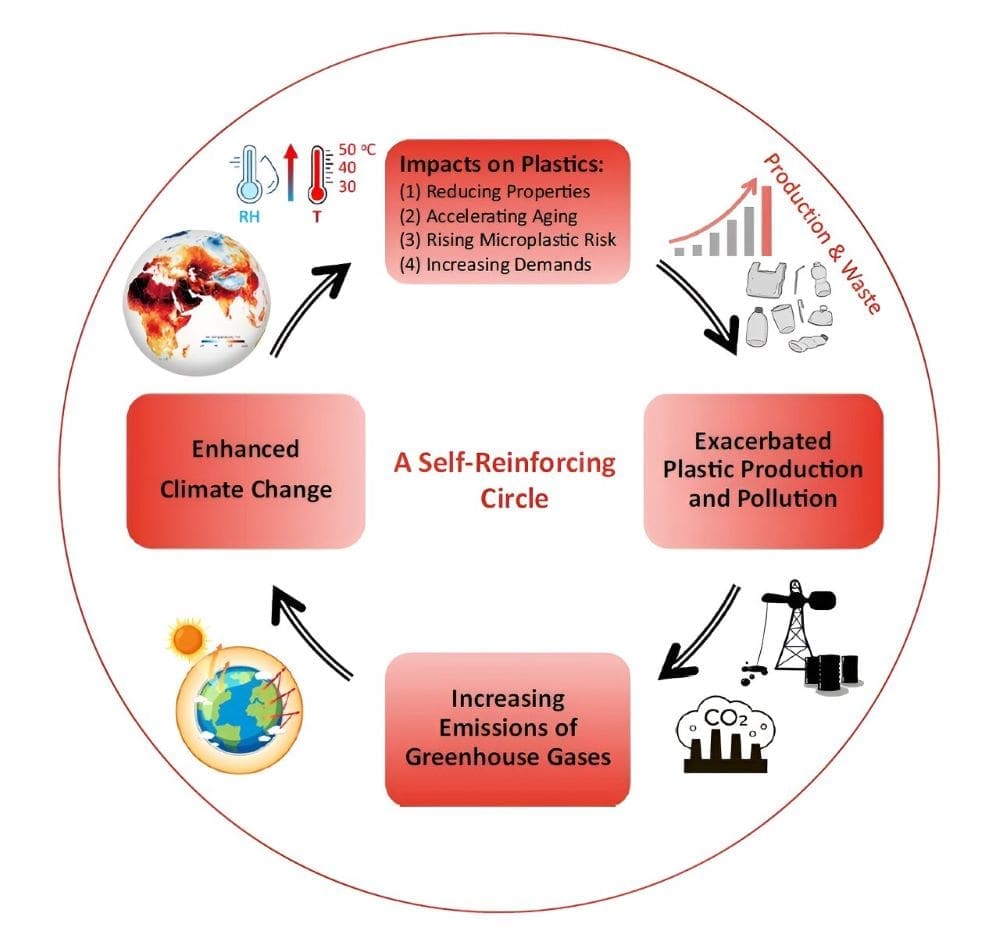
This degradation not only necessitates more frequent replacement of polymer products but also leads to a surge in manufacturing volumes and rates. Consequently, knock-on effects include unreliable food packaging, contamination of waterways with microplastics, and habitat degradation for aquatic life.
Moreover, the report highlights the release of volatile organic compounds (VOCs) and other hazardous substances from plastics as temperatures increase. Heat accelerates the diffusion, evaporation, and leaching of these compounds into the air, soil, and water, exacerbating environmental pollution.
The combined effects of rising temperatures and moisture intensify challenges for plastics, making it imperative to address these issues across all sectors involved in the plastic lifecycle. Wei and co-authors emphasize the need for concerted efforts to mitigate plastic pollution and combat climate change.
As the world grapples with the intertwined challenges of global warming and plastic pollution, the findings of this report serve as a clarion call for urgent action and global cooperation to break free from the destructive feedback loop driving these crises.
Journal Reference:
Wei, XF., Yang, W. & Hedenqvist, M.S. ‘Plastic pollution amplified by a warming climate’, Nature Communications 15, 2052 (2024). DOI: 10.1038/s41467-024-46127-9
Article Source:
Press Release/Material by KTH Royal Institute of Technology
Featured image credit: nuraghies | Freepik.com