

By Osaka Metropolitan University
While there is an increasing consensus among humans that corporal discipline of children does more harm than good, fish may disagree.
Ryo Hidaka, Shumpei Sogawa, Masanori Kohda and Satoshi Awata from Osaka Metropolitan University have demonstrated that a fish species employs physical punishment to elicit helping efforts from their offspring, indicating advanced social and cognitive skills previously thought to be unique to higher vertebrates.
The results of their study were published online in Animal Behaviour.
For millennia, human societies have used punishment to promote cooperation and maintain social order. But humans are not the only species seeking better cooperative behavior. So how do other animals achieve this?
Seeking an answer, the research team from the Graduate School of Science at Osaka Metropolitan University took a look at a rather taciturn animal: fish, more specifically, Neolamprologus savoryi, a cooperatively breeding cichlid fish.
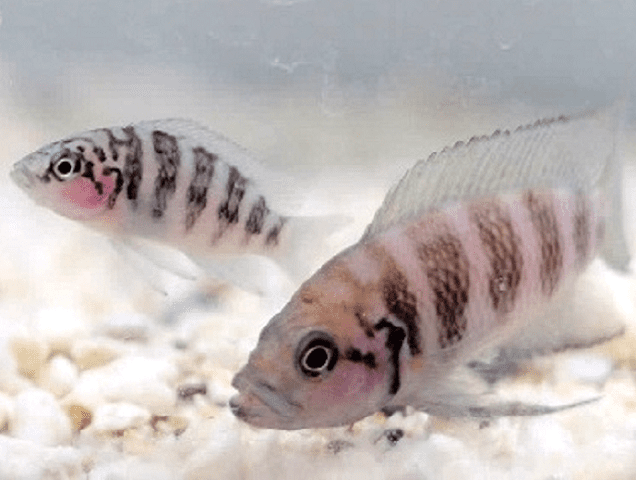
“Even though punishment in cooperatively breeding cichlid fish has been studied, there is limited evidence that they use punishment to encourage cooperative behavior,” said Satoshi Awata, a professor at Osaka Metropolitan University and lead author of the study.
N. savoryi subordinates, or helpers, assist dominant breeders in, for example, defending territory against intruders or maintaining the breeding shelter. By observing the behavior of N. savoryi in a controlled laboratory setting, the researchers were able to manipulate and measure the effects of punishment on helping behavior.
Their results showed that dominant breeders physically attacked idle helpers — including their own offspring — to promote the latter’s participation in cooperative activities. Indeed, those experiencing such aggression subsequently increased their efforts in helping behaviors. In contrast, helpers who engaged proactively in helping behaviors avoided aggression from dominant breeders.
“Our study demonstrated that nonhuman animals also use punishment to elicit cooperative behaviors in group members,” Awata said.
The study’s findings highlight that punishment is not exclusive to human societies but is also present in how other animals enforce cooperation and maintain social relationships. This research bridges a gap in understanding the evolution of cooperative behavior and the mechanisms animals use to sustain it.
“Our findings reveal that fish, like humans, employ advanced cognitive abilities to sustain their societies. This compels us to reconsider the notion of ‘intelligence’ not only in fish but across the animal kingdom,” Awata said.
More information: Ryo Hidaka, Shumpei Sogawa, Masanori Kohda, Satoshi Awata, ‘Punishment from dominant breeders increases helping effort of subordinates in a cooperatively breeding cichlid‘, Animal Behaviour (2024), DOI: 10.1016/j.anbehav.2024.02.020. Osaka Metropolitan University Press Release. Featured image credit: NOAA | Unsplash