
By Alex Morrison | University of Exeter
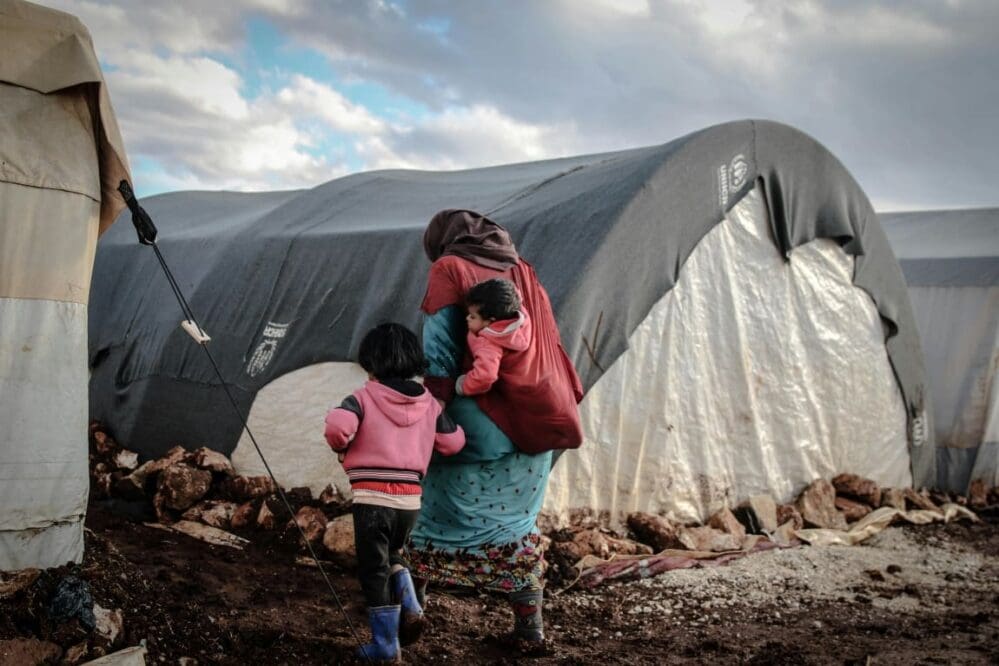
Humanity must rethink migration as the climate crisis drives rapid global changes, researchers say.
With significant migration expected – and border policies hardening – the researchers say the “time is ripe to highlight the benefits of collaboration between nations and regions”.
By promoting the benefits of migration, especially in an era of ageing populations, global leaders could ensure a better future for people and societies.
The paper, published in the journal One Earth, comes from an international team of climate and social scientists including the universities of Wageningen, Exeter and Nanjing.
“Millions of people are projected to be displaced by sea-level rise in the next decades, and two billion could be exposed to extreme heat beyond their experience by the end of the century,” said Professor Marten Scheffer, of Wageningen University.
“Ignoring or downplaying the inevitable global redistribution of people would lead to geo-political instability, and a polarised and fractured world,” he added.
“Instead, the international community must come together to rethink mobility and cultural integration to ensure a benign transition to this new world.”

So far, most migration with significant climate dimensions has happened within countries, with people leaving areas affected by long-term decline in agricultural productivity or escaping conditions such as coastal erosion or extreme events.
While some large nations have different climate zones that can accommodate this, small countries do not.
The paper also warns that a “skewed distribution of wealth and associated power” makes it difficult for people to move, both within and between states.
Professor Tim Lenton, from Exeter’s Global Systems Institute, said: “While many animal species are already changing their geographical distribution in response to climate change, and humans have done so for thousands of years, humanity now faces increasing barriers to this.“
He continued: “Global warming exacerbates existing inequalities, making habitability a major political challenge of this century. Concrete cooperation is now needed to match migrant flows with demand for labour, to the benefit of the Global South and the developed world alike.”
The paper says major reform of the food system, supported by movement of workers, could increase production while conserving nature – especially if meat consumption is reduced in favour of plant-based diets.
Migration can therefore be a win-win for people and the climate, but leaders must make a positive case for economic benefits and effective integration.
“Playing up the social costs of migration appeals to national identity motivations, but fails to overcome problems from ageing populations,” said Professor Neil Adger.
“Instead, leaders should focus on the economic and social benefits of new populations and effective integration, which benefits newcomers and original inhabitants alike. Every corner of the world needs to anticipate the coming climate crisis and promote the safe and beneficial movement of people as conditions change.”
More information: Marten Scheffer, W. Neil Adger, Stephen R. Carpenter, Carl Folke, Tim Lenton, Gaia Vince, Frances Westley, Chi Xu, ‘Anticipating the global redistribution of people and property’, One Earth (vol. 7, Iss. 7; 2024); DOI: 10.1016/j.oneear.2024.06.008 | UExeter Press Release/Material. Featured image credit: Ahmed akacha | Pexels